

Operation Process and Working Principle of Grass Powder Pneumatic Conveying Equipment
Grass powder, as a key raw material in various industries such as animal feed, biofuel, and pharmaceuticals, requires efficient and reliable handling solutions. The pneumatic conveying system, particularly designed for grass powder, plays a crucial role in ensuring smooth material transport from storage to processing units. This equipment not only enhances operational efficiency but also maintains the quality of the grass powder by minimizing dust and contamination risks. Understanding its operation process and working principle is essential for optimizing performance and ensuring long-term reliability.
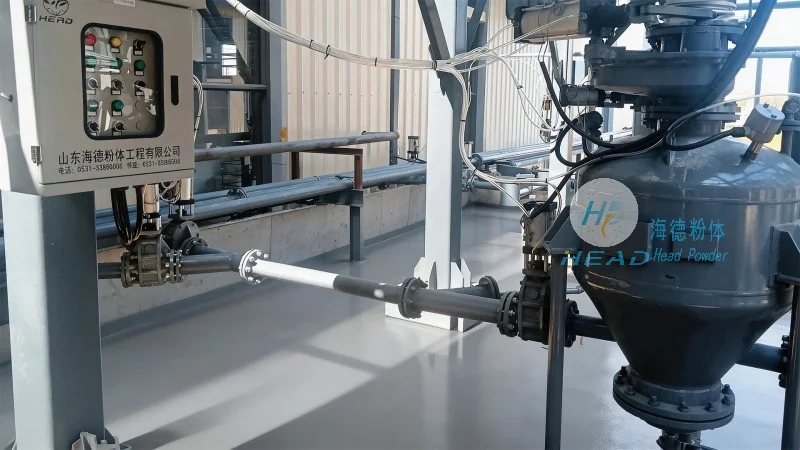
Key Components of the Pneumatic Conveying System
The grass powder pneumatic conveying equipment typically consists of several core components that work in synergy to achieve effective material transport. These components include the hopper for material storage, a rotary valve or feeder to control the flow rate, a conveying line (usually made of stainless steel or plastic to prevent material degradation), a blower or air compressor to generate the necessary air pressure, and a dust collector or filter to manage airborne particles. Each component is carefully designed to handle the specific characteristics of grass powder, such as its fine particle size and potential moisture content, ensuring optimal performance and minimal maintenance.
Operation Process of the Grass Powder Pneumatic Conveying Equipment
The operation process of the grass powder pneumatic conveying system begins with the preparation of the system. The hopper is first filled with the required amount of grass powder, ensuring a stable supply for the entire transport cycle. The rotary valve or feeder is then adjusted to the desired flow rate, which is typically controlled by a variable speed drive or manual control mechanism. The blower or air compressor is started, and the air pressure is monitored using a pressure gauge. Once the air pressure reaches the optimal level (usually around 0.5 to 1.0 bar above the ambient pressure), the rotary valve is opened to allow the grass powder to enter the conveying line. The air flow then carries the powder particles, creating a consistent stream that moves through the system. During operation, the pressure and flow meters are continuously monitored to detect any deviations or abnormalities. If the pressure drops or the flow rate changes unexpectedly, the system's control panel triggers an alarm, prompting operators to check for blockages or other issues. The material is then transported to the destination point, where it is deposited into the receiving silo or processing unit. The air is filtered through a dust collector, and the clean air is released back into the environment, completing the cycle.

Working Principle of the Pneumatic Conveying System
The working principle of the grass powder pneumatic conveying system is based on the principles of fluid dynamics and particle suspension. The system operates by creating a high-velocity air stream within the conveying line, which is sufficient to lift and transport the grass powder particles. According to the Bernoulli equation, the pressure energy of the air is converted into kinetic energy, allowing the particles to be carried along the line. The air velocity is a critical parameter; it must be at least twice the terminal velocity of the powder particles to ensure they remain in suspension. The terminal velocity is determined by the particle size, density, and shape of the grass powder, as well as the air density and viscosity. The conveying line's diameter is designed to balance the air velocity and pressure drop, minimizing energy consumption while maintaining efficient transport. The system may include horizontal, vertical, or inclined sections, each designed to handle the material's flow characteristics. For vertical sections, the air velocity is increased to counteract the gravitational force acting on the particles, preventing them from settling. The use of flexible hoses or corrugated pipes in certain sections allows for the handling of bends and changes in direction without causing excessive pressure losses.

Advantages of Using Grass Powder Pneumatic Conveying Equipment
Implementing a pneumatic conveying system for grass powder offers several significant advantages over traditional methods like belt conveyors or manual handling. Firstly, it provides a dust-free and hygienic environment, which is crucial for industries where product quality and safety are paramount. The enclosed system prevents contamination from external sources and reduces the risk of respiratory issues for operators. Secondly, it offers high efficiency in terms of material transport speed and capacity, allowing for continuous operation and reduced downtime. The system's ability to handle fine particles without clogging or blockages makes it ideal for grass powder, which can be prone to agglomeration. Thirdly, it reduces labor costs and operational complexity, as the automated process minimizes the need for manual intervention. Furthermore, the system's compact design and flexible layout enable easy integration into existing production lines, making it a cost-effective solution for various applications.
Company Profile: Shandong HeadPowder Engineering Co., Ltd.
HeadPowder, as a leading manufacturer of pneumatic conveying equipment, specializes in providing customized solutions tailored to the specific needs of grass powder handling. With a strong focus on innovation and quality, the company has established itself as a trusted partner in the industry. HeadPowder's products are designed and manufactured in China, leveraging advanced technology and rigorous quality control processes to ensure reliability and durability. The company's team of experts provides comprehensive support, from initial consultation and system design to installation, commissioning, and after-sales service. HeadPowder's commitment to customer satisfaction and product excellence has earned it a reputation for delivering high-performance grass powder pneumatic conveying systems that meet the highest industry standards.