

Operation Process and Working Principle of Desulfurization and Dust Removal Fly Ash Material Pneumat
The pneumatic conveying line designed for desulfurization and dust removal fly ash is a critical piece of equipment in modern industrial facilities. This system efficiently handles the transportation of fly ash, a byproduct of flue gas desulfurization and dust removal processes, from collection points to disposal or utilization sites. The technology ensures safe, reliable, and low-maintenance operation, making it an essential component for industries such as power generation, cement production, and chemical processing.

Company Overview: Shandong HeadPowder Engineering Co., Ltd.
HeadPowder, a leading engineering company based in Shandong, China, specializes in the design, manufacturing, and installation of advanced material handling systems. With years of experience in the field, HeadPowder has developed a reputation for delivering high-quality solutions tailored to the unique needs of industrial clients. The company's commitment to innovation and customer satisfaction has positioned it as a trusted partner in the global market for pneumatic conveying equipment.
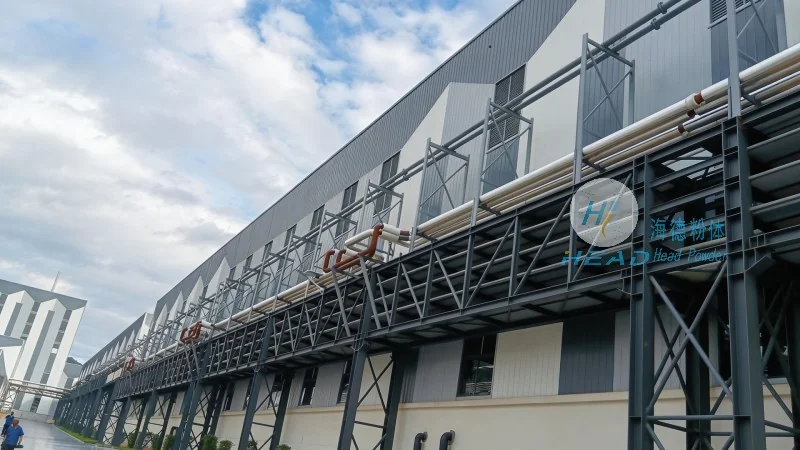
The Importance of Efficient Fly Ash Handling in Industrial Applications
Fly ash, generated during the combustion of fossil fuels, contains valuable minerals and can be repurposed in construction materials, but its handling requires specialized equipment due to its fine particle size and potential environmental hazards. Inefficient handling can lead to dust emissions, equipment wear, and operational inefficiencies. A well-designed pneumatic conveying line addresses these challenges by providing a closed-loop system that minimizes environmental impact and maximizes material recovery.

Understanding the Pneumatic Conveying Line: Key Components and Functionality
The desulfurization and dust removal fly ash pneumatic conveying line consists of several key components, each playing a vital role in the overall operation. These include the ash collection hopper, air compressor, conveying pipeline, control system, and discharge unit. The air compressor generates the necessary air pressure to move the fly ash particles through the pipeline. The conveying pipeline, typically made of stainless steel or other corrosion-resistant materials, ensures the material is transported without degradation. The control system monitors and regulates the flow of air and material, ensuring safe and efficient operation.

Detailed Operation Process of the Desulfurization and Dust Removal Fly Ash Pneumatic Conveying Line
The operation of the pneumatic conveying line begins with the collection of fly ash from the desulfurization and dust removal units. The ash is stored in a hopper, where it is fed into the conveying system. The air compressor then starts, creating a high-pressure air stream that draws the fly ash particles into the pipeline. As the air flows through the pipeline, it carries the ash particles to the discharge point. The control system adjusts the air pressure and flow rate to maintain optimal conveying conditions. The process is continuous, allowing for steady and reliable transportation of the fly ash material.