

Principle and Application Characteristics of Denitrification Urea Pneumatic Conveying Systems
Shandong HeadPowder Engineering Co., Ltd., a professional manufacturer based in Shandong, China, specializes in the design, development, and production of advanced pneumatic conveying systems for industrial applications. The company focuses on providing efficient and reliable solutions for transporting denitrification urea, a critical component in flue gas desulfurization and denitrification processes.
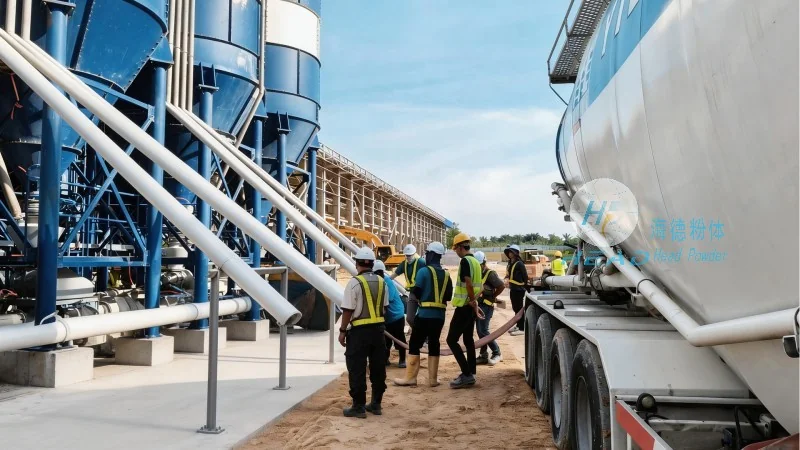
Principle of Denitrification Urea Pneumatic Conveying Systems
Denitrification urea, commonly used in selective catalytic reduction (SCR) systems for reducing nitrogen oxides (NOx) in industrial exhaust, requires a specialized conveying method to ensure safe and efficient transport from storage to application points. The pneumatic conveying system operates on the principle of using compressed air or other gas to create a flow that moves the urea particles through a pipeline network. This method eliminates the need for mechanical components like conveyors or elevators, reducing maintenance costs and minimizing the risk of material contamination. The system typically consists of a storage silo, a feeding device, a conveying pipeline, and a discharge unit, all integrated to maintain a consistent flow rate and pressure.

Application Characteristics and Working Scenarios
The denitrification urea pneumatic conveying system is designed to adapt to various industrial working environments, including power plants, chemical factories, and industrial boilers. In power plants, the system is crucial for delivering urea to the SCR reactors, where it reacts with NOx to form harmless nitrogen and water. The system's flexibility allows it to handle different urea particle sizes and flow rates, ensuring optimal performance under varying load conditions. For chemical factories, the system can be integrated with existing production lines to transport urea from storage to processing units, maintaining a clean and controlled environment. The working scenarios also include applications in industrial boilers where the system helps in the continuous supply of urea for denitrification, enhancing the overall efficiency of the combustion process.

Advantages in Industrial Applications
Compared to traditional mechanical conveying methods, the pneumatic conveying system offers several advantages in handling denitrification urea. Firstly, it provides a dust-free and hygienic transport process, which is essential for maintaining the quality of the urea and preventing contamination in sensitive industrial processes. Secondly, the system is highly efficient in terms of energy consumption, as it uses compressed air to move the material with minimal friction losses. This results in lower operational costs and reduced environmental impact. Additionally, the system's modular design allows for easy expansion or modification to accommodate changes in production requirements, making it a versatile solution for different industrial scales. The reliability of the system is further enhanced by its automated control features, which ensure consistent operation and reduce the risk of downtime.

Maintenance and Safety Considerations
Proper maintenance is essential to ensure the long-term performance and safety of the denitrification urea pneumatic conveying system. Regular inspections of the conveying pipeline, valves, and feeding devices are necessary to detect any blockages or wear and tear. The system should be equipped with safety features such as pressure relief valves and emergency shut-off mechanisms to prevent accidents during operation. Additionally, the use of high-quality materials for the pipeline and components is crucial to withstand the corrosive nature of urea and prevent leaks. The company, Shandong HeadPowder Engineering Co., Ltd., provides comprehensive maintenance services and technical support to ensure that the system operates at peak efficiency and meets all safety standards.