

What is a lithium battery mineral powder pneumatic conveying system? What are its design principles?
For companies in the lithium battery industry, the efficient and reliable transport of mineral powders is a critical operational requirement. This involves handling materials such as lithium ore, cobalt, nickel, and other raw materials that are essential for battery production. The traditional methods of bulk material handling, like belt conveyors or bucket elevators, often face challenges when dealing with fine powders, especially those with high moisture content or abrasive properties. This is where pneumatic conveying systems offer a robust solution. A lithium battery mineral powder pneumatic conveying system is engineered to transport these powders in a closed system using air pressure or vacuum, ensuring minimal dust, improved safety, and enhanced material integrity.

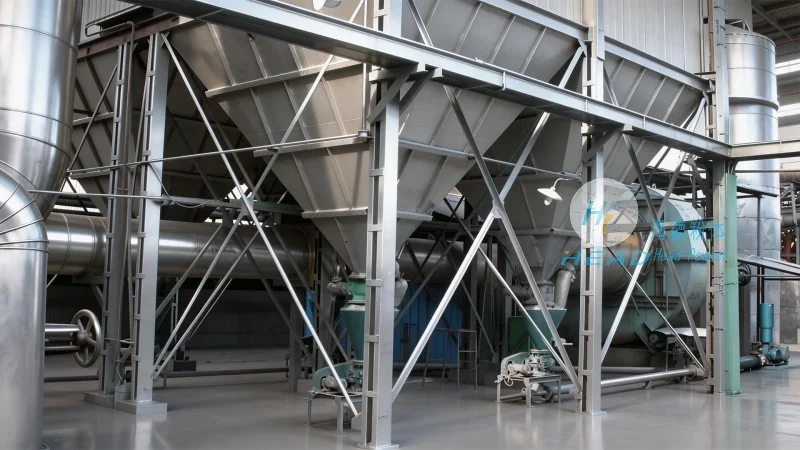
Design Principles of Pneumatic Conveying Systems
The design of a pneumatic conveying system for lithium battery mineral powders is based on several key principles that ensure optimal performance and efficiency. First, the system must be capable of handling the specific properties of the powders, including particle size distribution, moisture content, and flowability. The selection of the conveying method—whether it's a pressure system (using positive pressure to push material through the pipeline) or a vacuum system (using negative pressure to draw material)—depends on the material characteristics and the distance of transport. For instance, pressure systems are often preferred for short to medium distances and for materials that are less abrasive, while vacuum systems are suitable for longer distances or when the material is more delicate. The pipeline design is another crucial aspect, as it must be constructed from materials that resist corrosion and wear, such as stainless steel or special alloys, to prevent material degradation and system failure. Additionally, the system incorporates components like feeders, cyclones, and filters to manage the flow and separation of the powder from the air, ensuring that the material is delivered to the destination without loss or contamination.

HeadPowder's Expertise in Pneumatic Conveying Solutions
Shandong HeadPowder Engineering Co., Ltd., commonly known as HeadPowder, is a leading provider of customized pneumatic conveying solutions tailored for the lithium battery industry. With a strong presence in China, particularly in Shandong, the company has built a reputation for delivering high-quality systems that meet the stringent requirements of modern battery manufacturing. HeadPowder's team of engineers and technicians specializes in understanding the unique challenges of mineral powder handling in lithium battery production, such as the need for precise control over material flow, minimal dust generation, and compliance with safety and environmental regulations. The company's approach involves a thorough analysis of the client's specific needs, including the type of mineral powders, production capacity, and operational environment, to design a system that is both efficient and cost-effective. By leveraging advanced engineering principles and using high-quality components, HeadPowder ensures that its pneumatic conveying systems are durable, reliable, and capable of withstanding the demands of continuous operation in industrial settings.

Key Features and Benefits of Lithium Battery Mineral Powder Pneumatic Conveying Systems
Implementing a pneumatic conveying system for lithium battery mineral powders offers several advantages that contribute to improved operational efficiency and product quality. One of the primary benefits is the reduction of dust and airborne particles, which not only enhances workplace safety but also prevents material loss and contamination. Unlike open systems, pneumatic conveying operates in a closed environment, which helps maintain the purity of the powders and reduces the risk of cross-contamination between different batches. Another significant benefit is the ability to control the flow rate and pressure precisely, allowing for consistent and uniform material delivery to the processing equipment. This consistency is crucial for maintaining the quality of the final battery products, as variations in raw material feed can affect battery performance and lifespan. Furthermore, pneumatic conveying systems are more flexible in terms of layout, as they can be installed in various configurations to fit the existing factory layout, minimizing the need for extensive structural modifications. The systems also contribute to energy efficiency by using compressed air or vacuum systems that can be optimized for the specific material and distance, reducing energy consumption compared to traditional bulk handling methods. Overall, the adoption of a pneumatic conveying system for lithium battery mineral powders is a strategic investment that enhances operational reliability, improves product quality, and supports the sustainable growth of the battery manufacturing industry.