

Introduction to Wood Chip Powder Conveying: Structure and Principle Explanation
Wood chip powder conveying systems are critical components in various industrial processes, particularly in the wood processing and biomass energy sectors. These systems are designed to efficiently transport wood chips, which are often used as raw materials for power generation, biofuel production, or as feedstock in manufacturing applications. The effectiveness of such conveying systems directly impacts operational efficiency, material handling costs, and overall production capacity. This article provides an overview of the structural components and operational principles underlying wood chip powder conveying technology, with a focus on the engineering solutions offered by Shandong HeadPowder Engineering Co., Ltd., a leading provider in this field.

Key Structural Components of Wood Chip Powder Conveying Systems
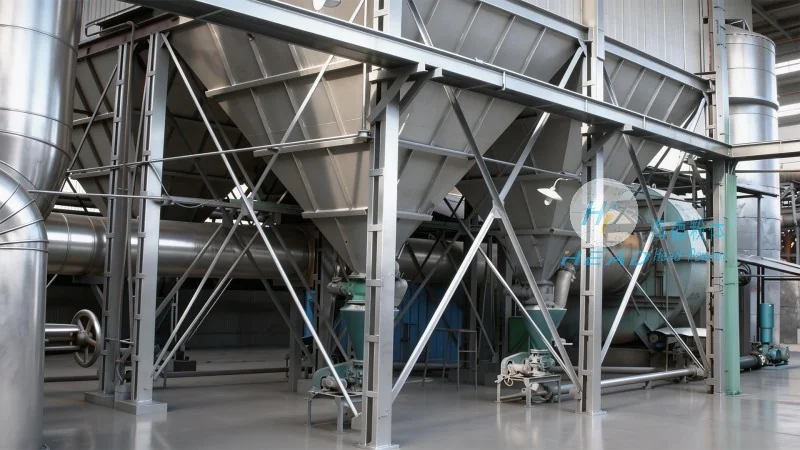
At the core of any wood chip powder conveying system are several essential structural components that work in concert to ensure reliable and efficient material transport. These components include the feed hopper, conveyor mechanism (such as screw conveyors or pneumatic systems), control valves, and discharge mechanisms. The feed hopper is responsible for storing and regulating the flow of wood chips into the system, preventing overloading and ensuring a consistent feed rate. This component is typically designed with a sloped bottom to facilitate smooth material movement and minimize blockages. The conveyor mechanism, which can vary in type depending on the specific application, is the primary device for moving the wood chips through the system. Screw conveyors, for instance, use rotating screws to push material forward, while pneumatic systems utilize air pressure to transport the chips in a pipeline. Control valves are integrated to regulate the flow rate and pressure within the system, allowing for precise control over the conveying process. Finally, the discharge mechanism ensures that the wood chips are delivered to the intended destination, such as a storage silo or processing unit, with minimal loss or spillage.

Operational Principles of Wood Chip Powder Conveying
The operational principles of wood chip powder conveying systems are centered on the physics of material movement and the mechanics of the conveying equipment. For screw conveyors, the principle involves the rotation of the screw, which creates a screw thread that lifts and moves the wood chips forward. The angle and pitch of the screw are critical factors that determine the conveying capacity and the pressure exerted on the material. Proper design ensures that the wood chips are conveyed without excessive friction or degradation, maintaining their integrity for downstream processes. Pneumatic conveying systems, on the other hand, rely on the principles of fluid dynamics. Air is compressed and introduced into the conveying line, creating a flow that propels the wood chips through the pipeline. The velocity of the air and the size of the particles are key variables that affect the efficiency of the system. Effective pneumatic systems are designed to minimize particle separation and ensure a uniform flow of material. Additionally, the system must account for factors such as particle size distribution, moisture content, and bulk density, as these variables can impact the conveying performance. Proper maintenance and monitoring of these parameters are essential to maintain optimal operational conditions.
Engineering Solutions by Shandong HeadPowder Engineering Co., Ltd.
Shandong HeadPowder Engineering Co., Ltd., commonly known as HeadPowder, specializes in the design, manufacturing, and installation of advanced wood chip powder conveying systems. The company's expertise lies in tailoring solutions to meet the specific needs of clients, whether in the wood processing industry, biomass energy sector, or other applications requiring efficient material handling. HeadPowder's systems are engineered to handle a wide range of wood chip sizes and types, from fine powders to larger chunks, ensuring versatility and adaptability. The company employs state-of-the-art technology and materials in the construction of its conveying components, such as high-strength stainless steel and corrosion-resistant alloys, to ensure durability and longevity in demanding industrial environments. Furthermore, HeadPowder offers comprehensive support services, including system design, installation, and maintenance, to ensure that clients achieve maximum performance and reliability from their conveying systems. The company's commitment to quality and customer satisfaction has established it as a trusted partner in the industry, providing reliable solutions that enhance operational efficiency and reduce material handling costs.
Conclusion and Application Scope
Wood chip powder conveying systems are indispensable in modern industrial operations, and the structural design and operational principles of these systems play a crucial role in their effectiveness. By understanding the key components and underlying principles, as well as leveraging the expertise of companies like Shandong HeadPowder Engineering Co., Ltd., industries can optimize their material handling processes, improve productivity, and ensure the efficient use of wood chip resources. The continued development and refinement of conveying technology will likely contribute to more sustainable and efficient industrial practices, particularly in the context of renewable energy and biomass utilization. As demand for wood chip-based products grows, the importance of reliable and efficient conveying systems will only increase, making them a critical investment for businesses operating in the wood processing and related sectors.