

What is Automatic Continuous Powder Pneumatic Conveying? And What Are Its Design Principles?
Automatic continuous powder pneumatic conveying is a sophisticated industrial technology used for the transport of bulk powders through a pipeline system using air as the conveying medium. This method offers a highly efficient and flexible solution for moving materials like powders, granules, and other particulate substances over long distances or within complex processing facilities. The core of this technology lies in its ability to maintain a continuous flow of material without the need for frequent manual intervention, making it ideal for applications in pharmaceuticals, food processing, chemical manufacturing, and other industries where material handling must be precise and reliable.

Introduction to Automatic Continuous Powder Pneumatic Conveying
At its essence, automatic continuous powder pneumatic conveying systems are engineered to transport bulk materials from a source to a destination using a combination of air pressure and flow control mechanisms. Unlike traditional mechanical conveying methods such as screw conveyors or belt conveyors, pneumatic systems utilize air to suspend and move particles, which can be particularly advantageous for materials that are abrasive, sensitive, or prone to caking. The system typically consists of a series of components including a hopper for material storage, a conveyor line with air supply and control valves, and a receiver for the delivered material. This integrated approach ensures that the material is moved in a controlled manner, minimizing product degradation and ensuring consistent quality throughout the process.
Key Components of an Automatic Continuous Powder Pneumatic Conveying System
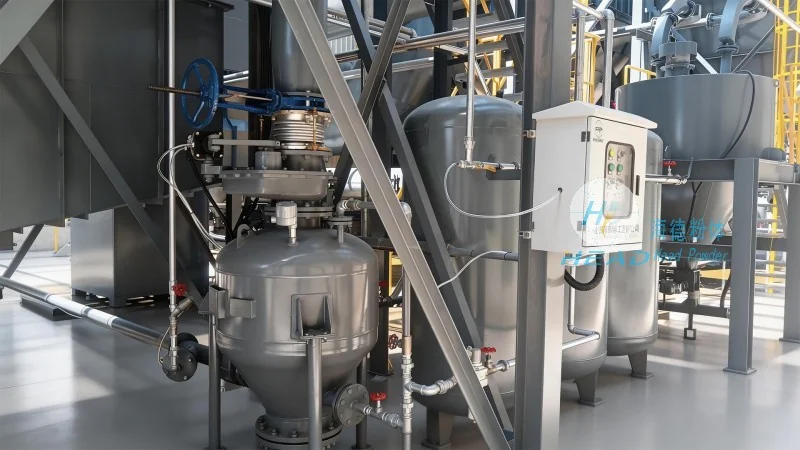
The effectiveness of an automatic continuous powder pneumatic conveying system depends on several critical components that work in harmony to achieve efficient material transport. The primary components include the material hopper, which holds the bulk powder and provides a consistent feed to the system; the air supply unit, which generates the necessary pressure and flow of air to move the material; the conveying line, which is a sealed pipeline that carries both the material and air; and the control valves and regulators, which manage the air pressure and flow rates to maintain optimal conveying conditions. Additionally, the system may include a filter or separator to remove excess air and prevent contamination, as well as a receiver or discharge hopper to collect the conveyed material at the destination. Each component plays a vital role in ensuring the smooth operation of the system and the quality of the transported material.
Design Principles Underpinning Automatic Continuous Powder Pneumatic Conveying
The design principles of automatic continuous powder pneumatic conveying are centered on achieving a balance between material flow, air consumption, and system efficiency. A key principle is the use of a consistent air-to-solid ratio, which is the ratio of the volume of air to the volume of material being conveyed. This ratio is crucial because it determines the velocity of the material particles within the pipeline and influences the overall conveying capacity. Engineers must carefully calculate the air flow rate and pressure based on the characteristics of the material, such as particle size, density, and moisture content, to ensure that the particles are adequately suspended and transported without excessive wear on the system components. Another important design principle is the consideration of pipeline layout and system configuration. The design must account for the length and elevation changes of the conveying line, as well as any bends or fittings that may affect the flow dynamics. Properly sized and positioned components, such as airlocks and check valves, are also essential to prevent backflow and maintain the integrity of the material flow.
Advantages of Automatic Continuous Powder Pneumatic Conveying
Automatic continuous powder pneumatic conveying offers several advantages over traditional mechanical conveying methods. One of the most significant benefits is its ability to handle a wide range of materials, including those that are difficult to transport mechanically due to their properties. For example, abrasive or corrosive powders can be safely conveyed without causing damage to the system or the material. Additionally, the system is highly flexible, allowing for changes in material type or flow rate without major modifications to the infrastructure. This adaptability makes it suitable for diverse industrial applications. Another advantage is the reduced risk of product contamination, as the sealed pipeline system prevents exposure to external elements and minimizes the risk of cross-contamination between different materials. Furthermore, the system can be integrated with other processing equipment, such as mixers or reactors, to create a seamless material handling workflow. The continuous nature of the system also contributes to improved productivity and reduced downtime, as there is no need for manual loading or unloading of material.
Applications of Automatic Continuous Powder Pneumatic Conveying
The versatility of automatic continuous powder pneumatic conveying makes it applicable to numerous industries and processes. In the pharmaceutical industry, for example, the system is used to transport active pharmaceutical ingredients (APIs) and excipients with high precision and minimal risk of contamination, ensuring compliance with stringent regulatory standards. In the food processing sector, it is employed to handle powders like flour, sugar, and spices, maintaining product freshness and quality. The chemical manufacturing industry utilizes this technology for transporting raw materials and intermediates, particularly in processes involving hazardous or sensitive substances. Additionally, in the agricultural sector, pneumatic conveying systems are used to move bulk fertilizers and feed additives. The ability to handle materials with varying characteristics and the flexibility of the system make it a preferred choice for many applications across these industries.

Considerations for Implementing Automatic Continuous Powder Pneumatic Conveying
While automatic continuous powder pneumatic conveying offers numerous benefits, successful implementation requires careful consideration of several factors. The first consideration is the selection of the appropriate system configuration based on the specific material being conveyed and the operational requirements. Engineers must evaluate factors such as the material's particle size distribution, density, and flow properties to determine the optimal air-to-solid ratio and system pressure. The choice of pipeline material is also critical, as it must be resistant to the material's chemical properties and able to withstand the pressure and flow conditions. Additionally, the system must be designed to accommodate any potential variations in material feed, such as fluctuations in bulk density or changes in moisture content. Proper maintenance and monitoring of the system are essential to ensure long-term reliability and efficiency. Regular checks of air pressure, flow rates, and component wear can help identify issues before they lead to system failures, thereby minimizing downtime and maintenance costs.
Conclusion
Automatic continuous powder pneumatic conveying is a highly effective and versatile technology for the transport of bulk powders in industrial settings. By leveraging air as the conveying medium, this system offers advantages such as flexibility, reduced contamination risk, and the ability to handle a wide range of materials. The design principles, which focus on maintaining optimal air-to-solid ratios and proper system configuration, are crucial to achieving efficient and reliable operation. As industries continue to demand more precise and efficient material handling solutions, the importance of well-designed pneumatic conveying systems will only grow. For companies like Shandong HeadPowder Engineering Co., Ltd., which specializes in the engineering and implementation of such systems, understanding and applying these principles is essential to meeting the needs of modern industrial processes.