

Introduction to the Paddy Husk Ash Pneumatic Conveying System: Structure and Working Principle
HeadPowder, a leading engineering company based in Shandong, China, specializes in the design and manufacturing of pneumatic conveying systems tailored for various industrial applications. The company's expertise lies in providing efficient and reliable solutions for handling bulk materials, such as paddy husk ash, through advanced pneumatic technology.

Pneumatic Conveying System Overview
The paddy husk ash pneumatic conveying system is a sophisticated piece of equipment designed to transport bulk materials like paddy husk ash from one location to another using air as the conveying medium. This system offers a dust-free, low-maintenance, and highly efficient method of material handling compared to traditional methods like belt conveyors or bucket elevators. The system's design ensures minimal material degradation and optimal performance in handling fine or abrasive materials, making it ideal for industrial processes where material integrity is crucial.

Key Components and Structure
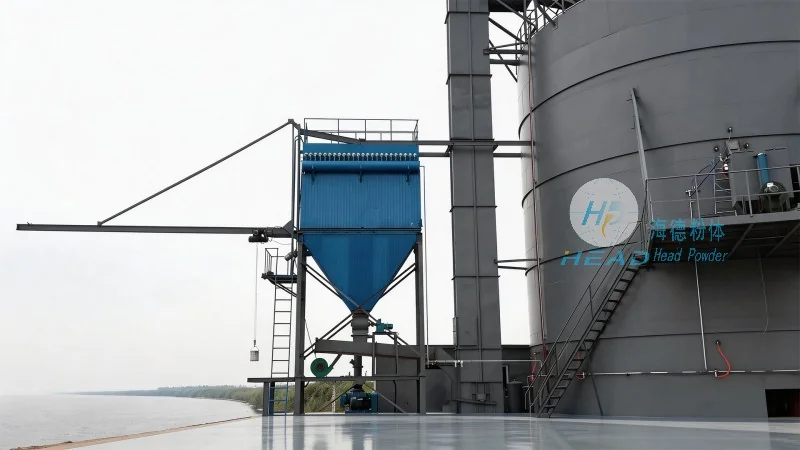
The core components of the paddy husk ash pneumatic conveying system include the material hopper, air compressor, conveying pipeline, and material separator. The material hopper is responsible for storing and feeding the paddy husk ash into the system. It is equipped with a feeding mechanism that ensures a consistent flow of material into the conveying pipeline. The air compressor generates the necessary air pressure to move the material through the pipeline. The conveying pipeline is typically made of high-quality materials like stainless steel or plastic, designed to withstand the pressure and abrasive nature of the material being conveyed. The material separator, located at the end of the pipeline, separates the conveyed material from the air and returns the air to the compressor for recycling. This closed-loop system enhances energy efficiency and reduces operational costs.
Working Principle
The operation of the paddy husk ash pneumatic conveying system begins with the material being fed from the hopper into the conveying pipeline. The air compressor then supplies high-pressure air into the pipeline, creating a flow that carries the paddy husk ash particles along with it. As the material travels through the pipeline, it is continuously mixed with the air, ensuring uniform transportation. The material separator at the discharge end uses a combination of gravity and air pressure to separate the material from the air stream. The separated material is collected in a receiving container, while the air is recirculated back to the compressor. This process repeats continuously, allowing for a steady and efficient flow of paddy husk ash from the source to the destination. The system's design minimizes material loss and ensures that the conveyed material remains in good condition, making it suitable for various industrial applications such as power generation, cement production, or agricultural processing.
Advantages and Applications
HeadPowder's paddy husk ash pneumatic conveying system offers several advantages over traditional material handling methods. The system provides a dust-free environment, reducing the risk of respiratory issues and contamination in the workplace. It also minimizes material degradation due to reduced friction and impact during transportation. Additionally, the system is highly flexible, allowing for changes in the conveying route or capacity without significant modifications. The system is widely used in industries that handle bulk materials, including the power generation sector, where paddy husk ash is used as a fuel source. It is also applicable in cement production, where the ash is used as a supplementary cementitious material, and in agricultural processing, where it is used as a fertilizer or animal feed additive. The system's efficiency and reliability make it an essential component in modern industrial operations, contributing to improved productivity and reduced operational costs.