

The Operation Process and Working Principle of Cement Fly Ash Pneumatic Conveying
For industrial applications involving the transport of cement and fly ash, pneumatic conveying systems offer an efficient and reliable solution. This article explores the operation process and working principle of such systems, highlighting the key components and mechanisms that enable the smooth transfer of these materials. The discussion will also touch upon the expertise of Shandong HeadPowder Engineering Co., Ltd., a leading provider in this field, known for their advanced engineering solutions tailored to industrial needs.

Understanding Pneumatic Conveying Systems
Pneumatic conveying systems utilize air or gas to transport bulk materials like cement and fly ash from one location to another. These systems are widely used in the cement industry due to their ability to handle fine powders and abrasive materials with minimal wear and tear. The core principle involves creating a pressure differential to move the material through a pipeline, ensuring efficient and continuous operation.
Key Components of a Pneumatic Conveying System
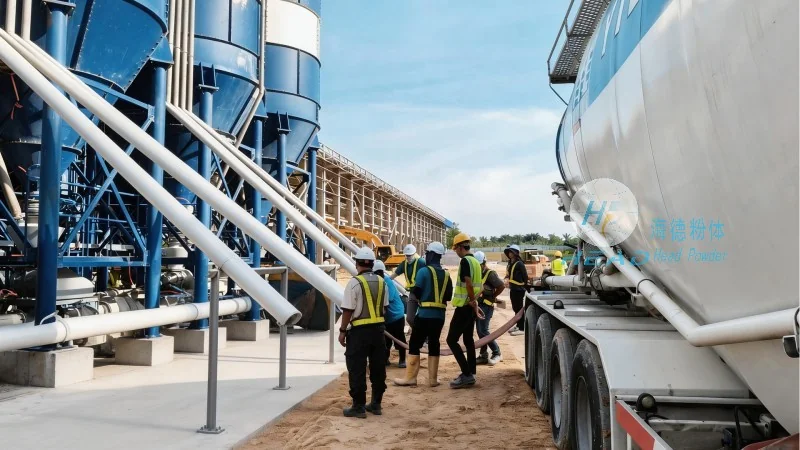
The operation of a cement and fly ash pneumatic conveying system relies on several critical components. These include the material feed hopper, which holds the bulk material and allows for controlled discharge; the air compressor or blower, which generates the necessary airflow to move the material; the conveying line, typically made of stainless steel or other corrosion-resistant materials to withstand the abrasive nature of cement and fly ash; and the control valves and sensors that regulate the flow and pressure within the system.

The Working Principle: From Hopper to Discharge
The process begins with the material being fed into the hopper from a storage silo or bin. As the material accumulates, it is drawn into the conveying line by the airflow generated by the compressor. The air, moving at high velocity, entrains the particles of cement and fly ash, forming a slurry-like mixture that travels through the pipeline. The system may employ different conveying modes, such as dilute phase or dense phase, depending on the material characteristics and distance to be covered. Dilute phase systems use higher air velocities to transport material over longer distances, while dense phase systems use lower velocities and higher pressure to move material more slowly and with less segregation.
Efficiency and Control in Industrial Applications
Efficiency is a key factor in the operation of pneumatic conveying systems for cement and fly ash. The system must maintain consistent airflow and pressure to ensure reliable material transfer without clogging or excessive wear. Shandong HeadPowder Engineering Co., Ltd. specializes in designing and manufacturing customized pneumatic conveying solutions that optimize performance and reduce operational costs. Their expertise lies in selecting the appropriate components, such as high-efficiency blowers and robust conveying lines, to handle the specific demands of cement and fly ash transport.
Maintenance and Longevity of Pneumatic Conveying Systems
Regular maintenance is crucial to ensure the longevity and efficiency of pneumatic conveying systems. Components like air filters, check valves, and material feeders require periodic inspection and cleaning to prevent blockages and maintain optimal performance. Shandong HeadPowder Engineering Co., Ltd. provides comprehensive maintenance services and technical support to their clients, ensuring that the systems operate at peak efficiency throughout their service life.
Conclusion: Reliable Solutions for Cement and Fly Ash Transport
Pneumatic conveying systems represent a sophisticated and efficient method for transporting cement and fly ash in industrial settings. By understanding the operation process and working principle, as well as leveraging the expertise of companies like Shandong HeadPowder Engineering Co., Ltd., industries can achieve reliable, cost-effective material handling solutions. The combination of advanced engineering and careful system design ensures that these systems meet the demands of modern cement production and processing, providing a sustainable and efficient approach to material transport.