

Operation Process and Working Principle of High-Temperature Fine Ash Material Conveying Equipment
High-temperature fine ash material conveying equipment is essential in industrial settings, particularly in power generation and related facilities where hot, fine particulate materials are handled. This equipment is engineered to safely and efficiently transport materials like fly ash and bottom ash, which often exist at elevated temperatures ranging from 200°C to 800°C. The following sections detail the operation process and working principles of such equipment, alongside key information about HeadPowder, a leading manufacturer in this field.

Overview of High-Temperature Fine Ash Material Conveying Equipment
High-temperature fine ash material conveying systems are designed to address the unique challenges posed by hot, abrasive materials. Unlike conventional conveying equipment, these systems incorporate heat-resistant materials and specialized components to withstand the harsh conditions of material transport. The equipment is typically constructed with stainless steel, alloy steel, or other heat-resistant alloys for the conveyor mechanism and housing, ensuring durability and minimal degradation over time. Insulation layers, such as ceramic fiber or mineral wool, are applied to the housing to maintain temperature control and prevent heat loss to the environment.
Key Components and Their Functions
The high-temperature fine ash material conveying system comprises several critical components, each with a specific role in the overall operation. The primary components include the feed hopper or inlet, which receives the material from the source (e.g., a boiler or ash storage silo); the conveyor mechanism (such as a screw conveyor or pneumatic duct system); the heat-resistant seals and bearings to prevent heat transfer and mechanical wear; and the discharge outlet for transporting the material to its destination. The screw conveyor, for example, uses rotating screws to push material forward, while pneumatic systems utilize compressed air to suspend and transport particles through ducts. Each component is engineered to handle the high temperatures and abrasive nature of fine ash, ensuring reliable performance and longevity.
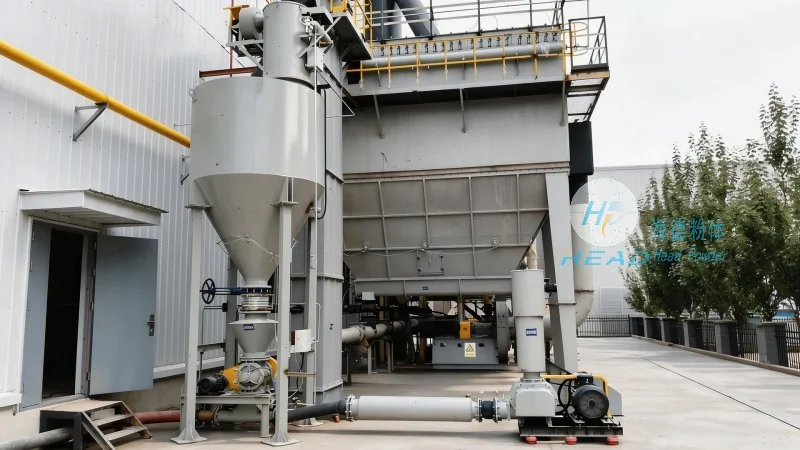
Operation Process of the Conveying Equipment
The operation process of high-temperature fine ash material conveying equipment involves a series of sequential steps, each carefully controlled to ensure safe and efficient material transport. The process begins with the material being fed into the hopper from the source. The material then flows into the conveyor mechanism, which may be a screw or pneumatic system, depending on the design. In a screw conveyor, the rotating screws create a thrust force that moves the material forward. In a pneumatic system, high-pressure air or gas propels the fine ash particles through the ducts. Temperature sensors and monitoring systems are integrated to track material temperature and equipment performance, allowing for real-time adjustments to maintain optimal conditions. The material is discharged from the outlet into a collection bin or further processing unit, completing the transport cycle.
Working Principle of the Conveying Equipment
The working principle of high-temperature fine ash material conveying equipment is based on the physical properties of the material and the mechanical or pneumatic forces applied to move it. For mechanical systems like screw conveyors, the principle involves the rotation of screws to generate a thrust force that pushes the material forward. The screws are typically smooth and made of heat-resistant materials to minimize friction and wear. The housing is insulated to retain heat and prevent heat loss. In pneumatic conveying systems, the principle relies on creating a pressure differential using compressed air or gas, which suspends the fine ash particles and transports them through the ducts. The air velocity is carefully controlled to ensure the material is fully suspended and avoids clogging. Cyclone separators or filters may be used to separate the material from the air and collect it in the discharge bin.

Manufacturer Information: HeadPowder
HeadPowder, a division of Shandong HeadPowder Engineering Co., Ltd., is a leading manufacturer of high-temperature fine ash material conveying equipment. The company is headquartered in Shandong, China, and specializes in providing customized solutions for industrial material handling needs. HeadPowder's engineering team utilizes advanced technologies and materials to develop equipment that can withstand harsh conditions, ensuring durability and minimal maintenance. The company focuses on client-specific requirements, offering products that enhance operational efficiency and safety in demanding industrial environments.

Applications and Benefits
High-temperature fine ash material conveying equipment is widely used in power generation, cement production, and waste management industries. The equipment offers several benefits, including improved safety by reducing manual handling of hot materials, increased efficiency through minimized downtime and maintenance, and cost savings by optimizing material transport processes. Additionally, the equipment is designed with environmental considerations, such as dust collection systems to minimize emissions and reduce the impact on the surroundings.
Conclusion
High-temperature fine ash material conveying equipment is a critical component in industrial processes that handle hot, fine particulate materials. The operation process and working principles of such equipment are designed to ensure safe and efficient material transport, with components engineered to withstand harsh conditions. HeadPowder, based in Shandong, China, provides high-quality equipment that meets the specific needs of clients, offering reliable performance and durability. By understanding the operation and working principles of this equipment, industrial facilities can optimize their material handling processes and improve overall operational efficiency.