

Operation Process and Working Principle of Polypropylene Granule Pneumatic Conveying Lines
This document delves into the operation process and working principle of polypropylene granule pneumatic conveying lines. Such systems are pivotal in modern industrial operations, particularly in sectors dealing with bulk polypropylene granules. The focus here is on the technical intricacies, the components involved, and the step-by-step functionality of these systems, providing a comprehensive understanding for users and potential clients.

Company Overview: HeadPowder
The insights shared are grounded in the expertise of Shandong HeadPowder Engineering Co., Ltd., a prominent player in the material handling industry. HeadPowder specializes in the design, fabrication, and installation of pneumatic conveying systems tailored to diverse industrial needs. Headquartered in Shandong, China, the company has established a strong reputation for delivering high-quality, durable, and efficient solutions that meet stringent industry standards.
Understanding Pneumatic Conveying Technology for Polypropylene Granules
Pneumatic conveying represents a sophisticated method of transporting bulk materials, including polypropylene granules, by utilizing compressed air as the primary conveying medium. Unlike traditional mechanical systems that rely on belts, screws, or buckets, pneumatic systems leverage air pressure to move materials through a pipeline. This approach offers distinct advantages, such as reduced maintenance requirements, lower energy consumption, and the ability to handle materials that are challenging to transport via mechanical means.
Key Components and Their Roles in the System
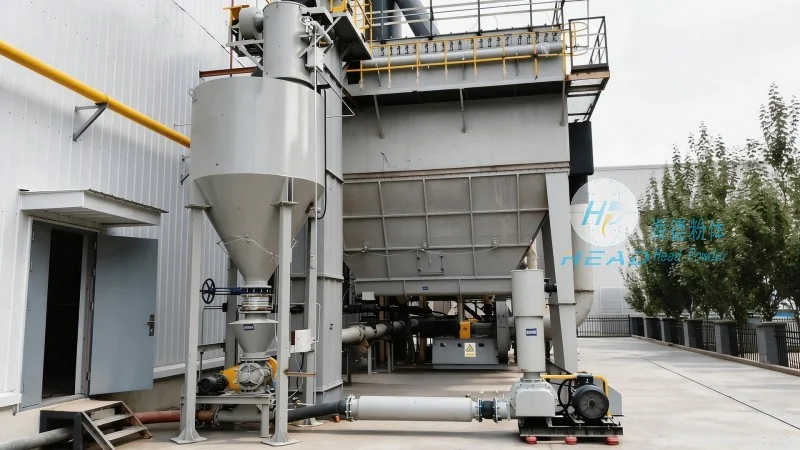
A typical polypropylene granule pneumatic conveying line comprises several critical components, each playing a vital role in the system's overall performance. The main components include the hopper or feeder, the air compressor, the conveying pipeline, the control valve, and the receiver or discharge hopper. The hopper serves as the storage and feeding unit, ensuring a consistent supply of polypropylene granules. The air compressor generates the necessary compressed air to create the pressure differential required for material transport. The control valve regulates the flow of air and material, maintaining optimal operation. The receiver collects the conveyed material at the end of the pipeline, where it is discharged into a storage or processing unit.

The Operation Process: From Loading to Discharge
The operation of a polypropylene granule pneumatic conveying line follows a systematic sequence of steps. Initially, the polypropylene granules are loaded into the hopper. The feeder then meters the material at a controlled rate into the pipeline. Simultaneously, the air compressor supplies compressed air into the pipeline. As the air and material mix, the compressed air pushes the granules forward through the pipeline. The material travels to the receiver at the end of the line, where it is discharged. This process can operate continuously, with the hopper and receiver feeding and receiving material as required, ensuring a steady flow of polypropylene granules throughout the system.

Working Principle: How Air Pressure Drives Material Transport
The working principle of a pneumatic conveying system is rooted in fluidization and pressure differential. When compressed air is introduced into the pipeline, it creates a pressure gradient between the hopper and the receiver. This pressure difference causes the polypropylene granules to become suspended in the air stream, allowing them to be carried along the pipeline. The velocity of the air and the size of the granules are critical factors that determine the efficiency of the conveying process. Proper system design ensures that the air velocity is sufficient to keep the granules in suspension without causing excessive wear on the pipeline or components, thereby maintaining system efficiency and longevity.
Benefits and Applications of This Conveying Solution
The adoption of polypropylene granule pneumatic conveying lines offers numerous benefits, making them a preferred choice for many industrial applications. These systems are particularly suitable for transporting materials over long distances or through complex layouts, as they can navigate bends and changes in elevation with ease. They are also ideal for handling materials that are sensitive to contamination or degradation, as the enclosed pipeline prevents exposure to external elements. Additionally, pneumatic conveying systems are relatively straightforward to install and maintain, contributing to lower operational costs and higher reliability. Industries that benefit from this technology include plastics manufacturing, chemical processing, food processing, and pharmaceuticals, where efficient and clean material transport is essential.