

Principle and Working Scenario Characteristics of Flocculant Dry Powder Pneumatic Conveyors
Shandong HeadPowder Engineering Co., Ltd., based in Shandong, China, specializes in the design and manufacturing of advanced pneumatic conveying systems. Among their product portfolio is the flocculant dry powder pneumatic conveyor, a critical equipment for handling flocculant powders efficiently and reliably. This article delves into the fundamental principles behind this technology and explores the specific working scenarios where it excels.

The Core Principle of Dry Powder Pneumatic Conveying
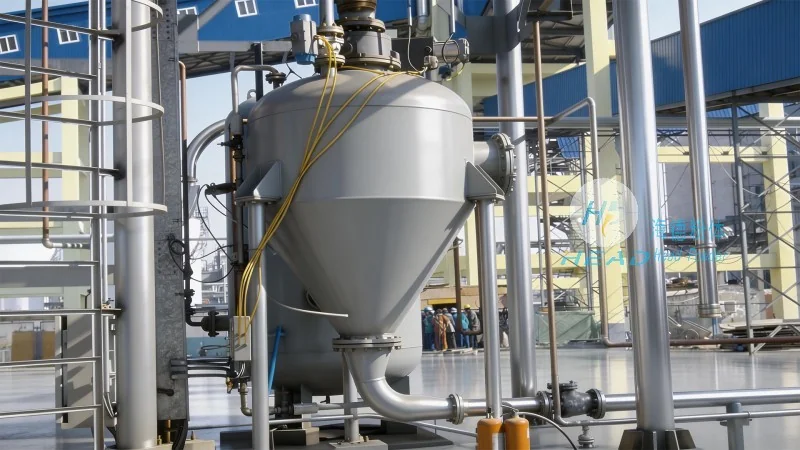
The flocculant dry powder pneumatic conveyor operates on the principle of pneumatic transport, where a gas stream (typically air) is used to move dry powder materials through a pipeline. In this system, the flocculant powder is introduced into a hopper or feeder, and then drawn into the conveying line by the air flow. The air acts as the motive force, carrying the powder particles through the system. The design incorporates features such as pressure or vacuum systems, depending on the application, to ensure consistent and controlled movement of the material. The key to effective operation lies in maintaining the right air-to-powder ratio, which balances the conveying velocity with the material's properties to prevent blockages and ensure smooth transport.

Working Scenario Characteristics
The flocculant dry powder pneumatic conveyor is particularly suited for industrial applications where flocculant powders need to be transported over medium to long distances with minimal loss and high efficiency. Common working scenarios include: (1) Water treatment plants, where flocculants are used to coagulate and settle suspended solids in wastewater. The conveyor must handle fine powders and operate in a controlled environment to avoid contamination. (2) Chemical manufacturing facilities, where flocculants are used as additives in the production of various chemicals. The system needs to maintain precise dosing and consistent flow to meet production requirements. (3) Mining and mineral processing operations, where flocculants are employed to enhance the separation of ore particles. The conveyor must be robust enough to handle abrasive materials and maintain high throughput. (4) Pharmaceutical and food processing industries, where flocculants are used as processing aids. The system must adhere to strict hygiene standards and ensure no cross-contamination. Each of these scenarios demands specific characteristics from the conveyor, such as high accuracy in dosing, low particle degradation, and the ability to operate in harsh or controlled environments.
Key Advantages in Practical Applications
When deployed in these working scenarios, the flocculant dry powder pneumatic conveyor offers several advantages over traditional methods like belt conveyors or manual handling. Firstly, it eliminates the need for mechanical contact with the material, reducing the risk of contamination and degradation. Secondly, it provides precise control over the flow rate and dosage, which is crucial for processes that require exact amounts of flocculant. Thirdly, the system is compact and can be integrated into existing production lines, saving space and reducing installation costs. Additionally, it minimizes material loss and dust emissions, contributing to a cleaner and safer working environment. These advantages make the flocculant dry powder pneumatic conveyor an ideal choice for industries where efficiency, accuracy, and hygiene are paramount.