

Working Principle and Features of Pneumatic Conveying Systems for Glass Particle Materials
HeadPowder, a leading manufacturer based in Shandong, China, specializes in the design and production of advanced pneumatic conveying systems tailored for handling glass particle materials. These systems are engineered to efficiently transport glass particles from one location to another, offering a reliable solution for industries that require precise and controlled material movement. This article explores the working principle and key features of such systems, highlighting their applications and benefits.

The Working Principle of Pneumatic Conveying Systems for Glass Particles
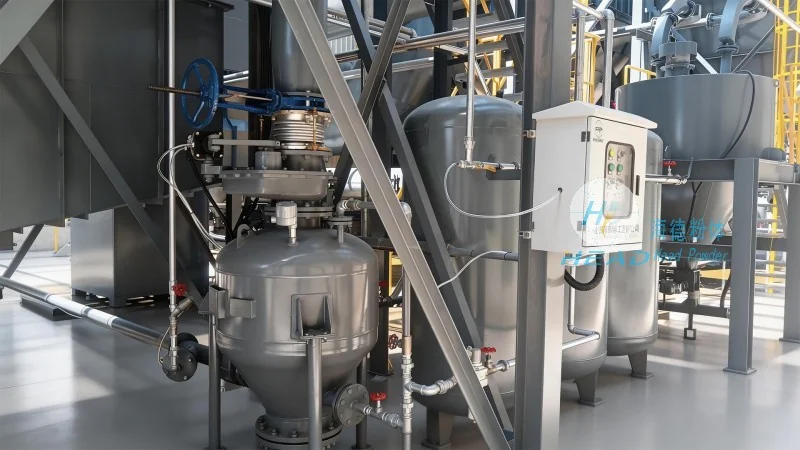
The core of a pneumatic conveying system for glass particles involves the use of air or gas to transport the material through a pipeline. The process typically begins with the material being fed into a hopper or feeder, where it is then introduced into the conveying line. A fan or blower generates the necessary airflow, creating a pressure differential that propels the glass particles forward. The system can operate under either positive or negative pressure, depending on the specific requirements of the application. Positive pressure systems push the material through the pipeline using compressed air, while negative pressure systems draw the material in using suction. This dual capability allows for flexibility in different industrial settings, ensuring optimal performance for various glass particle sizes and types.
Key Features of Pneumatic Conveying Systems for Glass Particle Materials
HeadPowder's pneumatic conveying systems for glass particles are characterized by several advanced features that enhance their efficiency and reliability. One of the primary features is the ability to handle a wide range of glass particle sizes, from fine powders to larger chunks, without causing blockages or damage to the particles. The systems are equipped with specialized hopper designs and feeder mechanisms that ensure consistent material flow, preventing clogging and maintaining uniform particle distribution. Additionally, the conveying lines are constructed from materials resistant to the corrosive and abrasive nature of glass particles, such as stainless steel or high-grade plastics, which prolongs the system's lifespan and reduces maintenance costs. Another notable feature is the integration of monitoring and control systems, allowing operators to track the system's performance in real-time and adjust parameters as needed. This feature enhances operational safety and ensures that the system operates within optimal parameters, minimizing downtime and maximizing productivity.

Applications and Benefits in Industrial Settings
Pneumatic conveying systems for glass particles find extensive applications in various industries, including glass manufacturing, pharmaceuticals, and food processing. In glass manufacturing, these systems are crucial for transporting raw materials like sand, soda ash, and limestone to the production lines, ensuring a continuous and controlled supply of ingredients. The systems also facilitate the movement of finished glass products from processing units to storage or packaging areas, streamlining the production workflow. In the pharmaceutical and food industries, the systems are used to handle glass containers and powders, providing a hygienic and contamination-free transport method that meets stringent quality standards. The benefits of using these systems include improved safety by eliminating manual handling of glass particles, reduced labor costs due to automated operation, and enhanced product quality through precise material control. Furthermore, the systems contribute to environmental sustainability by minimizing dust emissions and reducing the need for manual handling, which can lead to workplace injuries.

Conclusion and Company Overview
HeadPowder Engineering Co., Ltd., based in Shandong, China, stands as a trusted provider of high-quality pneumatic conveying systems for glass particle materials. By leveraging advanced engineering and materials, the company ensures that its systems deliver reliable performance, efficient material handling, and long-term durability. The working principle of these systems, combined with their key features, makes them an ideal solution for industries seeking to optimize their material transport processes. With a commitment to innovation and customer satisfaction, HeadPowder continues to develop cutting-edge solutions that meet the evolving needs of the glass and related industries.