

Operation Process and Working Principle of Pneumatic Conveying Equipment for Bone Powder Materials
HeadPowder, a leading manufacturer based in Shandong, China, specializes in the design and production of advanced pneumatic conveying systems tailored for bone powder materials. This article provides a detailed overview of the operation process and working principles of such equipment, highlighting its efficiency and reliability in material handling applications.

Understanding Pneumatic Conveying Systems
Pneumatic conveying equipment utilizes air or gas to transport bulk materials like bone powder through a pipeline system. The technology offers a dust-free, hygienic, and efficient method for moving materials, which is particularly important in industries where material purity and contamination control are critical. The system typically consists of a hopper, a conveyor line, and a receiver, all connected by a network of pipes.
Key Components of the Pneumatic Conveying Equipment
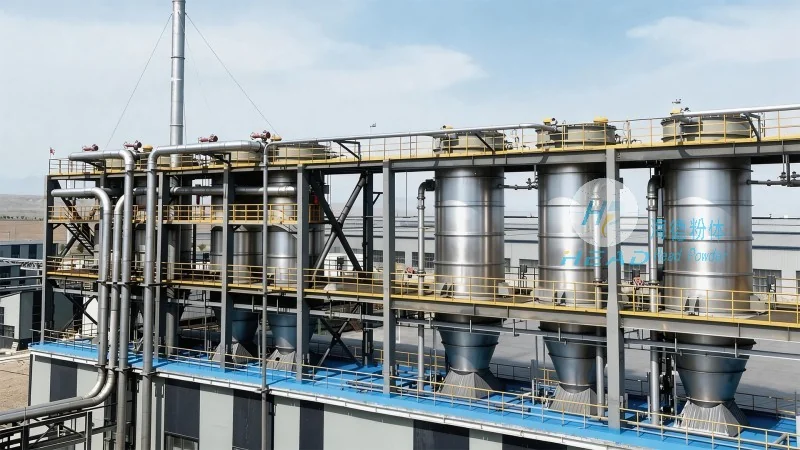
The core components of the system include the material hopper, which stores the bone powder and feeds it into the conveyor line. The hopper is equipped with a feeder mechanism, such as a rotary valve or a screw feeder, that controls the flow rate of the material. The conveyor line is the main pipeline where compressed air or gas is introduced to create a flow that propels the bone powder particles. The receiver, or discharge hopper, collects the material at the end of the pipeline, completing the transport process.

Operation Process of the Pneumatic Conveying Equipment
The operation process begins with the loading of bone powder into the material hopper. The feeder mechanism then regulates the discharge of the material into the conveyor line. Compressed air is supplied to the pipeline, creating a high-velocity airflow that entrains the bone powder particles. As the air flows through the pipeline, it carries the material to the receiver, where the air is separated from the material and either vented or recycled. The receiver collects the bone powder, which can then be further processed or stored.
Working Principle of the Pneumatic Conveying Equipment
The working principle is based on the principle of fluidization and particle suspension. When compressed air is introduced into the pipeline at a sufficient velocity, it creates a turbulent flow that suspends the bone powder particles in the air stream. This suspension allows the material to be transported over long distances without the need for mechanical components like belts or buckets, which can cause contamination or wear. The system operates under pressure, with the air pressure maintained at a level that ensures the material is fully entrained and transported efficiently.
Advantages of Using Pneumatic Conveying for Bone Powder Materials
Using pneumatic conveying equipment for bone powder materials offers several advantages. Firstly, it provides a dust-free and hygienic environment, which is essential in food and pharmaceutical industries where contamination control is paramount. Secondly, the system is highly efficient, with minimal material loss and low maintenance requirements. Additionally, the equipment can handle a wide range of material characteristics, including varying particle sizes and moisture content, making it versatile for different applications. The ability to transport materials over long distances without intermediate handling also improves operational efficiency and reduces labor costs.
Applications and Industries
The pneumatic conveying equipment for bone powder materials is widely used in various industries, including animal feed production, pharmaceutical manufacturing, and food processing. In animal feed production, the equipment is used to transport bone meal, a key ingredient in feed formulations, from storage silos to processing lines. In pharmaceutical manufacturing, the system ensures the safe and hygienic transport of bone powder used in dietary supplements or medicinal products. The equipment is also used in food processing facilities to handle bone powder used in the production of meat products or nutritional supplements.
Conclusion
HeadPowder's pneumatic conveying equipment for bone powder materials represents a reliable and efficient solution for material handling in various industries. By understanding the operation process and working principles of such equipment, users can optimize their material transport processes, improve productivity, and maintain high standards of hygiene and purity. With its advanced design and robust construction, the equipment from Shandong HeadPowder Engineering Co., Ltd. is a trusted choice for businesses seeking to enhance their material handling capabilities.