

Operation Process and Working Principle of Denitrification Urea Material Conveying Line
Denitrification urea material conveying lines are critical components in industrial processes that require efficient and reliable transportation of urea, a key chemical used in various applications such as fertilizer production and environmental control. These systems are designed to handle urea under conditions that ensure minimal degradation and optimal performance, making them indispensable in modern industrial settings. The operation of such lines involves a series of integrated mechanisms that work in tandem to achieve seamless material transfer, from storage to processing or application points.

Overview of Denitrification Urea Material Conveying Lines
Denitrification urea material conveying lines are specialized systems engineered to transport urea, a nitrogen-rich compound, through various stages of industrial processes. These lines are typically used in power plants, chemical manufacturing facilities, and environmental treatment systems where urea is employed for denitrification purposes. The primary goal of these conveying lines is to ensure the safe and efficient movement of urea from storage silos or bulk containers to the points of use, such as reactors or injection systems. The design of these lines incorporates features that address the unique properties of urea, including its hygroscopic nature and potential for dust generation, to maintain operational efficiency and safety.
Key Components and Their Roles
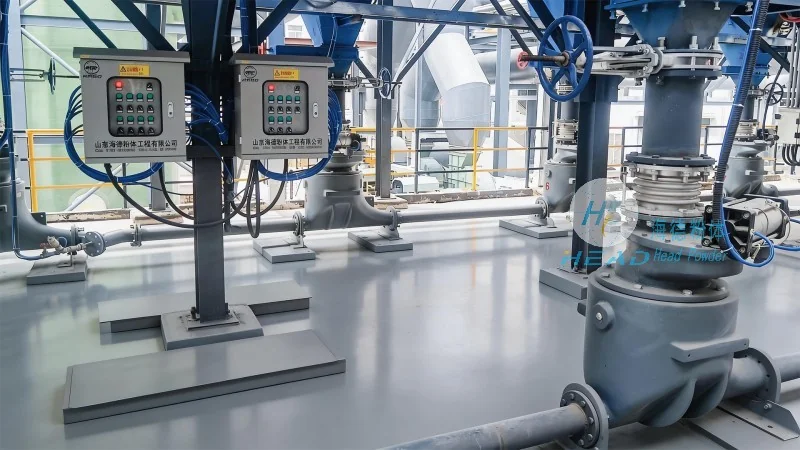
The denitrification urea material conveying line consists of several key components that work together to facilitate material transport. These components include storage silos or hoppers, feeding mechanisms (like screw feeders or rotary valves), conveyor systems (such as pneumatic or mechanical conveyors), and control systems. Each component plays a crucial role in the overall operation. For instance, the storage silos are designed to hold large quantities of urea while minimizing moisture absorption, which can affect the material's quality. The feeding mechanisms ensure a consistent and controlled flow of urea into the conveyor system, preventing blockages and ensuring smooth operation. The conveyor systems, whether pneumatic (using air pressure to move material) or mechanical (using belts or screws), are selected based on the specific requirements of the application, such as the distance to be covered and the material's characteristics. The control systems monitor and regulate the entire process, ensuring that the flow rate, pressure, and other parameters remain within optimal ranges to prevent system failures or inefficiencies.
Operation Process of the Conveying Line
The operation of a denitrification urea material conveying line begins with the loading of urea into the storage silo. The urea is then discharged from the silo into the feeding mechanism, which regulates the flow rate. The material is then transferred to the conveyor system, which moves it to the processing or injection point. In a pneumatic conveying system, for example, the urea is drawn into a pipeline using air pressure, and the air-urea mixture travels through the system to the destination. The system includes components like air blowers, filters, and cyclones to maintain the quality of the air and the material. In a mechanical conveying system, such as a screw conveyor, the urea is moved along a rotating screw, which pushes the material forward. The operation is controlled by a central control panel that monitors the flow rate, pressure, and other parameters, allowing for adjustments to be made in real-time to maintain optimal performance.
Working Principle of the Conveying Line
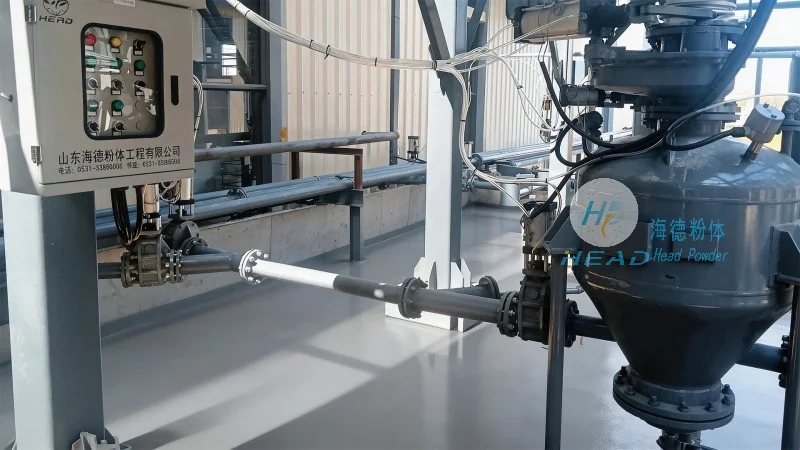
The working principle of a denitrification urea material conveying line is based on the principles of fluid dynamics and mechanical motion. In pneumatic conveying systems, the urea is suspended in a stream of air and transported through the pipeline. The air pressure creates a flow that moves the material, and the system uses filters and cyclones to separate the urea from the air, ensuring that the material is delivered to the destination without contamination. The mechanical conveying systems, on the other hand, rely on the physical movement of the urea along a conveyor, such as a screw or belt, which is driven by a motor. The control systems in both types of systems monitor the flow rate and pressure, ensuring that the material is transported at the desired speed and pressure. The working principle also involves the use of sensors and alarms to detect any abnormalities, such as blockages or pressure drops, and to alert operators to take corrective action.
Company Information: Shandong HeadPowder Engineering Co., Ltd.
Shandong HeadPowder Engineering Co., Ltd. is a leading manufacturer and supplier of denitrification urea material conveying lines and related industrial equipment. The company is headquartered in Shandong, China, and has a strong reputation for providing high-quality, reliable, and efficient solutions for industrial material handling needs. HeadPowder specializes in designing and manufacturing custom conveying systems that meet the specific requirements of its clients, ensuring that the systems are tailored to the unique conditions of each application. The company's products are known for their durability, efficiency, and ease of maintenance, making them a preferred choice for industries that require consistent and reliable performance.