

Operation Process and Working Principle of Foam Granule Material Conveying Lines
Foam granule material conveying lines are essential in industrial settings for efficiently transporting lightweight and irregularly shaped foam granules. These systems are designed to handle materials that are prone to sticking or require gentle handling, ensuring minimal product damage during the conveying process. The operation of such lines involves a series of integrated components that work in harmony to achieve smooth material transfer from the source to the destination.

Company Overview: Shandong HeadPowder Engineering Co., Ltd.
As a leading manufacturer in the field, Shandong HeadPowder Engineering Co., Ltd. specializes in developing and supplying high-quality conveying solutions tailored to the needs of various industries. With a strong presence in China, particularly in Shandong, the company leverages advanced engineering and manufacturing capabilities to deliver reliable and efficient foam granule conveying systems. The company’s commitment to quality and customer satisfaction has established it as a trusted partner for businesses seeking robust material handling solutions.
Key Components of Foam Granule Conveying Lines
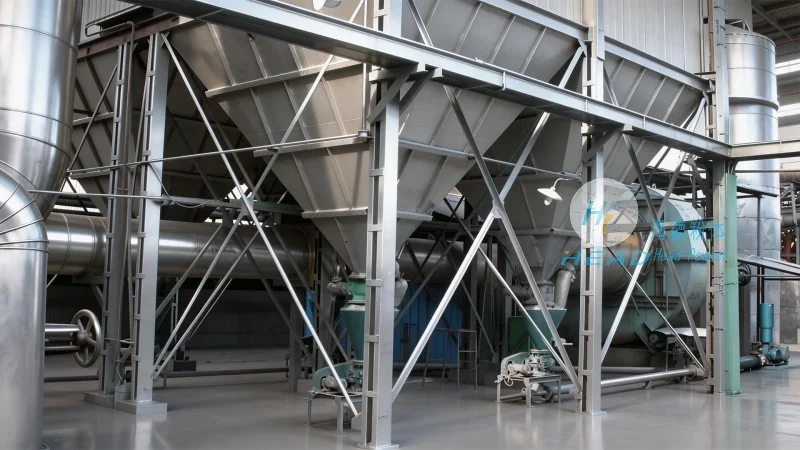
Foam granule conveying lines typically consist of several core components that ensure optimal performance. These include the hopper or feeding mechanism, which feeds the granules into the system; the conveyor itself, which may use belt, screw, or pneumatic technology depending on the material characteristics; and the control system, which monitors and regulates the operation. Each component is designed to handle the unique properties of foam granules, such as their low density and tendency to float or stick, ensuring that the conveying process is both efficient and gentle on the product.
The Operation Process of Foam Granule Conveying Lines
The operation of a foam granule material conveying line begins with the loading of the granules into the hopper. The hopper is equipped with a feeding device, such as a rotary valve or a screw feeder, which controls the flow rate of the material into the conveyor. Once the granules are fed into the conveyor, they are transported along the path set by the system. The conveyor may use a belt that moves at a controlled speed, or a screw that pushes the material forward, depending on the design. The material is then discharged at the end of the line, where it is collected in a storage bin or transferred to the next processing stage. Throughout the operation, the control system continuously monitors parameters such as speed, pressure, and material level, ensuring that the process runs smoothly and without interruptions.

Working Principle of Foam Granule Conveying Lines
The working principle of foam granule conveying lines is based on the mechanical transfer of material from one point to another. The system utilizes a combination of gravity, friction, and controlled motion to move the granules. For example, a belt conveyor uses the friction between the belt and the granules to pull them along the path, while a screw conveyor uses the rotation of the screw to push the material forward. In pneumatic conveying systems, compressed air is used to create a flow that carries the granules through the line. The control system plays a crucial role in maintaining the stability of the process by adjusting the speed of the conveyor, the pressure of the air, or the flow rate of the material. This ensures that the conveying line operates efficiently and safely, minimizing energy consumption and maximizing throughput.

Advantages of Foam Granule Conveying Lines
Foam granule conveying lines offer several advantages over traditional material handling methods. Firstly, they are designed to handle lightweight and irregularly shaped materials without causing damage, which is critical for foam products that are sensitive to mechanical stress. Secondly, the systems are highly efficient, with minimal downtime and low maintenance requirements. The use of advanced control systems allows for precise regulation of the conveying process, ensuring consistent material flow and reducing waste. Additionally, the modular design of these lines allows for easy customization to meet the specific needs of different applications, making them versatile and adaptable to various industrial settings.
Applications and Industries
Foam granule conveying lines are widely used in various industries, including automotive, construction, and packaging. In the automotive industry, they are used to transport foam components for seating and insulation. In construction, they handle foam insulation materials for building applications. In packaging, they convey foam packaging materials for product protection. The versatility of these systems makes them suitable for a wide range of applications, and their ability to handle different types of foam granules ensures that they can be adapted to meet the specific requirements of each industry.