

Comparison of Positive Pressure and Negative Pressure Conveying for Desulfurization and Dust Removal
Gas-solid conveying technology plays a crucial role in the handling of desulfurization and dust removal slag, which is a byproduct of flue gas treatment in power plants and industrial facilities. Among the various methods available, positive pressure conveying and negative pressure conveying are two primary approaches that have been widely adopted. This article provides a detailed comparison of these two conveying methods, focusing on their operational principles, advantages, disadvantages, and practical applications, to help industry professionals make informed decisions when selecting the most suitable system for their specific needs.

Overview of Desulfurization and Dust Removal Slag Handling
Desulfurization and dust removal slag, also known as FGD (Flue Gas Desulfurization) slurry or fly ash, is a fine particulate material that requires efficient and reliable transport from the collection point to the storage or disposal site. The choice of conveying method significantly impacts the overall efficiency, cost, and environmental compliance of the slag handling process. Positive pressure conveying and negative pressure conveying represent two distinct approaches to achieving this goal, each with its own set of characteristics and suitability for different scenarios.
Positive Pressure Conveying: Principles and Characteristics
Positive pressure conveying, also known as pressure pneumatic conveying, operates by forcing air or gas through a pipeline at a pressure higher than the ambient air pressure. The material is suspended in the air stream and transported to the destination. This method typically uses a positive displacement blower or a rotary lobe pump as the air source, which provides a consistent and controllable flow rate.
Key advantages of positive pressure conveying include high conveying capacity, ability to handle abrasive and corrosive materials, and the capability to transport materials over long distances with relatively low energy consumption. The system is also less prone to blockages compared to negative pressure systems, as the positive pressure helps maintain the flow of material through the pipeline. However, it has some limitations, such as the need for sealed pipelines to prevent dust leakage and the potential for higher maintenance costs due to the use of high-pressure components.

Negative Pressure Conveying: Principles and Characteristics
Negative pressure conveying, or vacuum pneumatic conveying, works by creating a vacuum in the pipeline, which draws the material and air mixture into the system. The material is then transported to the destination under the pressure difference between the intake and the discharge point. This method commonly employs a rotary vane vacuum pump or a roots blower as the air source.
Advantages of negative pressure conveying include lower initial investment costs, as it often requires simpler equipment and less extensive pipeline sealing. It is also suitable for conveying materials over shorter distances and can handle more sensitive or fine materials without causing excessive particle breakage. However, negative pressure systems are more susceptible to blockages, especially with high moisture content or sticky materials, and may require more frequent maintenance to prevent dust accumulation in the vacuum pump and pipeline.
Comparison of Positive and Negative Pressure Conveying
When comparing positive and negative pressure conveying for desulfurization and dust removal slag, several factors need to be considered. The choice is often determined by the distance of the conveying line, the material properties (such as particle size, moisture content, and abrasiveness), and the overall system layout.

For long-distance conveying (typically over 100 meters), positive pressure conveying is generally more efficient and reliable. The higher pressure ensures consistent material flow and reduces the risk of blockages, making it suitable for large-scale power plants where the slag needs to be transported from the FGD unit to a remote storage facility. On the other hand, negative pressure conveying is more appropriate for shorter distances (usually under 50 meters) and for applications where the material is more sensitive or where the initial cost is a critical factor. It is commonly used in smaller industrial facilities or for handling smaller volumes of slag.
Material properties also play a significant role in the selection. Positive pressure systems are better suited for abrasive or corrosive materials, as the high-pressure air helps to keep the material suspended and reduces wear on the pipeline. Negative pressure systems, while effective for fine and dry materials, may struggle with sticky or high-moisture content slag, which can lead to blockages and increased maintenance.
Energy consumption is another important consideration. Positive pressure conveying typically consumes more energy due to the need to maintain high pressure, but the efficiency gains in terms of capacity and reliability often offset this cost. Negative pressure systems are generally more energy-efficient for short distances but may require more frequent maintenance to keep the vacuum pump and pipeline clean.
Practical Applications and Case Studies
Both positive and negative pressure conveying systems have been successfully implemented in various industrial settings. For example, a large thermal power plant in China uses a positive pressure conveying system to transport desulfurization slag over a distance of 200 meters to a storage silo. The system has demonstrated high reliability, with minimal downtime and efficient material handling. In contrast, a small chemical plant employs a negative pressure conveying system to move fly ash from the dust collector to a disposal site, which is located within 30 meters of the source. The system has been cost-effective and suitable for the plant's operational scale.
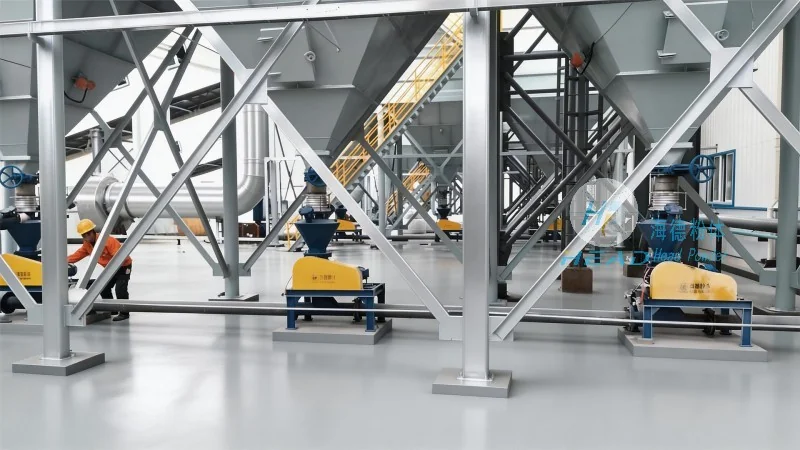
These case studies highlight the importance of matching the conveying method to the specific requirements of the application. The choice between positive and negative pressure conveying should be based on a thorough analysis of the material characteristics, conveying distance, and operational constraints.
Conclusion and Recommendations
Both positive pressure and negative pressure conveying are viable options for handling desulfurization and dust removal slag, each with its own set of advantages and limitations. Positive pressure conveying is generally preferred for long-distance, high-capacity applications with abrasive or corrosive materials, while negative pressure conveying is more suitable for shorter distances and for handling more sensitive or fine materials.
When selecting a conveying system, it is essential to consider factors such as the distance of the conveying line, the properties of the material, energy consumption, and maintenance requirements. Consulting with experienced engineering firms, such as Shandong HeadPowder Engineering Co., Ltd., can provide valuable insights and help design a system that meets the specific needs of the facility.