

Operation Process and Working Principle of Air-Pneumatic Conveying System for Fine Powder Materials
HeadPowder, a leading engineering company based in Shandong, China, specializes in the design, manufacturing, and installation of advanced air-pneumatic conveying systems tailored for handling fine powder materials. These systems are engineered to efficiently transport dry powders and granular materials over long distances with minimal loss and high reliability. The following sections will detail the operational process and working principles of such systems, providing a comprehensive understanding of their functionality and benefits.
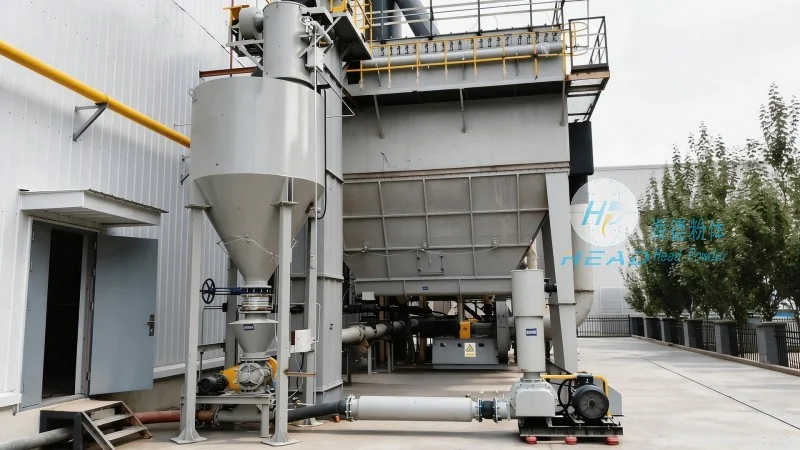
Key Components of the Air-Pneumatic Conveying System
The air-pneumatic conveying system for fine powder materials typically consists of several core components that work in tandem to ensure smooth material transport. These include the material hopper, feeder, air compressor, conveying pipeline, and discharge unit. Each component plays a critical role in the overall system performance. The material hopper is designed to store the fine powder, ensuring a consistent feed rate to the feeder. The feeder, often a rotary valve or a screw feeder, regulates the flow of material into the pipeline, preventing blockages and maintaining a steady supply. The air compressor generates the necessary pressure and airflow to move the material through the pipeline. The conveying pipeline, usually made of stainless steel or other corrosion-resistant materials, is designed to withstand the pressure and ensure efficient material transport. Finally, the discharge unit, such as a rotary valve or a dust collector, collects the material at the end of the pipeline, completing the transport process.

Operation Process of the Air-Pneumatic Conveying System
The operation of the air-pneumatic conveying system for fine powder materials involves a sequential process that ensures efficient and reliable material transport. The process begins with the loading of the fine powder into the material hopper. The feeder then regulates the flow of material from the hopper into the conveying pipeline. Simultaneously, the air compressor generates high-pressure air, which is introduced into the pipeline. The air and material mixture travels through the pipeline, with the air providing the necessary force to move the material. The conveying system can operate in either positive or negative pressure modes, depending on the application requirements. In positive pressure mode, the pipeline is pressurized, and the air pushes the material forward. In negative pressure mode, the pipeline is slightly under vacuum, and the air pulls the material. The system's control panel allows operators to adjust the air pressure, material feed rate, and other parameters to optimize performance. The discharge unit collects the material at the end of the pipeline, completing the transport process. The entire operation is monitored by sensors and control systems to ensure safety and efficiency.
Working Principle of the Air-Pneumatic Conveying System
The working principle of the air-pneumatic conveying system for fine powder materials is based on the interaction between the air flow and the material particles. The system utilizes the kinetic energy of the air to lift and transport the fine powder through the pipeline. The air compressor provides a continuous stream of air, which is mixed with the material in the hopper. The feeder then introduces the material into the pipeline, where the air flow entrains the particles, creating a suspension. The suspended material is then transported through the pipeline to the discharge point. The key to efficient operation is maintaining the correct air-to-material ratio, which ensures that the material is fully entrained and transported without blockages or degradation. The system's design, including the pipeline diameter, length, and material of construction, is critical to achieving optimal performance. Proper maintenance and regular inspections are also essential to ensure the system operates efficiently and safely.

Benefits and Applications of the Air-Pneumatic Conveying System
The air-pneumatic conveying system for fine powder materials offers several advantages over traditional material handling methods. These include high efficiency, low maintenance, and the ability to transport materials over long distances without the need for intermediate storage or handling. The system is also suitable for handling materials that are sensitive to moisture or contamination, as the enclosed pipeline prevents exposure to the environment. HeadPowder's air-pneumatic conveying systems are widely used in various industries, including chemical, pharmaceutical, food, and cement production. They are particularly useful for transporting fine powders such as cement, flour, and chemical powders, where traditional methods may be inefficient or impractical. The system's flexibility allows it to be customized to meet the specific requirements of each application, ensuring optimal performance and reliability.