

Operation Process and Working Principle of Loess Material Conveying
Shandong HeadPowder Engineering Co., Ltd. specializes in the design, manufacturing, and implementation of advanced material conveying solutions tailored for loess and similar earthy materials. As a leading provider in the field, the company's expertise lies in developing systems that ensure efficient, reliable, and safe transportation of loess from source to processing or storage facilities. This article delves into the operation process and working principle of loess material conveying systems, highlighting the key components and mechanisms that drive their functionality.

Key Components of Loess Material Conveying Systems
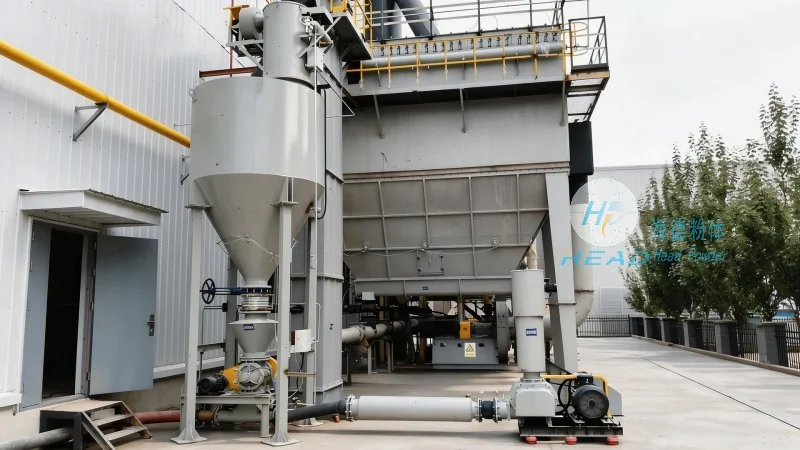
At the core of loess material conveying systems are several critical components that work in tandem to achieve seamless material transport. The primary equipment includes bulk material feeders, conveyor belts or screw conveyors, control panels, and safety mechanisms. The feeders are responsible for uniformly delivering loess into the conveyor system, preventing blockages and ensuring consistent flow. Conveyor belts, often made of durable materials resistant to abrasion and moisture, transport the material horizontally or at an incline. Screw conveyors are another common option, particularly for vertical or inclined transport, using rotating screws to push material forward. Control panels, equipped with sensors and automation software, monitor system performance, adjust speed, and trigger safety protocols when necessary. Additionally, safety features such as emergency stop buttons, overload protection, and material detection sensors are integrated to safeguard both personnel and equipment.

Operation Process of Loess Material Conveying
The operation process of loess material conveying systems begins with the intake of raw loess from a stockpile or storage silo. The material is first fed into a hopper or feeder, where it is broken down into smaller, manageable particles to prevent clogging. From the feeder, the loess is transferred to the conveyor system. For horizontal transport, a belt conveyor system is typically used, with the belt moving at a controlled speed to move the material along the designated path. The speed of the conveyor is adjusted based on the material's density, moisture content, and the required throughput. For vertical or inclined transport, a screw conveyor or a bucket elevator may be employed, which uses mechanical force to lift and move the material upward. The system continuously monitors the flow rate and pressure, ensuring that the conveyor operates within optimal parameters. When the material reaches the destination, such as a processing plant or a storage silo, it is discharged through a chute or outlet. The entire process is automated, with the control panel managing the sequence of operations, from start to finish, ensuring minimal human intervention and maximum efficiency.

Working Principle of Loess Material Conveying
The working principle of loess material conveying systems is based on the principles of mechanical transport and material flow dynamics. The system operates by converting the potential energy of the material (from its height or position) into kinetic energy, which is then used to move the material along the conveyor path. In belt conveyors, the material is placed on the moving belt and is carried forward by the friction between the belt and the material. The speed of the belt determines the rate of material transport, and the angle of inclination can be adjusted to control the flow rate. Screw conveyors, on the other hand, use a rotating screw to push the material forward. The pitch and diameter of the screw are designed to handle the specific characteristics of loess, such as its particle size and moisture content. The control system plays a crucial role in maintaining the balance between the material's flow rate and the conveyor's capacity. Sensors, such as load cells and level detectors, provide real-time data on the material's position and weight, allowing the system to adjust its operation accordingly. This closed-loop control ensures that the system operates efficiently, minimizing energy consumption and maximizing throughput. Additionally, the system is designed to handle varying loads and material conditions, making it adaptable to different industrial applications.
Advantages of Loess Material Conveying Systems
Loess material conveying systems offer several advantages over traditional manual or semi-automated methods. Firstly, they provide high throughput and consistent material flow, which is essential for large-scale operations. The automated control systems ensure that the conveyor operates at optimal speeds, reducing downtime and increasing productivity. Secondly, these systems are highly efficient in terms of energy consumption, as they use minimal power to transport large volumes of material. The use of durable materials for the conveyor components, such as high-strength belts and corrosion-resistant screws, reduces maintenance costs and extends the system's lifespan. Thirdly, the systems are designed with safety in mind, incorporating multiple safety features that protect both personnel and equipment from potential hazards. The integration of sensors and automation also minimizes the risk of accidents, such as material spills or equipment failure. Finally, loess material conveying systems are versatile and can be customized to meet the specific requirements of different industrial applications, from mining and construction to agriculture and waste management.
Conclusion
Loess material conveying systems, as exemplified by the solutions offered by Shandong HeadPowder Engineering Co., Ltd., represent a sophisticated and efficient approach to material transport. By combining advanced mechanical components with intelligent control systems, these systems ensure reliable and safe transportation of loess and similar earthy materials. The operation process, which involves precise material handling and automated control, is designed to maximize productivity while minimizing energy consumption and maintenance costs. As industries continue to demand higher efficiency and reliability in material handling, loess material conveying systems remain a critical component of modern industrial operations. With their adaptability and robust design, these systems are well-suited to meet the evolving needs of various sectors, ensuring sustainable and efficient material transport for years to come.