

Operation Process and Working Principle of the Sulfate Nickel Crystallization Material Conveying Sys
Shandong HeadPowder Engineering Co., Ltd., located in Shandong, China, specializes in the design and manufacturing of advanced material handling systems for various industrial applications. The Sulfate Nickel Crystallization Material Conveying System is a critical component in the production line for nickel sulfate, ensuring efficient and reliable transportation of crystallized nickel sulfate from the crystallization stage to subsequent processing or storage units.
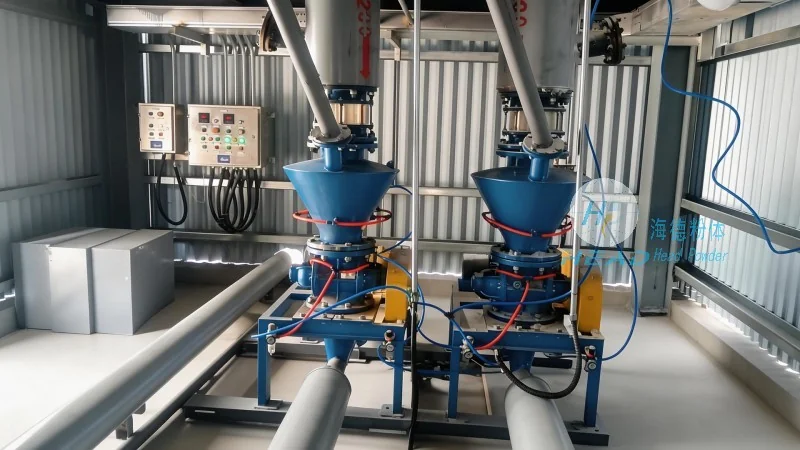
System Overview and Core Components
The Sulfate Nickel Crystallization Material Conveying System is engineered to handle the unique characteristics of nickel sulfate crystals, which are typically fine, hygroscopic, and prone to agglomeration. The system integrates several key components, including a crystallizer, a material discharge mechanism, a conveying device (such as a belt conveyor or screw conveyor), and a control system. Each component is designed to work in harmony to maintain the integrity of the crystallized material and ensure smooth operation throughout the process.

Operation Process: Step-by-Step Execution
The operation of the Sulfate Nickel Crystallization Material Conveying System begins with the completion of the crystallization process in the crystallizer. Once the nickel sulfate crystals have reached the desired size and concentration, they are discharged from the crystallizer into a hopper or collection bin. From there, the material is transferred to the conveying device. The conveying system then transports the crystallized material to the next stage of the production process, such as drying, packaging, or further chemical processing. The entire process is automated, with the control system monitoring parameters like flow rate, speed, and temperature to optimize performance and prevent issues like blockages or material degradation.
Working Principle: How the System Ensures Efficiency
The working principle of the Sulfate Nickel Crystallization Material Conveying System relies on the integration of mechanical and control technologies. The crystallizer, equipped with agitation and temperature control mechanisms, ensures uniform crystal formation. The discharge mechanism, often a rotary valve or a slurry pump, regulates the flow of the crystallized material into the conveying system. The conveying device, selected based on the material's properties (e.g., belt conveyors for bulk handling or screw conveyors for more precise control), moves the material through the system. The control system, typically a PLC (Programmable Logic Controller), manages the entire operation by receiving feedback from sensors (e.g., level sensors, speed sensors) and adjusting the conveying speed or discharge rate as needed. This closed-loop control ensures that the system operates at peak efficiency, minimizing downtime and maximizing throughput.

Key Advantages and Practical Applications
Shandong HeadPowder Engineering Co., Ltd. has developed the Sulfate Nickel Crystallization Material Conveying System to address the specific challenges of handling nickel sulfate crystals. The system offers several advantages, including high reliability, low maintenance requirements, and energy efficiency. It is designed to handle large volumes of material while maintaining the quality of the crystallized product, which is crucial for downstream applications such as battery production or chemical synthesis. The system's modular design allows for easy integration into existing production lines and can be customized to meet the specific needs of different industrial clients, ensuring optimal performance and cost-effectiveness.