

Working Principle and Characteristics of Dense Phase Material Conveying Lines
Understanding the working principle and key characteristics of dense phase material conveying lines is essential for industries that rely on efficient and reliable material handling solutions. These systems are designed to transport bulk materials with high efficiency, minimal product degradation, and reduced environmental impact compared to traditional pneumatic conveying methods.

About HeadPowder Engineering
HeadPowder, the professional manufacturer from Shandong, China, specializes in providing advanced material handling equipment. With years of experience in the industry, HeadPowder Engineering Co., Ltd. has established itself as a leading provider of dense phase material conveying solutions. The company’s headquarters is located in Shandong, China, where it develops and manufactures high-quality equipment tailored to meet diverse industrial needs.
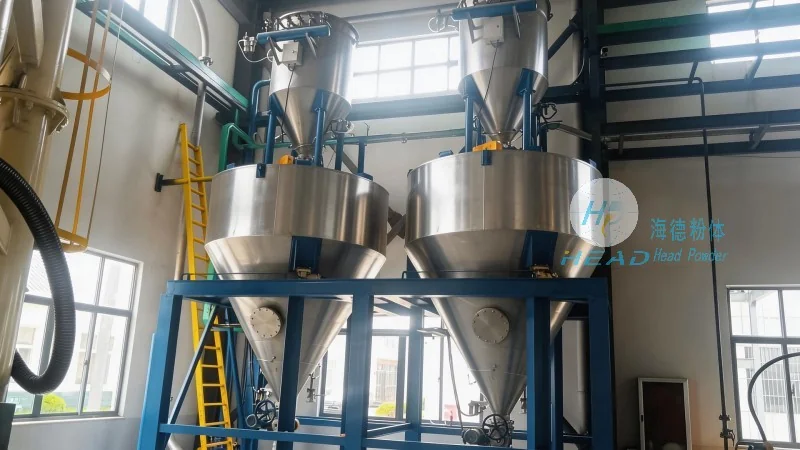
The Working Principle of Dense Phase Material Conveying Lines
Dense phase material conveying lines operate by creating a high-pressure environment that forces the material to move through the pipeline. Unlike dilute phase systems that use low pressure and high velocity, dense phase systems utilize a higher pressure and lower velocity, resulting in a more stable and controlled flow. The process typically involves a compressor or blower that generates the necessary pressure to push the material through the pipeline. The material is mixed with a small amount of air or gas, forming a dense slurry that travels through the system. This method ensures that the material is transported in a compact form, reducing the risk of segregation and product degradation.

Key Characteristics of Dense Phase Material Conveying Lines
Dense phase material conveying lines offer several advantages that make them ideal for various industrial applications. One of the primary characteristics is their ability to handle a wide range of materials, including powders, granules, and fine particles. The system’s design allows for the transportation of materials with varying properties, such as moisture content and particle size, without compromising the quality of the product. Another significant characteristic is the reduced product degradation, as the material is transported in a dense phase, minimizing friction and impact. This results in higher product integrity and lower maintenance costs. Additionally, dense phase conveying systems are more energy-efficient compared to traditional methods, as they require less air volume and lower pressure, leading to cost savings over time. The system also provides better control over the material flow, allowing for precise dosing and regulation. This is particularly important in applications where accurate material delivery is critical, such as in pharmaceutical, food, and chemical industries. Furthermore, the compact design of dense phase conveying lines reduces the footprint required for installation, making them suitable for facilities with limited space. The system’s ability to handle long distances and multiple points of discharge also enhances its versatility, allowing for flexible material distribution. Overall, dense phase material conveying lines are a reliable and efficient solution for bulk material handling, offering improved performance and reduced operational costs.