

Operation Process and Working Principle of Cast Iron Fume Pneumatic Conveying Line
For industrial applications involving the handling of cast iron fumes and dust, the cast iron fume pneumatic conveying line is a critical system designed to efficiently transport these materials from one location to another. This article will explore the detailed operation process and working principle of such a system, highlighting the key components and the step-by-step procedures involved in its operation.

Introduction to Cast Iron Fume Pneumatic Conveying Lines
The cast iron fume pneumatic conveying line, developed by Shandong HeadPowder Engineering Co., Ltd., is a specialized equipment used in foundries and metal processing facilities. It is engineered to handle the challenging characteristics of cast iron fumes and dust, which are often abrasive, heavy, and potentially hazardous. The system combines pneumatic conveying technology with advanced material handling mechanisms to ensure safe and efficient transport of these materials. The primary goal is to minimize the risk of dust exposure, improve workplace safety, and enhance the overall efficiency of material handling processes.
Key Components of the Cast Iron Fume Pneumatic Conveying System
The cast iron fume pneumatic conveying line consists of several essential components that work in tandem to achieve the desired material transport. These components include the material feed hopper, the air compressor or blower, the conveying pipeline, the control valves, and the discharge unit. Each component plays a crucial role in the overall operation of the system.
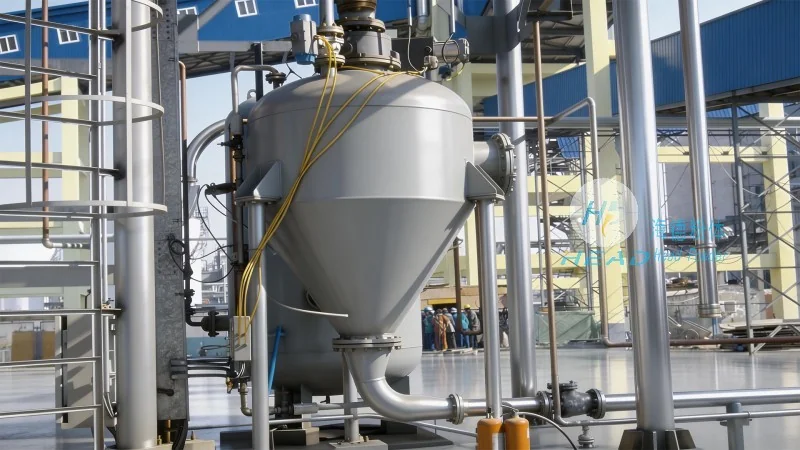
Firstly, the material feed hopper is responsible for storing and feeding the cast iron fumes and dust into the conveying system. It is typically equipped with a rotary valve or a screw feeder to control the flow rate of the material. The hopper is designed to handle the abrasive nature of cast iron particles, ensuring long-term durability and minimal wear. Secondly, the air compressor or blower provides the necessary air pressure to move the material through the pipeline. The choice of compressor depends on the specific requirements of the application, such as the material density, particle size, and the distance to be conveyed. Thirdly, the conveying pipeline is made of robust materials, such as stainless steel or high-grade plastic, to withstand the abrasive properties of cast iron fumes and prevent blockages. The pipeline is usually equipped with bends and elbows that are designed to minimize pressure loss and maintain the flow of material. Fourthly, the control valves are used to regulate the air flow and material flow, allowing for precise control over the conveying process. These valves can be automated or manually operated, depending on the operational needs. Finally, the discharge unit is responsible for releasing the material from the pipeline into the designated storage or processing area. It is designed to handle the high temperature and abrasive nature of cast iron fumes, ensuring safe and efficient discharge.
Operation Process of the Cast Iron Fume Pneumatic Conveying Line
The operation of the cast iron fume pneumatic conveying line involves a series of steps that ensure the smooth and efficient transport of materials. The process begins with the loading of the cast iron fumes and dust into the material feed hopper. The rotary valve or screw feeder then controls the flow rate of the material, feeding it into the conveying pipeline. Simultaneously, the air compressor or blower starts operating, generating the necessary air pressure to move the material. The air and material are then mixed in the pipeline, and the material is carried forward by the air flow. The conveying system is designed to maintain a consistent air flow rate and pressure, ensuring that the material is transported at an optimal speed without causing blockages or excessive pressure drops.

During the conveying process, the system continuously monitors the pressure and flow rate to ensure that the material is being transported efficiently. If any issues arise, such as a blockage or a pressure drop, the control valves can be adjusted to restore the normal operation. The discharge unit then receives the material and releases it into the storage or processing area. The entire process is automated and controlled by a system that ensures safety and efficiency. The cast iron fume pneumatic conveying line is designed to operate continuously, with minimal downtime for maintenance or cleaning.
Working Principle of the Cast Iron Fume Pneumatic Conveying System
The working principle of the cast iron fume pneumatic conveying line is based on the principle of pneumatic conveying, where the material is transported by the air flow. The system uses a combination of positive and negative pressure to move the material through the pipeline. The air compressor or blower creates a positive pressure at the inlet of the pipeline, which pushes the material forward. The discharge unit creates a negative pressure at the outlet, which helps to draw the material out of the pipeline. The air and material are mixed in the pipeline, and the material is carried forward by the air flow. The velocity of the air is crucial in determining the efficiency of the conveying process. The air velocity must be high enough to overcome the frictional resistance of the material and the pipeline, but not so high as to cause excessive wear or blockages.
The cast iron fume pneumatic conveying line is designed to handle a wide range of material characteristics, including different particle sizes, densities, and moisture contents. The system can be customized to meet the specific requirements of the application, such as the conveying distance, the material flow rate, and the required discharge pressure. The use of advanced materials and components ensures that the system is durable and reliable, with a long service life. The cast iron fume pneumatic conveying line is an essential equipment for foundries and metal processing facilities, providing a safe and efficient way to handle cast iron fumes and dust.

Advantages of Using Cast Iron Fume Pneumatic Conveying Lines
The cast iron fume pneumatic conveying line offers several advantages over traditional material handling methods. Firstly, it provides a safe and efficient way to handle cast iron fumes and dust, reducing the risk of dust exposure and improving workplace safety. Secondly, the system is highly efficient, with minimal energy consumption and low maintenance costs. Thirdly, the system is flexible and can be customized to meet the specific requirements of the application. Fourthly, the system is compact and can be installed in a limited space, making it suitable for various industrial settings. Finally, the system is reliable and can operate continuously, with minimal downtime for maintenance or cleaning.
Conclusion
In conclusion, the cast iron fume pneumatic conveying line is a critical system for handling cast iron fumes and dust in industrial applications. Developed by Shandong HeadPowder Engineering Co., Ltd., this system combines advanced technology with robust components to ensure safe and efficient material transport. The operation process involves several steps, including material feeding, air compression, conveying, and discharge. The working principle is based on pneumatic conveying, using a combination of positive and negative pressure to move the material through the pipeline. The system offers several advantages, including improved safety, efficiency, and flexibility. For foundries and metal processing facilities, the cast iron fume pneumatic conveying line is an essential equipment that enhances the overall productivity and safety of the operation.