

Operation Process and Working Principle of Gypsum Fly Ash Powder Pneumatic Conveying System
HeadPowder, a leading provider of industrial material handling solutions, specializes in the design, manufacturing, and installation of advanced pneumatic conveying systems. This article delves into the operation process and working principle of a gypsum fly ash powder pneumatic conveying system, highlighting its efficiency, reliability, and application in various industrial sectors.

Company Overview
Shandong HeadPowder Engineering Co., Ltd. is headquartered in Shandong, China. As a professional engineering company, HeadPowder focuses on delivering high-quality pneumatic conveying systems tailored to the needs of clients in the cement, power, and construction industries. The company's expertise lies in optimizing material transport processes, ensuring minimal dust generation, and enhancing overall operational safety.
Understanding Pneumatic Conveying Systems
Pneumatic conveying systems utilize air or gas to transport bulk materials like gypsum and fly ash from one location to another. These systems are widely used due to their ability to handle fine powders efficiently, reduce material loss, and maintain a clean working environment. The gypsum fly ash powder pneumatic conveying system is specifically designed to handle the unique characteristics of these materials, including their fine particle size and potential for dust formation.
Key Components of the System
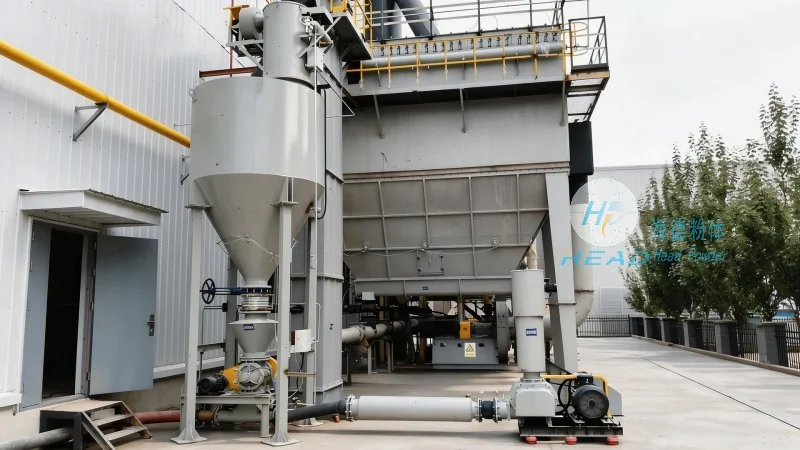
The gypsum fly ash powder pneumatic conveying system consists of several critical components that work in tandem to ensure smooth material transport. These include the hopper for material storage, the conveyor line (either positive or negative pressure), the air compressor or vacuum pump, and the control system. Each component plays a vital role in the overall operation, from feeding the material to delivering it to the destination point.
Operation Process of the Gypsum Fly Ash Powder Pneumatic Conveying System
The operation process of the system begins with the loading of gypsum and fly ash powder into the hopper. The material is then fed into the conveyor line using a feeder, which can be a rotary valve or a screw feeder. Simultaneously, the air compressor generates the necessary air pressure or vacuum to move the material through the pipeline. The air and material mixture travels through the pipeline, reaching the discharge point where the material is separated from the air using a cyclone separator or a filter. The separated material is then collected in the receiving hopper, while the air is either recirculated or vented to the atmosphere.
Working Principle of the System
The working principle of the gypsum fly ash powder pneumatic conveying system is based on the principles of fluid dynamics and particle transport. In a positive pressure system, the air compressor increases the air pressure above the material's weight, causing the material to be pushed through the pipeline. In a negative pressure system, the vacuum pump creates a low-pressure environment, drawing the material and air mixture into the pipeline. The system's design ensures that the material is transported at a consistent velocity, minimizing particle degradation and maintaining the integrity of the material.

Benefits and Applications
The gypsum fly ash powder pneumatic conveying system offers numerous benefits, including high transport efficiency, reduced labor costs, and improved safety compared to traditional methods like bucket elevators or belt conveyors. It is widely used in power plants, cement factories, and construction sites where large quantities of gypsum and fly ash need to be transported over short to medium distances. The system's ability to handle fine powders without clogging or blockages makes it an ideal solution for industries dealing with sensitive materials.
Conclusion
Shandong HeadPowder Engineering Co., Ltd. provides comprehensive solutions for gypsum fly ash powder pneumatic conveying systems, ensuring reliable and efficient material transport. By understanding the operation process and working principle of these systems, industries can optimize their material handling processes, reduce operational costs, and enhance overall productivity. The company's expertise in designing and implementing such systems positions it as a trusted partner for clients seeking advanced material handling solutions.