

Principles and Application Scenarios of Air-Driven Pneumatic Conveying for Sodium Bicarbonate Powder
Understanding the fundamental principles and practical application scenarios of air-driven pneumatic conveying for sodium bicarbonate powders is crucial for industries that rely on efficient material handling. This article provides an in-depth exploration of the technology, focusing on how it operates and the specific environments where it excels. The discussion is centered around the expertise of Shandong HeadPowder Engineering Co., Ltd., a company based in Shandong, China, which specializes in engineering solutions for powder processing and material transport.

The Core Principles of Air-Driven Pneumatic Conveying
At its essence, air-driven pneumatic conveying uses a pressurized or vacuum system to transport dry powders like sodium bicarbonate through a pipeline. The process involves creating a flow of air that propels the powder particles, often with the assistance of additional equipment such as rotary valves, cyclones, and filters. The key components of this system include a blower or compressor to generate the necessary air pressure, a hopper to store the powder, and a pipeline network that connects the source to the destination. The velocity of the air and the particle size of the sodium bicarbonate are critical factors that determine the efficiency and effectiveness of the conveying process. Shandong HeadPowder Engineering Co., Ltd. leverages advanced engineering to optimize these parameters, ensuring reliable and consistent performance in various industrial applications.
Key Advantages of Air-Driven Pneumatic Conveying for Sodium Bicarbonate
Compared to traditional mechanical conveying methods, air-driven systems offer several distinct advantages when handling sodium bicarbonate powders. One of the most significant benefits is the ability to transport materials over long distances without the need for multiple transfer points or intermediate storage. This reduces the risk of contamination and minimizes downtime associated with equipment maintenance. Additionally, pneumatic conveying can handle a wide range of particle sizes and moisture content, making it suitable for sodium bicarbonate with varying characteristics. The system also provides better control over the flow rate and can be easily integrated with other processing equipment, such as mixing or packaging lines. Shandong HeadPowder Engineering Co., Ltd. emphasizes these advantages in their design and implementation of conveying systems, tailored to meet the specific needs of clients in the chemical and food industries.
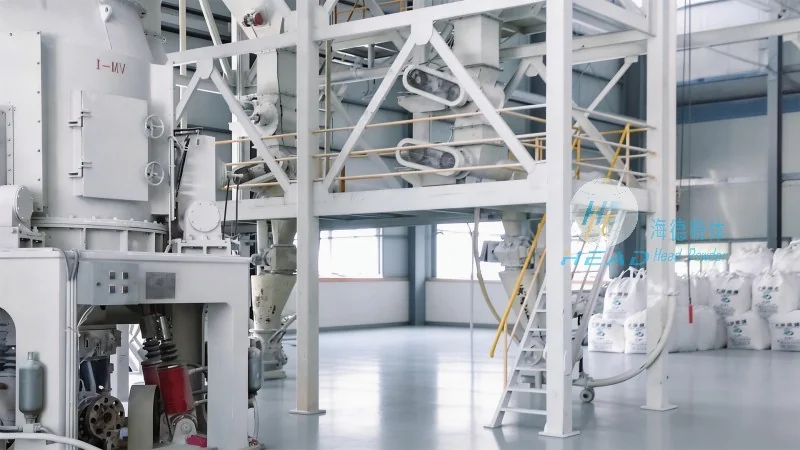
Common Application Scenarios for Sodium Bicarbonate Pneumatic Conveying
The versatility of air-driven pneumatic conveying makes it applicable in numerous industrial settings where sodium bicarbonate is used. In the food industry, for example, it is commonly employed to transport baking soda from storage silos to production lines, ensuring a continuous and hygienic supply. The pharmaceutical sector also utilizes this technology to move sodium bicarbonate powders to manufacturing facilities, where they are used as an ingredient in various medications. In the chemical industry, the process is often used to convey the powder to reactors or mixing tanks, facilitating the production of other chemical compounds. Shandong HeadPowder Engineering Co., Ltd. has successfully implemented these systems in diverse applications, from small-scale food processing plants to large-scale chemical manufacturing facilities, demonstrating the adaptability and reliability of the technology.

Design Considerations for Efficient Sodium Bicarbonate Conveying Systems
Designing an effective air-driven pneumatic conveying system for sodium bicarbonate requires careful consideration of several factors. The first is the particle size distribution of the powder, as larger particles may require higher air velocities to maintain suspension. The system must also account for the moisture content of the sodium bicarbonate, as excessive moisture can lead to caking or blockages in the pipeline. Additionally, the distance and elevation changes between the source and destination must be evaluated to determine the appropriate air pressure and blower capacity. Shandong HeadPowder Engineering Co., Ltd. employs advanced computational fluid dynamics (CFD) and material testing to optimize system design, ensuring that the conveying process is both efficient and cost-effective. The company also considers factors such as material compatibility with the pipeline materials and the need for dust collection systems to maintain environmental compliance.

Integration with Other Processing Equipment
Air-driven pneumatic conveying systems for sodium bicarbonate are often integrated with other processing equipment to create a seamless material handling workflow. For instance, the conveying line may connect directly to a mixer or a packaging machine, allowing for immediate use of the powder without intermediate storage. This integration reduces the need for manual handling and minimizes the risk of product degradation. Shandong HeadPowder Engineering Co., Ltd. specializes in designing integrated systems that combine conveying, mixing, and packaging functions, providing clients with a comprehensive solution for their sodium bicarbonate processing needs. The company ensures that all components are compatible and that the system operates in harmony, enhancing overall productivity and efficiency.
Maintenance and Operational Considerations
Proper maintenance is essential to ensure the long-term reliability of air-driven pneumatic conveying systems for sodium bicarbonate. Regular cleaning of the pipeline and equipment is necessary to prevent the buildup of powder residues, which can affect flow rates and system performance. The blower or compressor must be checked for wear and tear, and filters should be replaced as needed to maintain air quality. Shandong HeadPowder Engineering Co., Ltd. provides comprehensive maintenance services and offers training to clients on proper operational procedures, ensuring that the systems remain in optimal condition. The company also emphasizes the importance of monitoring system performance through sensors and data logging, allowing for early detection of issues and timely intervention. This proactive approach helps minimize downtime and extends the lifespan of the conveying equipment.