

Principle and Working Scene Characteristics of Aluminum Battery Pneumatic Conveying Machines
HeadPowder, a leading engineering company based in Shandong, China, specializes in the design and manufacturing of advanced pneumatic conveying systems tailored for aluminum battery production lines. This article explores the fundamental principles behind these systems and highlights their key working scene characteristics, providing insights into their efficiency and application in modern battery manufacturing processes.

The Principle of Pneumatic Conveying for Aluminum Batteries
The core principle of aluminum battery pneumatic conveying machines involves the use of air pressure to transport aluminum powders or related materials within a closed system. Unlike traditional mechanical conveyors, pneumatic systems utilize compressed air to create a flow that moves materials through pipes. The process typically starts with a hopper where aluminum powders are stored. When the system is activated, a blower generates high-pressure air, which then draws the material into the pipeline. The air and material mixture travels through the conveying line, often with the aid of in-line valves or cyclones to separate the material from the air at the discharge point. This method ensures a dust-free and efficient transfer of aluminum powders, which is crucial for maintaining the quality and safety of battery production. The system's design considers factors such as material density, particle size, and moisture content to optimize the conveying efficiency and prevent blockages or material degradation.

Key Working Scene Characteristics
Aluminum battery pneumatic conveying machines are deployed in various working scenes within battery manufacturing facilities. These systems are commonly used in the following scenarios:
- Material Handling in Battery Cell Production: In the production of aluminum batteries, raw aluminum powders are transported from storage silos to mixing and coating stations. The pneumatic conveying system ensures a continuous and controlled flow of materials, reducing downtime and improving production throughput. The closed system also minimizes the risk of dust exposure, which is essential for maintaining a safe working environment.
- Transfer Between Production Lines: In large-scale battery manufacturing plants, materials may need to be transferred between different production lines or departments. The pneumatic conveying system provides a flexible and efficient means of moving aluminum powders across different areas of the facility, eliminating the need for manual handling or traditional conveyor belts that can be less effective in complex layouts.
- Quality Control and Storage: After processing, aluminum powders may be conveyed to quality control stations for testing or to storage silos for future use. The system's ability to handle materials at controlled speeds and pressures ensures that the material quality is maintained throughout the transfer process. This is particularly important in battery manufacturing, where material purity directly impacts the performance and lifespan of the final battery products.
Advantages and Considerations in Application
Implementing aluminum battery pneumatic conveying systems offers several advantages in industrial settings. These include:
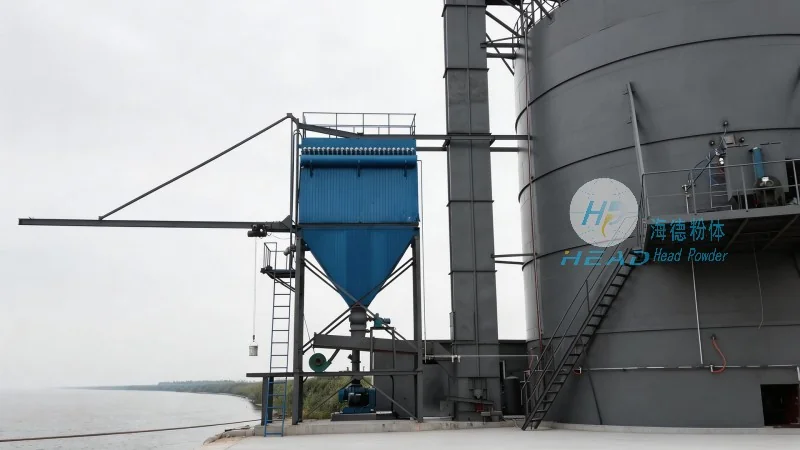
- Efficiency and Speed: Pneumatic systems can transport materials at high speeds, significantly reducing the time required for material transfer compared to traditional methods. This leads to increased production efficiency and lower operational costs.
- Flexibility and Scalability: The modular design of pneumatic conveying systems allows for easy expansion or reconfiguration to accommodate changes in production volume or layout. This flexibility is crucial for adapting to evolving manufacturing needs.
- Reduced Maintenance: Compared to mechanical conveyors, pneumatic systems have fewer moving parts, which reduces the risk of mechanical failure and lowers maintenance requirements. This results in lower long-term operational costs and increased system reliability.
- Environmental Safety: The closed system design prevents dust emissions, contributing to a cleaner and safer working environment. This is particularly important in battery manufacturing, where dust can be hazardous and affect both worker health and product quality.
However, it is important to consider certain factors when implementing such systems. For instance, the system's performance is highly dependent on the properties of the material being conveyed, such as particle size, moisture content, and flowability. Proper system design and maintenance are essential to prevent issues like blockages or material degradation. Additionally, the initial investment cost of pneumatic conveying systems may be higher than traditional conveyors, though the long-term benefits in terms of efficiency and safety often justify the investment.