

What is Wheat Bran Pneumatic Conveying? Classification and Applications of Pneumatic Conveying
Wheat bran, a byproduct of wheat milling, is widely utilized across various industries including animal feed, food processing, and pharmaceuticals. Efficient material handling is critical for processing wheat bran, and pneumatic conveying systems have become a preferred solution due to their ability to transport bulk materials like wheat bran over extended distances with minimal dust and contamination. This article explores the concept of wheat bran pneumatic conveying, the classification of pneumatic conveying systems, and their practical applications.

Understanding Pneumatic Conveying Systems
Pneumatic conveying, also known as air conveying, involves transporting bulk materials through a pipeline using compressed air or vacuum. The system typically comprises a hopper, a conveyor line, and a receiver. Material is fed into the hopper and then drawn or pushed through the pipeline by the air flow. Two primary types of pneumatic conveying systems exist: positive pressure and negative pressure systems. Positive pressure systems utilize compressed air to push material through the pipeline, while negative pressure systems employ vacuum to draw material into the pipeline.
Key Considerations for Wheat Bran Pneumatic Conveying
When handling wheat bran, several factors must be considered to ensure optimal system performance. Wheat bran is a light, powdery material that can be prone to dust and caking, which may impact conveying efficiency. The appropriate system choice depends on distance, material characteristics, and required throughput. For instance, short distances with dry, non-abrasive material may suit a positive pressure system, whereas longer distances or fine, dusty material may benefit from a negative pressure system.
Classification of Pneumatic Conveying Systems
Pneumatic conveying systems are classified based on pressure differential between the conveying line and ambient air. Main classifications include:

Positive Pressure Conveying
Positive pressure systems force air and material through the pipeline using a positive pressure blower. Air is introduced at the pipeline start, carrying material along. Suitable for short to medium distances and non-abrasive, low-moisture materials. Advantages include lower maintenance costs and handling of larger particles.
Negative Pressure Conveying
Negative pressure systems, or vacuum systems, create a vacuum at the receiver end to draw material into the pipeline. Ideal for long distances and fine, dusty materials, as they minimize dust emissions. Advantages include better flow control and reduced noise.
Combined Systems
Combined systems, or hybrid systems, integrate both positive and negative pressure components. Used for complex applications with varying pressure needs, such as long-distance transport with acceleration at the start and deceleration at the end.

Applications of Pneumatic Conveying in Wheat Bran Processing
Pneumatic conveying systems are widely used in wheat bran processing due to their efficiency and contamination control. Common applications include:
Transporting Wheat Bran from Mills to Storage
After production at the mill, wheat bran is transported to storage silos or processing facilities. Pneumatic systems are ideal for long-distance transport without intermediate storage, maintaining material quality and reducing contamination risk.
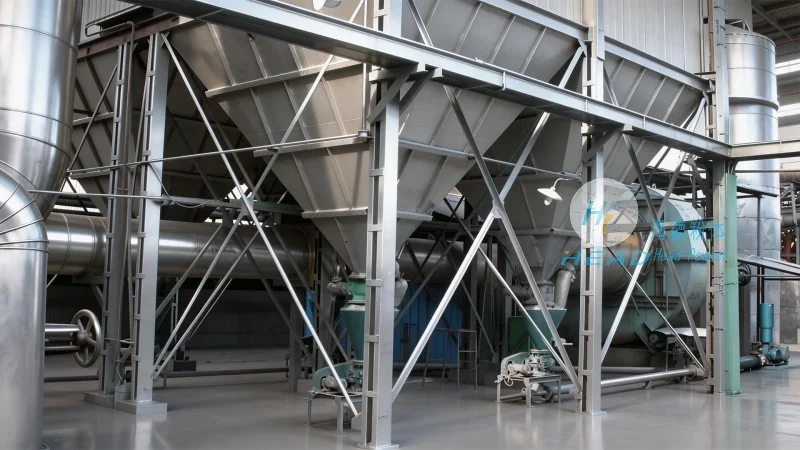
Conveying Wheat Bran to Processing Equipment
Stored wheat bran is conveyed to processing equipment like mixers or extruders. Pneumatic systems ensure efficient, dust-free transport, supporting smooth equipment operation and preventing damage.
Handling Wheat Bran in Animal Feed Production
As a key animal feed ingredient, wheat bran is transported from storage to feed mixing facilities via pneumatic systems. This ensures uniform mixing and hygienic material handling.
Conclusion
Pneumatic conveying systems provide an efficient and reliable solution for handling wheat bran and other bulk materials. By understanding system types and applications, manufacturers can select the most suitable solution. Shandong HeadPowder Engineering Co., Ltd., a leading provider of pneumatic conveying solutions, specializes in designing customized systems tailored to client needs. With extensive industry experience, HeadPowder delivers high-quality, durable systems ensuring optimal performance and long-term reliability.