

Principles and Application Scenarios of Heavy Powder Pneumatic Conveying Equipment
Heavy powder pneumatic conveying equipment, commonly referred to as headpowder systems, represents a sophisticated solution for transporting bulk powders and granular materials over long distances with high efficiency and minimal product degradation. This technology is integral to industries ranging from food processing and pharmaceuticals to chemical manufacturing and mining, where the integrity of the material being handled is paramount. The equipment operates by using compressed air to create a flow that propels the material through a pipeline network, ensuring a clean, dust-free transfer process.
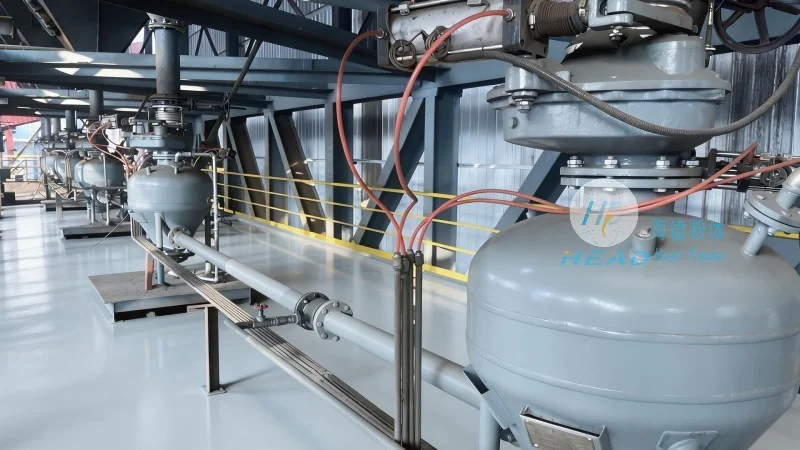
The Core Principles of Pneumatic Conveying
The fundamental principle behind pneumatic conveying is the use of air as a medium to transport solid particles. In a typical system, a blower or compressor generates the necessary air pressure, which is then introduced into a hopper or storage silo containing the powder. As the air flows through the material, it lifts and carries the particles forward through the pipeline. The design of the system, including the type of air flow (e.g., dilute phase or dense phase), the pipe diameter, and the number of bends, all influence the efficiency and effectiveness of the conveying process. For heavy powders, which may have higher density or stickiness, specialized components such as rotary valves, airlocks, and pulse jet filters are often incorporated to ensure reliable and continuous operation.
Key Components and Their Functions
Several critical components work in tandem to ensure the smooth operation of a heavy powder pneumatic conveying system. The blower or compressor serves as the power source, providing the necessary air pressure to initiate and maintain the material flow. Hoppers or storage silos are used to hold the bulk material, with a rotary valve or airlock at the discharge end to control the flow rate and prevent backflow. The pipeline network, typically made of stainless steel or other corrosion-resistant materials, is designed to withstand the pressure and abrasive nature of the powder. At the receiving end, a receiver or hopper collects the material, often equipped with a dust collection system such as a pulse jet filter to capture any fine particles and maintain air quality. The control system, which may include sensors and automation, monitors the pressure, flow rate, and material level, ensuring optimal performance and preventing system failures.

Application Scenarios and Operational Advantages
Heavy powder pneumatic conveying equipment is widely applied in various industrial settings due to its ability to handle a diverse range of materials while offering several operational advantages. One of the primary benefits is the ability to transfer materials without direct contact, which minimizes contamination and product degradation. This is particularly important in industries like food and pharmaceuticals, where product purity is critical. Additionally, the system can handle materials with varying moisture content and particle sizes, making it versatile for different applications. The enclosed pipeline system also reduces dust emissions, improving workplace safety and environmental compliance. Furthermore, the equipment can be integrated with other processing equipment, such as mixers or reactors, to create a continuous production line, enhancing overall efficiency and reducing labor costs.

Case Study: Application in Chemical Manufacturing
For instance, in a chemical manufacturing plant, heavy powder pneumatic conveying equipment is used to transport raw materials like calcium carbonate and silica to production reactors. The system, supplied by Shandong HeadPowder Engineering Co., Ltd., operates at a pressure of 0.8 MPa and handles materials with a particle size range of 0-200 microns. The dense phase conveying mode is employed to ensure stable and reliable flow, even with high-density powders. The plant has reported a 30% reduction in material handling time and a 20% decrease in labor costs compared to traditional bucket elevators. The enclosed system has also eliminated dust-related health hazards, leading to improved employee safety and compliance with environmental regulations.
Conclusion and Company Overview
Heavy powder pneumatic conveying equipment, as exemplified by the solutions from Shandong HeadPowder Engineering Co., Ltd., offers a reliable and efficient method for transporting bulk materials in various industrial applications. By leveraging the principles of pneumatic conveying and incorporating specialized components, these systems ensure minimal product degradation, high transfer efficiency, and improved workplace safety. The company, based in Shandong, China, specializes in designing and manufacturing customized pneumatic conveying solutions tailored to the specific needs of different industries, providing clients with durable and high-performance equipment that meets their operational requirements.