

Principle and Working Scene Characteristics of Rice Pneumatic Conveying Machines
HeadPowder, a leading manufacturer based in Shandong, China, specializes in the design and production of pneumatic conveying systems tailored for rice handling. This article explores the fundamental principles behind rice pneumatic conveying machines and highlights the key characteristics of their operational environments.

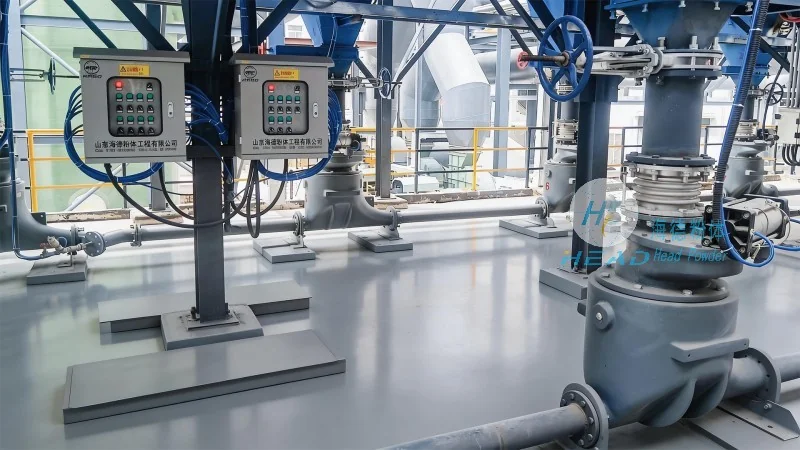
Understanding the Core Principle of Rice Pneumatic Conveying Machines
Rice pneumatic conveying machines operate on the principle of air flow to transport bulk materials like rice. The system typically consists of a hopper, a blower or fan, a pipeline, and a discharge outlet. As rice is fed into the hopper, the blower generates a high-velocity air stream that lifts the rice particles and propels them through the pipeline to the desired destination. This method eliminates the need for mechanical components such as belts or buckets, reducing friction and wear while ensuring a clean and efficient transfer process. The air flow can be adjusted to control the speed and direction of the rice movement, allowing for precise control over the conveying process.

Key Working Scene Characteristics of Rice Pneumatic Conveying Systems
The operational environment of rice pneumatic conveying machines is characterized by several distinct features that influence their performance and suitability. First, the system is designed to handle the unique physical properties of rice, including its lightweight nature and susceptibility to breakage. The air flow is optimized to minimize particle damage, ensuring that the rice remains intact during transport. Second, the equipment operates in a clean and hygienic setting, which is critical for food processing applications. The sealed pipeline and enclosed hopper prevent contamination from external sources, maintaining the quality and safety of the rice. Third, the system is highly adaptable to different production scales, from small-scale farms to large industrial processing facilities. The modular design allows for easy expansion or reconfiguration to meet varying production demands. Additionally, the noise level is relatively low compared to traditional mechanical conveyors, making it suitable for environments where noise control is a priority. The energy efficiency of the system is another notable characteristic, as the air flow is managed to minimize power consumption while maintaining optimal conveying performance.

Applications and Benefits in Real-World Scenarios
Rice pneumatic conveying machines are widely used in various working scenarios across the rice processing industry. In rice mills, these systems are employed to transport raw rice from storage silos to processing lines, ensuring a continuous and uninterrupted flow of material. The clean and efficient transfer helps maintain the quality of the rice, reducing the risk of contamination and spoilage. In storage facilities, the equipment is used to move rice between different storage areas or to load trucks for distribution. The ability to handle large volumes of rice quickly and safely makes it an essential component in logistics operations. Furthermore, the system is utilized in quality control processes, where the rice is conveyed through inspection stations to check for defects or impurities. The precise control over the conveying speed allows for thorough inspection without compromising the material's integrity. The benefits of using rice pneumatic conveying machines in these scenarios include improved productivity, reduced labor costs, and enhanced product quality. The system's ability to handle bulk materials without manual intervention streamlines the production process, while the hygienic design ensures compliance with food safety regulations.