

Operation Process and Working Principle of a Tri-metal Positive Electrode Material Pneumatic Conveyi
Shandong HeadPowder Engineering Co., Ltd., a leading enterprise in the field of powder processing technology, specializes in the design, manufacturing, and supply of advanced pneumatic conveying systems tailored for tri-metal positive electrode materials. These systems are critical components in the production lines of lithium-ion battery manufacturers, ensuring efficient and safe material handling from raw material storage to processing stages.

Overview of the Pneumatic Conveying System
The pneumatic conveying system for tri-metal positive electrode materials is engineered to handle the unique properties of these materials, including their fine particle size, chemical reactivity, and sensitivity to moisture and contamination. The system is designed to maintain a controlled environment, minimizing material degradation and ensuring consistent quality of the final electrode product. Key components include the material hopper, rotary airlock valve, conveying pipeline, and receiving hopper, all integrated to form a seamless material transport process.
Working Principle of the Pneumatic Conveying System
The system operates on the principle of pneumatic transport, where material is conveyed through a pipeline using compressed air. The process begins with the material being fed from the storage hopper into the conveying pipeline via a rotary airlock valve. Compressed air is introduced at the inlet of the pipeline, creating a pressure differential that propels the material particles forward. The air and material mixture travels through the pipeline, with the air velocity maintained at a level sufficient to keep the particles suspended and prevent settling. At the receiving end, a cyclone separator or a filter system separates the material from the air, allowing the material to be deposited into the target container while the air is either recirculated or discharged.
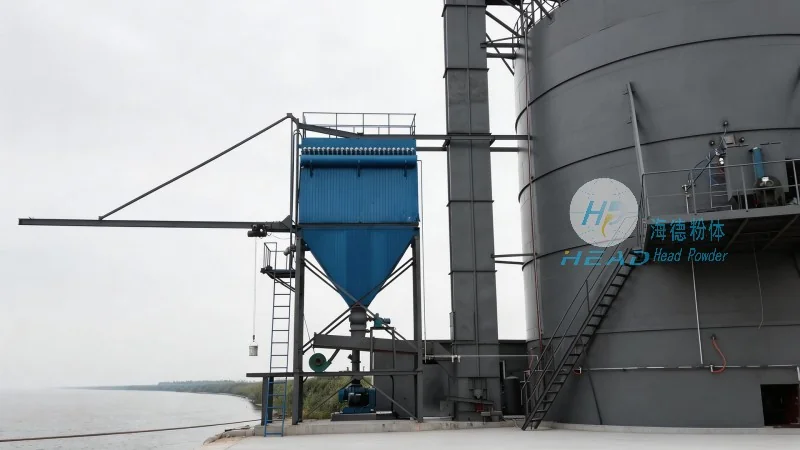
Operation Process of the Pneumatic Conveying System
The operation process of the tri-metal positive electrode material pneumatic conveying system involves several key steps, each designed to ensure efficient and reliable material transport. First, the material is loaded into the storage hopper, where it is stored under controlled conditions to prevent moisture absorption and oxidation. The material is then discharged from the hopper into the conveying pipeline through a rotary airlock valve, which controls the flow rate and prevents backflow. Compressed air is supplied to the pipeline at a regulated pressure and flow rate, ensuring consistent material movement. The material travels through the pipeline, with the air velocity maintained above the minimum conveying velocity to keep the particles in suspension. At the receiving end, the material is separated from the air using a cyclone or filter, and the material is collected in the receiving hopper. The system is equipped with monitoring and control systems to adjust air pressure, flow rate, and material feed rate in real-time, optimizing the conveying process and minimizing energy consumption.

Key Features and Benefits
The pneumatic conveying system for tri-metal positive electrode materials offers several advantages over traditional mechanical conveying methods. These include: (1) Reduced material degradation due to minimal contact with equipment surfaces and controlled environment; (2) Increased safety by eliminating the need for manual handling of hazardous materials; (3) Improved process efficiency through automated control and monitoring; (4) Lower maintenance costs due to fewer moving parts and reduced wear on components. The system is also designed for easy integration into existing production lines, with modular components that can be customized to meet specific customer requirements.
Application in Lithium-Ion Battery Production
The tri-metal positive electrode material pneumatic conveying system is widely used in the production of lithium-ion batteries, where the quality and purity of the electrode material are critical to the performance of the final battery. The system ensures that the material is transported in a controlled manner, minimizing contamination and maintaining consistent particle size distribution. This is essential for achieving uniform battery performance and extending the battery's lifespan. The system's ability to handle fine powders and maintain a clean environment is particularly important in the production of high-energy-density batteries, which are in high demand for electric vehicles and renewable energy storage systems.