

Principle and Working Scene Characteristics of Sand Pneumatic Conveying Machines
HeadPowder, a leading manufacturer based in Shandong, China, specializes in the design and production of pneumatic conveying equipment. With years of experience in the industry, the company has developed advanced solutions tailored to various material handling needs, including the efficient transportation of sand. The company's commitment to quality and innovation has positioned it as a trusted partner for businesses seeking reliable sand handling systems.


Understanding the Pneumatic Conveying Principle for Sand
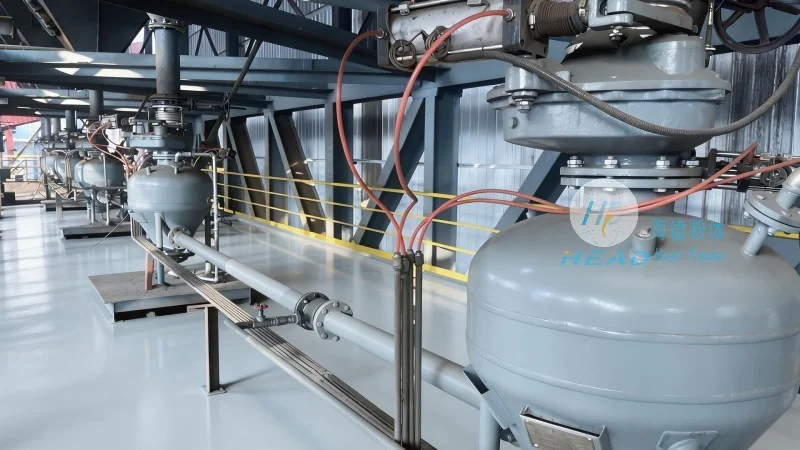
The pneumatic conveying of sand operates on the fundamental principle of using compressed air to move granular materials through a pipeline. Unlike traditional mechanical systems that rely on belts, buckets, or screw conveyors, this method provides a hygienic and flexible approach to material transport. The system typically comprises a hopper for storing the sand, a blower to generate the necessary air pressure, and a network of pipelines that direct the material to its final destination. The air flow creates a low-pressure zone within the pipeline, which draws the sand particles into the air stream, allowing them to be transported over long distances with minimal loss and contamination. This process is efficient, as it eliminates the need for multiple transfer points and reduces the risk of material degradation due to friction or exposure to the environment.

Key Working Scene Characteristics of Sand Pneumatic Conveying Systems
In construction and building projects, sand pneumatic conveying systems are widely used to transport sand from stockpiles to mixing stations. This application ensures a continuous and clean supply of sand, which is crucial for maintaining the quality of concrete and mortar. The systems can handle large volumes of sand, adapting to the varying production demands of construction sites. Additionally, in foundries and metalworking industries, these systems are employed to move sand for mold preparation. The hygienic nature of pneumatic conveying is particularly beneficial here, as it prevents the introduction of contaminants that could affect the quality of the final product. In sand processing plants, the equipment facilitates the transfer of sand between different stages, such as screening, drying, and packaging. The precision and control offered by pneumatic systems ensure that the sand is handled with minimal degradation, preserving its quality for subsequent processing steps. The flexibility of the system allows it to adapt to different operational conditions, including changes in production volume or material characteristics, making it a versatile solution for various industrial applications.
Advantages and Practical Applications in Real-World Scenarios
One of the primary advantages of sand pneumatic conveying systems is their ability to handle materials that are difficult to transport using traditional methods. For example, in environments where dust control is critical, such as in food processing or pharmaceutical industries, the enclosed pipeline system prevents dust emissions, ensuring compliance with safety and environmental regulations. The systems also offer cost savings by reducing labor costs associated with manual handling and minimizing material loss during transport. In agricultural settings, sand pneumatic conveyors are used to transport sand for soil conditioning or construction projects, providing a reliable method for material movement in remote or challenging locations. The adaptability of these systems to different sand types, including fine and coarse particles, makes them suitable for a wide range of applications. Overall, the working scene characteristics of sand pneumatic conveying systems highlight their efficiency, flexibility, and reliability in various industrial contexts, making them an essential component for modern material handling operations.