

Alumina Pneumatic Conveying: Principles and Application Characteristics
Alumina, a high-performance abrasive material widely used in industrial applications, often requires efficient and reliable material handling solutions. Pneumatic conveying technology offers an effective method for transporting alumina from one location to another, ensuring minimal loss and optimal process control. This article explores the fundamental principles behind alumina pneumatic conveying and highlights key application scenarios where this technology excels, as developed by Shandong HeadPowder Engineering Co., Ltd. (headpowder).

Principles of Pneumatic Conveying for Alumina
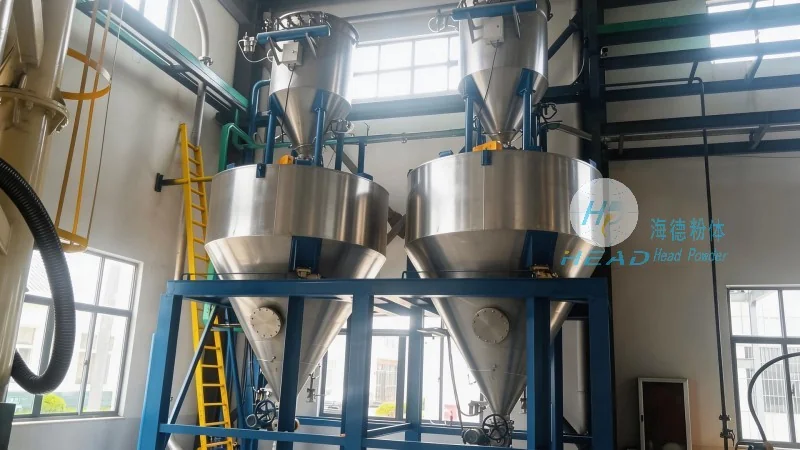
The core principle of pneumatic conveying involves using compressed air or gas to transport particulate materials like alumina through a pipeline system. There are two primary modes of pneumatic conveying: dilute-phase and dense-phase. Dilute-phase systems operate at higher air velocities, typically moving particles in a dispersed state, while dense-phase systems use lower air velocities to create a slurry-like flow, reducing particle degradation and equipment wear. For alumina, which is often abrasive and sensitive to handling, the choice of conveying mode depends on the material's characteristics, such as particle size, density, and moisture content. The system typically includes a hopper for material storage, a feeder to control the flow rate, a conveying line, and a receiver for the discharged material. Compressed air is introduced at the hopper end, creating a pressure differential that propels the alumina particles through the pipeline. Proper design of the conveying line, including pipe diameter, length, and bends, is crucial to minimize pressure drop and energy consumption. The use of specialized components, such as rotary valves, airlocks, and filters, ensures smooth operation and prevents material buildup or blockages. Additionally, the selection of materials for the conveying equipment, such as stainless steel or corrosion-resistant alloys, is essential to withstand the abrasive nature of alumina and maintain system longevity.

Key Working Scenarios and Applications
Alumina pneumatic conveying is employed in various industrial settings, each with specific requirements that the technology addresses effectively. One common application is in the manufacturing of refractory materials, where alumina is transported from storage silos to processing lines. The ability to handle large volumes of material with minimal human intervention makes pneumatic conveying ideal for such high-throughput operations. Another scenario involves the processing of ceramic products, where alumina is used as a raw material or as a finishing abrasive. In these cases, the conveying system must maintain the material's purity and prevent contamination, which is achieved through sealed and filtered pipelines. The automotive industry also utilizes alumina in the production of brake pads and other components, and pneumatic conveying ensures that the abrasive material is delivered to production lines without dust or particle loss. Furthermore, in research and development laboratories, small-scale pneumatic conveying systems are used to transport alumina for testing and analysis, providing precise control over material flow rates and particle size distribution. The versatility of alumina pneumatic conveying makes it suitable for both large-scale industrial production and laboratory-scale applications, adapting to different operational needs and material handling challenges.
Advantages and Considerations in Alumina Pneumatic Conveying
Implementing pneumatic conveying for alumina offers several advantages, including high efficiency, reduced labor costs, and improved material quality. The technology allows for continuous operation, minimizing downtime and ensuring consistent production output. Compared to traditional methods like bucket elevators or belt conveyors, pneumatic systems are more compact and can be integrated into existing facility layouts with minimal modifications. However, there are also considerations to keep in mind when designing and operating an alumina pneumatic conveying system. The abrasive nature of alumina can cause wear on equipment components, such as pipelines, valves, and hoppers, requiring regular maintenance and replacement of parts. Additionally, the system's energy consumption is higher than other conveying methods, as compressed air is a significant operational cost. Proper sizing of the air compressor and the conveying line is essential to balance energy efficiency with material transport requirements. Dust control is another critical aspect, as alumina particles can be fine and pose health and safety risks if not properly contained. The use of filters and dust collection systems is necessary to maintain a clean and safe working environment. Overall, the benefits of alumina pneumatic conveying, including its ability to handle abrasive materials efficiently and maintain product quality, make it a preferred choice for many industrial applications.