

Working Principle and Features of Polypropylene Powder Conveying Systems
In industrial production, an efficient and reliable powder conveying system is crucial for ensuring smooth production processes. Polypropylene (PP), as a widely used plastic material, requires specialized systems for its powder handling. This article delves into the working principle and unique features of polypropylene powder conveying systems, helping readers gain a comprehensive understanding of this technical field.


Company Background: Shandong HeadPowder Engineering Co., Ltd.
This content is provided by Shandong HeadPowder Engineering Co., Ltd. (HeadPowder), a company specializing in the research and application of powder processing technologies. HeadPowder, with its professional engineering team and advanced technology, offers customized powder conveying solutions to global clients. The company is located in Shandong, China, dedicated to enhancing industrial powder handling efficiency and safety.
Working Principle of Polypropylene Powder Conveying Systems
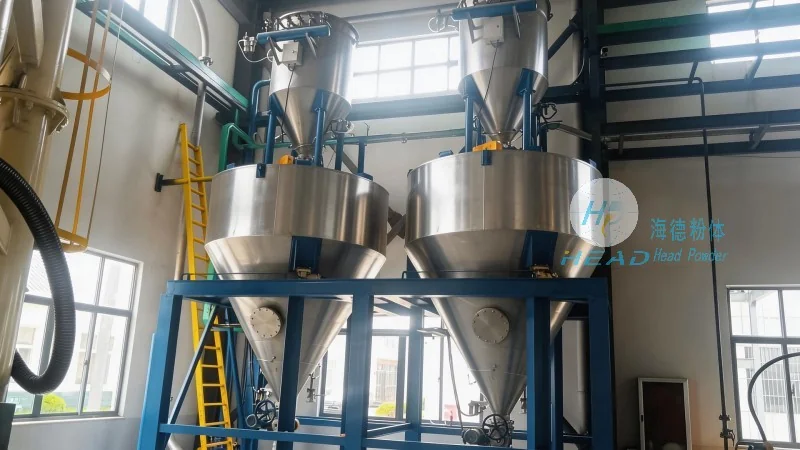
Polypropylene powder conveying systems typically employ a combination of technologies to meet the needs of different production environments. Their core working principle involves material transport, pneumatic or mechanical conveying, among other processes. The system precisely controls airflow speed, pressure, and pipeline layout to ensure stable polypropylene powder during transport, preventing caking or leakage. Specifically, the system may include key components such as hoppers, conveying pipelines, air source equipment, and control valves. These components work in concert to achieve continuous, uninterrupted material transport from raw material storage to processing equipment. Pneumatic conveying is a common method, where compressed air transports polypropylene powder from the hopper to production equipment. This approach is particularly suitable for long-distance or complex path conveying tasks. Additionally, the system is equipped with filtration and dust removal devices to maintain a clean conveying environment and prevent dust pollution. By optimizing airflow parameters and pipeline design, polypropylene powder conveying systems can achieve efficient, low-loss material transport, meeting the high standards of modern industrial production.