

Common Wheat Flour Conveying Methods: A Comparison of Advantages and Disadvantages
Wheat flour is a fundamental ingredient in the food industry, and efficient conveying methods are crucial for ensuring smooth production processes. The choice of conveying system significantly impacts operational efficiency, cost, and product quality. This article provides a detailed comparison of common wheat flour conveying methods, highlighting their advantages and disadvantages to help industry professionals make informed decisions.
Introduction to Wheat Flour Conveying
Before delving into specific conveying methods, it is essential to understand the importance of proper flour handling. Wheat flour is a fine powder that requires gentle handling to prevent clumping, contamination, and loss of quality. Conveying systems must be designed to maintain the integrity of the flour while ensuring safe and efficient transport. The following sections will explore various conveying methods used in the wheat flour industry, focusing on their operational characteristics, benefits, and limitations.
1. Screw Conveyors (Auger Conveyors)
Screw conveyors, also known as auger conveyors, are one of the most widely used methods for transporting wheat flour. These systems consist of a rotating screw (auger) inside a cylindrical tube, which moves material along the length of the conveyor. The screw's pitch and speed can be adjusted to control the flow rate and pressure, making screw conveyors versatile for various applications.
Advantages of screw conveyors include their compact design, which saves space in production facilities. They are also relatively low-cost to install and maintain, with minimal moving parts that reduce the risk of mechanical failure. Screw conveyors can handle both dry and slightly moist flour without causing significant clumping, as the rotating screw breaks up any agglomerates. Additionally, they are suitable for vertical or horizontal transport, providing flexibility in system design.
However, screw conveyors have several disadvantages. One major drawback is the potential for product degradation due to friction and heat generated by the rotating screw. This can affect the quality of the flour, especially if it contains heat-sensitive ingredients. Another limitation is their limited capacity for very fine powders, as the screw may not effectively convey materials with very low bulk density. Furthermore, screw conveyors can be prone to clogging if the flour is overly fine or contains foreign particles, requiring regular cleaning and maintenance.
2. Pneumatic Conveying Systems
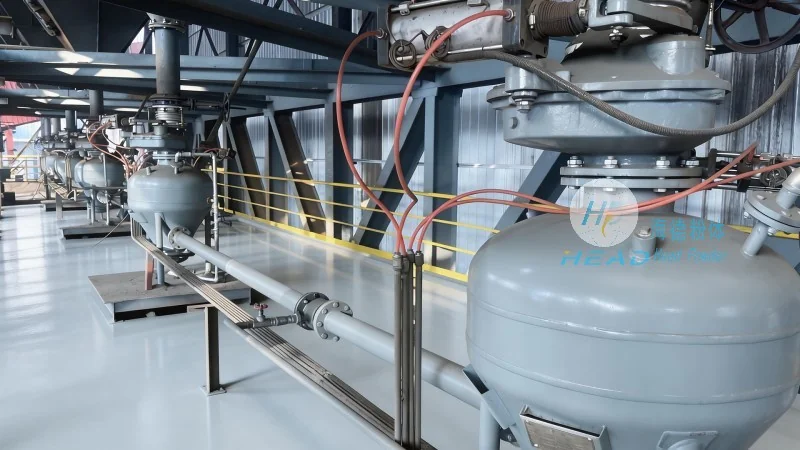
Pneumatic conveying systems use air or other gases to transport wheat flour through a network of pipes. These systems can be categorized into two main types: pressure and vacuum. Pressure systems force air and flour through the pipe, while vacuum systems draw the material into the system using a vacuum pump.
Advantages of pneumatic conveying include the ability to transport flour over long distances without the need for multiple transfer points. This reduces the risk of contamination and product loss. Pneumatic systems are also gentle on the flour, as the material is suspended in air rather than being pushed or dragged, minimizing friction and heat generation. Additionally, these systems can be integrated with other processing equipment, such as mixers or classifiers, to create a seamless production line.

Despite these benefits, pneumatic conveying has notable drawbacks. The primary disadvantage is the high energy consumption required to move the flour through the system, especially for long distances or high volumes. This increases operational costs and may not be feasible for large-scale production. Another limitation is the potential for product degradation due to the high velocity of the air, which can cause attrition and break down the flour particles. Furthermore, pneumatic systems are susceptible to clogging if the flour is too fine or contains moisture, leading to system downtime and maintenance challenges.
3. Bucket Elevators
Bucket elevators are vertical conveying systems that use a chain or belt with attached buckets to lift and transport wheat flour from a lower to a higher level. The buckets are filled at the bottom of the elevator and discharged at the top, providing efficient vertical transport.
Advantages of bucket elevators include their high capacity and ability to handle large volumes of flour efficiently. They are also suitable for vertical transport over significant heights, making them ideal for multi-level production facilities. Bucket elevators are relatively simple in design, with minimal moving parts, which reduces maintenance requirements and costs. Additionally, they can handle a wide range of flour types and particle sizes without causing significant degradation.
However, bucket elevators have some limitations. One major drawback is their limited horizontal transport capability, as they are primarily designed for vertical movement. This requires additional equipment, such as horizontal conveyors, to connect the elevator to other parts of the system. Another limitation is the potential for product degradation due to the impact of buckets on the flour as it is discharged. This can cause attrition and affect the quality of the flour. Furthermore, bucket elevators can be noisy and may require more space than other conveying systems, which can be a constraint in smaller facilities.
4. Belt Conveyors
Belt conveyors use a continuous belt to transport wheat flour horizontally or at a slight incline. The belt is supported by rollers and driven by a motor, moving the material along the length of the conveyor. These systems are commonly used in bulk material handling and can be adapted for flour transport with appropriate materials and design.
Advantages of belt conveyors include their high capacity and ability to transport large volumes of flour over long distances. They are also relatively low-cost to install and maintain, with a simple design that is easy to operate. Belt conveyors can handle a wide range of flour types and particle sizes, and the belt material can be selected to prevent product contamination. Additionally, these systems are versatile and can be integrated with other equipment, such as hoppers or classifiers, to create a seamless production line.
However, belt conveyors have several disadvantages. One major drawback is the risk of product contamination due to the belt material and the environment. If the belt is not properly sealed or maintained, it can introduce foreign particles into the flour, affecting product quality. Another limitation is the potential for belt slip or damage, which can cause downtime and maintenance costs. Furthermore, belt conveyors are not suitable for vertical transport and require a level or slightly inclined surface, which may not be feasible in all production facilities.

5. Vibrating Conveyors
Vibrating conveyors use vibrations to move wheat flour along a trough or pipe. The system consists of a conveyor bed that is vibrated at a specific frequency and amplitude, causing the flour to move forward. These systems are often used for fine powders and can be designed to handle various flour types and particle sizes.
Advantages of vibrating conveyors include their gentle handling of flour, as the vibrations minimize friction and heat generation. They are also relatively low-cost to install and maintain, with minimal moving parts that reduce the risk of mechanical failure. Vibrating conveyors can handle both dry and slightly moist flour without causing significant clumping, and they are suitable for both horizontal and slight incline transport. Additionally, these systems are flexible and can be adjusted to control the flow rate and direction of the flour.
However, vibrating conveyors have some limitations. One major drawback is their limited capacity for very fine powders, as the vibrations may not effectively convey materials with very low bulk density. Another limitation is the potential for product degradation due to the impact of the vibrating bed on the flour particles. This can cause attrition and affect the quality of the flour. Furthermore, vibrating conveyors can be noisy and may require more space than other conveying systems, which can be a constraint in smaller facilities.
Conclusion and Recommendations
Choosing the right wheat flour conveying method depends on several factors, including the production scale, flour type, required transport distance, and budget. Each method has its own advantages and disadvantages, and the optimal choice will vary based on the specific needs of the operation. For example, screw conveyors are ideal for small-scale or medium-scale production with limited space, while pneumatic systems are better suited for large-scale operations requiring long-distance transport. Bucket elevators are suitable for vertical transport in multi-level facilities, and belt conveyors are versatile for horizontal transport over long distances.
When selecting a conveying system, it is essential to consider the impact on product quality, operational efficiency, and maintenance costs. The goal is to find a balance between these factors to ensure the most cost-effective and efficient solution. By understanding the characteristics of each conveying method, industry professionals can make informed decisions that enhance their production processes and maintain the quality of their wheat flour products.
Shandong HeadPowder Engineering Co., Ltd. specializes in providing customized conveying solutions for the wheat flour industry. With years of experience and expertise, the company offers a range of conveying systems tailored to meet the specific needs of its clients. Whether it's a screw conveyor, pneumatic system, or bucket elevator, HeadPowder Engineering ensures that the chosen solution is efficient, reliable, and meets the highest standards of quality. For more information on their conveying systems and services, please contact the company at their address in Shandong, China.