

Types, Characteristics, and Applications of Stone Powder Particle Pneumatic Conveying
Stone powder particle pneumatic conveying is a key technology in material handling, particularly for transporting fine powders like stone powder. This method utilizes air as the medium to transport solid particles through a pipeline system. Understanding the types, characteristics, and application ranges of this technology is crucial for optimizing material handling processes in various industries.

Introduction to Stone Powder Particle Pneumatic Conveying
Stone powder, often derived from limestone or other rock formations, is a fine powder commonly used in construction, manufacturing, and chemical industries. Traditional conveying methods like belt conveyors or bucket elevators may not be suitable for such fine powders due to issues like dust generation, blockage, and material degradation. Pneumatic conveying offers a solution by transporting particles in a closed system using air pressure or vacuum, ensuring efficient and clean material transport.
Types of Stone Powder Particle Pneumatic Conveying Systems
There are primarily two types of pneumatic conveying systems used for stone powder: pressure and vacuum systems. Each type has distinct characteristics and is suitable for different operational conditions.
Pressure Pneumatic Conveying Systems
Pressure systems operate by forcing air and stone powder particles into the conveying line using a positive pressure source, such as a blower or compressor. The pressure is maintained throughout the system, ensuring continuous material flow. These systems are ideal for long-distance or high-capacity applications where the material needs to be transported over significant distances without frequent interruptions.

Vacuum Pneumatic Conveying Systems
Vacuum systems, on the other hand, use a vacuum pump to create a negative pressure that draws the stone powder particles into the conveying line. This method is typically used for shorter distances or when the material needs to be collected from multiple points and transported to a central location. Vacuum systems are often more flexible and can handle more varied particle sizes compared to pressure systems.
Key Characteristics of Stone Powder Particle Pneumatic Conveying
Several key characteristics define the performance and suitability of stone powder particle pneumatic conveying systems. These include:
Efficiency and Capacity
The efficiency of pneumatic conveying systems is determined by factors like air velocity, particle size, and system design. Proper air velocity ensures that particles are fully suspended and transported without settling or blockage. The capacity of the system is directly related to the flow rate of air and the size of the particles being conveyed. For stone powder, which is typically fine and light, the system must be designed to handle these characteristics effectively to maintain consistent flow rates.

System Reliability and Maintenance
Reliability is a critical factor in industrial applications. Pneumatic conveying systems are generally more reliable than mechanical systems as they have fewer moving parts, reducing the risk of mechanical failure. However, they require regular maintenance of air filtration systems, pipeline cleaning, and component replacement. Proper maintenance is essential to ensure the system operates efficiently and avoids downtime.
Environmental Considerations
Dust control is a major concern in stone powder handling. Pneumatic conveying systems are designed to minimize dust emissions by using sealed pipelines and efficient filtration systems. This not only improves workplace safety but also complies with environmental regulations. The closed system design prevents dust from escaping into the environment, making it a more environmentally friendly option compared to open conveyors.
Application Ranges of Stone Powder Particle Pneumatic Conveying
The application ranges of stone powder particle pneumatic conveying are broad and cover various industries where fine powders are involved. Some of the key applications include:
Construction Industry
In the construction sector, stone powder is used as a raw material for cement production, concrete mixing, and other building materials. Pneumatic conveying systems are used to transport stone powder from storage silos to production lines, ensuring a steady supply of material. This method is particularly useful in large-scale construction projects where the material needs to be transported over long distances and in a controlled manner.
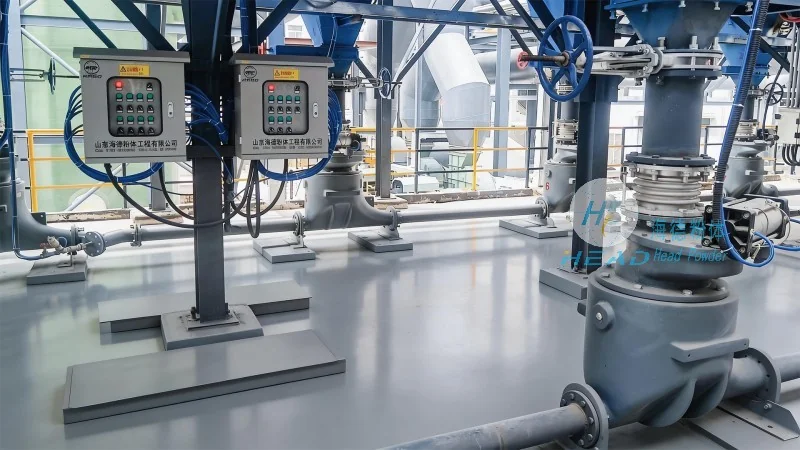
Manufacturing and Chemical Industries
Manufacturing facilities that produce stone-based products, such as ceramics, glass, or chemical additives, rely on pneumatic conveying to transport stone powder from raw material storage to processing equipment. The systems help maintain consistent quality by preventing contamination and ensuring uniform particle size distribution. This is crucial for achieving high-quality end products in these industries.
Mining and Mineral Processing
In mining operations, stone powder is often a byproduct or a raw material that needs to be processed and transported. Pneumatic conveying systems are used to transport stone powder from mining sites to processing plants or storage facilities. This method is efficient for handling large volumes of material and reduces the need for manual handling, improving safety and productivity.
About Shandong HeadPowder Engineering Co., Ltd.
Shandong HeadPowder Engineering Co., Ltd., a leading provider of material handling solutions, specializes in designing and manufacturing pneumatic conveying systems tailored to the needs of various industries. With years of experience in the field, the company has developed advanced systems that optimize material transport for stone powder and other fine powders. HeadPowder's expertise in system design, component selection, and maintenance ensures that clients receive reliable and efficient solutions that meet their specific operational requirements. The company is committed to providing high-quality products and services, supporting clients in improving their material handling processes and overall operational efficiency.