

What is a Foundry Sand Pneumatic Conveying Machine? What are its Design Principles?
Foundry sand, a critical material in the casting industry, requires efficient and reliable handling solutions to ensure smooth production processes. A foundry sand pneumatic conveying machine is a specialized equipment designed to transport foundry sand through an air-driven system. This technology offers a cost-effective and flexible method for moving bulk materials like foundry sand, eliminating the need for traditional mechanical conveyors and reducing operational costs. Manufactured by Shandong HeadPowder Engineering Co., Ltd. (headpowder), based in Shandong, China, this equipment is engineered to meet the demanding needs of foundry operations.

Understanding the Function of Foundry Sand Pneumatic Conveying Machines
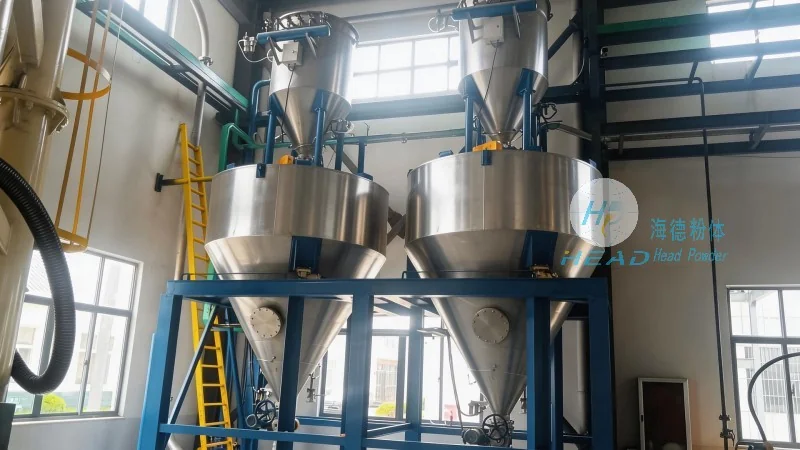
The primary function of a foundry sand pneumatic conveying machine is to transport foundry sand from one location to another within a foundry or industrial facility. This is achieved by using compressed air or other gases to create a flow of material through a pipeline system. The machine typically consists of a hopper, a blower or air compressor, a pipeline network, and a discharge point. The hopper collects the foundry sand, and the blower generates the necessary air pressure to move the sand through the pipeline. The system can be designed for both dilute phase and dense phase conveying, depending on the specific requirements of the foundry operation.
Design Principles of Foundry Sand Pneumatic Conveying Systems
The design of a foundry sand pneumatic conveying machine is based on several key principles to ensure optimal performance and efficiency. One of the fundamental principles is the selection of the appropriate air velocity and pressure. The air velocity must be sufficient to overcome the friction losses in the pipeline and to lift the foundry sand particles. The pressure required is determined by the length of the pipeline, the number of bends, and the height of the discharge point. Another critical design principle is the material of construction. Since foundry sand can be abrasive and contain moisture, the components of the conveying system, such as the hopper, pipeline, and blower, are typically made from corrosion-resistant and wear-resistant materials like stainless steel or special alloys.
Key Components and Their Roles in the System
Several key components work together to ensure the effective operation of a foundry sand pneumatic conveying machine. The hopper serves as the storage and feeding unit, providing a consistent flow of foundry sand to the system. The blower or air compressor is the heart of the system, generating the necessary air pressure to move the material. The pipeline network connects the hopper to the discharge point and is designed to minimize pressure losses. The discharge point, often a valve or a hopper, controls the release of the foundry sand at the destination. Additionally, some systems may include filters or cyclones to separate the air from the sand particles, ensuring that the air is clean and can be reused or vented safely.

Advantages of Using Foundry Sand Pneumatic Conveying Machines
Implementing a foundry sand pneumatic conveying machine offers several advantages over traditional conveying methods. Firstly, it provides a dust-free and enclosed system, which improves workplace safety and reduces the risk of dust-related health issues. Secondly, the system is flexible and can be easily reconfigured to accommodate changes in production processes or facility layout. Thirdly, it reduces labor costs as the material is transported automatically without the need for manual handling. Finally, the system is energy-efficient compared to mechanical conveyors, as it uses compressed air rather than mechanical components to move the material.

Applications in the Foundry Industry
Foundry sand pneumatic conveying machines are widely used in various applications within the foundry industry. They are commonly employed in the transport of foundry sand from storage areas to molding lines, from molding lines to reclamation systems, and from reclamation systems back to the molding process. The system can also be used to transport other bulk materials like additives or fluxes, enhancing the overall efficiency of the foundry operation. By integrating a foundry sand pneumatic conveying machine into the production process, foundries can improve their material handling capabilities, reduce downtime, and increase overall productivity.
Conclusion
A foundry sand pneumatic conveying machine is a vital piece of equipment in the foundry industry, designed to efficiently transport foundry sand through an air-driven system. The design principles, including appropriate air velocity, pressure, and material selection, ensure optimal performance and durability. The key components work together to provide a reliable and flexible solution for foundry sand handling. With its advantages in dust control, flexibility, and energy efficiency, this technology plays a crucial role in modern foundry operations. For those seeking to enhance their foundry sand handling capabilities, understanding the design and functionality of such a machine is essential.