

Types and Practical Applications of Pneumatic Conveying Systems for Calcium Nitrite Transport
For the efficient and safe transport of calcium nitrite, pneumatic conveying systems have emerged as a critical solution in industrial applications. These systems utilize air or other gases to move bulk materials like calcium nitrite from one location to another, offering advantages such as reduced dust generation, improved process control, and enhanced safety compared to traditional methods. Understanding the different types of pneumatic conveying systems and their practical applications is essential for optimizing material handling processes in industries that rely on calcium nitrite.

Overview of Pneumatic Conveying Systems for Calcium Nitrite
Pneumatic conveying systems are designed to transport solid materials through a pipeline using air or gas as the conveying medium. In the context of calcium nitrite, which is a white crystalline powder commonly used as a food preservative and in industrial processes, these systems are crucial for maintaining product quality and operational efficiency. The choice of system type depends on factors like material characteristics, distance to be conveyed, and the required flow rate. Key considerations include the material's density, particle size, and moisture content, as these affect the system's performance and energy consumption.
Types of Pneumatic Conveying Systems for Calcium Nitrite Transport
There are primarily two main categories of pneumatic conveying systems: dilute-phase and dense-phase systems. Each type has distinct characteristics and is suitable for different calcium nitrite transport scenarios.
Dilute-Phase Pneumatic Conveying Systems
Dilute-phase systems operate by suspending the calcium nitrite particles in a high-velocity air stream. The material is carried in a relatively low concentration, typically with air-to-material ratios ranging from 5:1 to 20:1. This method is ideal for short to medium-distance transport (up to several hundred meters) and is commonly used in applications where the material is non-abrasive and requires minimal pressure. The system typically involves a positive displacement blower or a high-pressure compressor to generate the necessary airflow. Dilute-phase systems are often preferred for their lower capital cost and simplicity, making them suitable for smaller-scale operations or where the material is to be conveyed over short distances.

Dense-Phase Pneumatic Conveying Systems
Dense-phase systems, also known as low-pressure or high-density systems, transport calcium nitrite in a higher concentration of material relative to the air stream. The material is conveyed in a more compact form, often with air-to-material ratios as low as 1:1. This method is suitable for longer distances (up to several kilometers) and for materials that are more abrasive or have higher moisture content. Dense-phase systems use a positive displacement pump or a venturi nozzle to create a high-pressure environment that pushes the material through the pipeline. These systems are particularly effective for maintaining product integrity, as the material is less exposed to air and is conveyed at lower velocities, reducing the risk of degradation or dust formation.
Practical Applications of Pneumatic Conveying Systems in Calcium Nitrite Handling
The practical application of pneumatic conveying systems for calcium nitrite varies across different industries, with each scenario tailored to the specific requirements of the process. Below are some common applications where these systems are utilized effectively.
Food and Beverage Industry
In the food and beverage sector, calcium nitrite is used as a preservative to inhibit bacterial growth in processed meats. Pneumatic conveying systems are employed to transport the powder from storage silos to production lines, ensuring a consistent and hygienic supply. The systems are designed to minimize contamination and maintain the material's purity, which is critical for food safety standards. For example, in a meat processing plant, a dilute-phase system may be used to move calcium nitrite from a bulk storage tank to a mixing unit, where it is added to the meat product. The system's ability to handle the material in a controlled manner reduces the risk of cross-contamination and ensures accurate dosing.
Industrial Manufacturing and Chemical Processing
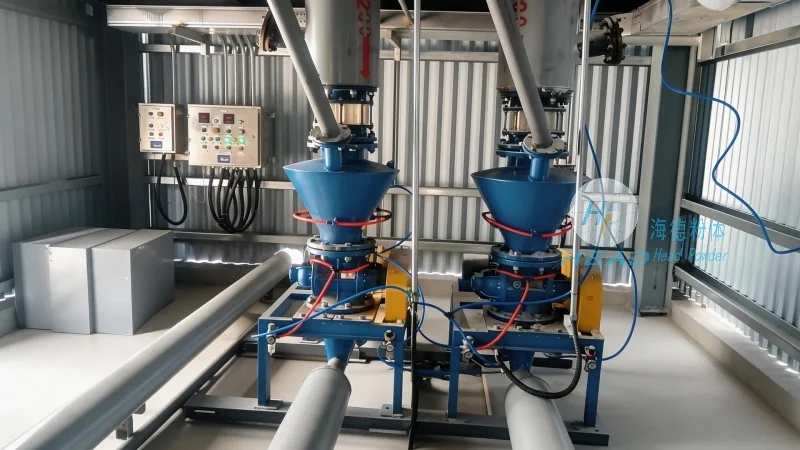
In industrial manufacturing and chemical processing, calcium nitrite is used as a raw material in the production of various chemicals and as a corrosion inhibitor. Pneumatic conveying systems are used to transport the powder from raw material storage to processing equipment, such as reactors or mixers. The dense-phase systems are often preferred in these applications due to the longer distances and the need to maintain the material's quality. For instance, in a chemical plant producing nitrite-based compounds, a dense-phase system can transport calcium nitrite from a storage silo to a reactor, ensuring a steady flow of material without the risk of clogging or degradation. The system's ability to handle abrasive materials and maintain consistent pressure is crucial for the efficiency of the chemical process.
Pharmaceutical and Specialty Chemicals
In the pharmaceutical and specialty chemicals industry, calcium nitrite is used in the formulation of certain medications and as a stabilizer in chemical formulations. Pneumatic conveying systems are employed to transport the powder in a sterile and controlled environment, ensuring that the material remains free from contaminants. The systems are typically designed with stainless steel components to meet the stringent hygiene and safety standards of the pharmaceutical industry. For example, in a pharmaceutical manufacturing facility, a dilute-phase system may be used to move calcium nitrite from a bulk container to a mixing tank, where it is combined with other ingredients. The system's low pressure and controlled airflow help maintain the material's purity and prevent cross-contamination, which is essential for producing high-quality pharmaceutical products.
Key Considerations for Selecting the Right Pneumatic Conveying System for Calcium Nitrite
When selecting a pneumatic conveying system for calcium nitrite transport, several factors must be considered to ensure optimal performance and cost-effectiveness. These factors include the material's physical properties, the distance to be conveyed, the required flow rate, and the system's compatibility with the existing infrastructure.
Material Characteristics
The physical properties of calcium nitrite, such as its particle size distribution, density, and moisture content, significantly impact the choice of system. For example, if the material has a wide range of particle sizes, a dense-phase system may be more suitable as it can handle a broader range of particle sizes without clogging. Conversely, if the material is fine and non-abrasive, a dilute-phase system may be sufficient. Additionally, the moisture content of the material affects the system's performance, as higher moisture levels can lead to increased friction and reduced airflow efficiency.

Distance and Flow Rate Requirements
The distance over which calcium nitrite needs to be conveyed and the required flow rate are critical factors in system selection. For short distances (less than 100 meters), a dilute-phase system with a positive displacement blower may be adequate. However, for longer distances (over 500 meters), a dense-phase system with a higher pressure pump is recommended to maintain the material's flow and prevent degradation. The flow rate also influences the system's design, as higher flow rates require more powerful air compressors or pumps to ensure consistent material transport.
System Integration and Maintenance
The integration of the pneumatic conveying system with existing infrastructure and the ease of maintenance are also important considerations. Systems that can be easily integrated with existing storage and processing equipment reduce installation costs and downtime. Additionally, the maintenance requirements of the system, such as the need for regular cleaning and component replacement, should be evaluated to ensure long-term operational efficiency. For example, systems with self-cleaning features or easy access to components can reduce maintenance time and costs.
About Shandong HeadPowder Engineering Co., Ltd.
Shandong HeadPowder Engineering Co., Ltd., a leading provider of material handling solutions, specializes in designing and manufacturing pneumatic conveying systems tailored to the needs of various industries. With a focus on innovation and quality, the company offers customized solutions for calcium nitrite transport and other bulk material handling applications. HeadPowder's expertise in material flow technology ensures that their systems are efficient, reliable, and safe, meeting the highest industry standards. The company's commitment to customer satisfaction and technical support has made it a trusted partner for businesses seeking to optimize their material handling processes. HeadPowder's facilities are located in Shandong, China, where they leverage advanced technology and skilled personnel to deliver superior products and services.