

What Are the Methods of Quartz Powder Conveyance?
Quartz powder, a widely used industrial material, requires efficient and reliable conveying methods to ensure smooth production processes. The choice of conveyance system depends on factors such as material properties, production scale, and operational environment. This article explores several common methods of quartz powder conveyance, highlighting their advantages and applications.

1. Air-Driven Pneumatic Conveying Systems
Pneumatic conveying, or air-driven systems, are among the most popular methods for transporting quartz powder due to their ability to handle fine powders without the need for mechanical components that might cause contamination or wear. These systems utilize compressed air to move the powder through a pipeline, often employing positive displacement or pressure differential principles. Positive displacement systems use rotary lobe or rotary vane pumps to push the powder, while pressure differential systems rely on the pressure drop created by the powder flow. The choice between these depends on the distance and volume of material to be conveyed. For instance, in large-scale operations, positive displacement systems are preferred for their high capacity and consistent flow rates. In contrast, pressure differential systems are suitable for shorter distances and lower volumes. The primary advantage of pneumatic conveying is its ability to maintain the purity of the quartz powder, as it is contained within a sealed system, preventing exposure to external contaminants. This is particularly crucial in applications where the powder is used in pharmaceuticals, electronics, or high-purity manufacturing. Additionally, pneumatic systems can handle abrasive materials like quartz powder without significant wear on components, thanks to the use of high-quality materials such as stainless steel or special alloys in the pipeline and pump parts. The efficiency of these systems is also enhanced by the use of cyclone separators and filters at the receiving end, which separate the powder from the air and return the air to the system for reuse, reducing energy consumption and operational costs.
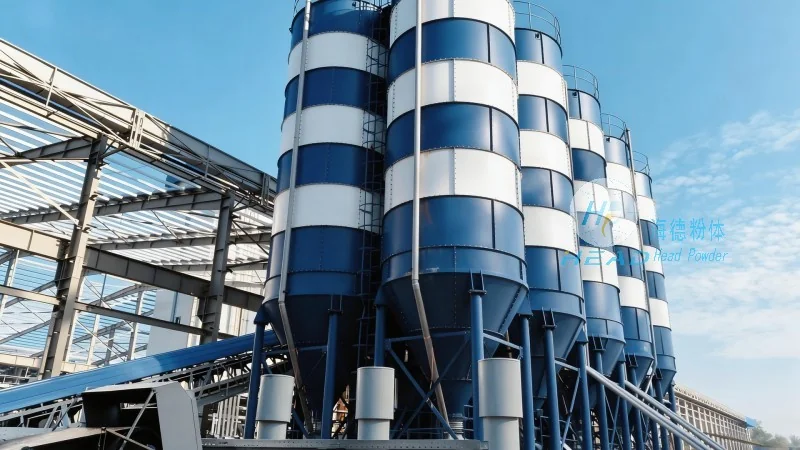
2. Screw or Auger Conveyors
Screw conveyors, also known as auger conveyors, are another effective method for transporting quartz powder, especially in applications where the material is relatively dry and free-flowing. These systems consist of a rotating screw (auger) inside a cylindrical tube, which moves the powder along the length of the conveyor. The speed and pitch of the screw can be adjusted to control the flow rate and pressure, making them versatile for various production needs. Screw conveyors are particularly suitable for horizontal or slightly inclined transport, as they can handle both light and heavy loads. Their design allows for easy integration into existing production lines, and they can be installed in a variety of configurations, including vertical lifts for elevating the powder to higher levels. The main advantage of screw conveyors is their simplicity and low maintenance requirements. Unlike pneumatic systems, they do not require compressed air or complex control systems, reducing operational costs and the risk of system failures. However, they are less effective for very fine or cohesive powders, as the screw may cause the material to stick to the tube walls, leading to blockages. In such cases, the addition of a liquid or dry lubricant can help improve flow, but this may affect the purity of the quartz powder. Screw conveyors are commonly used in industries such as food processing, chemical manufacturing, and mining, where quartz powder is used as an ingredient or filler. They are also suitable for applications where the powder needs to be mixed with other materials, as the screw can be designed to mix the components as they are conveyed.

3. Belt Conveyors
Belt conveyors are a widely used method for transporting quartz powder, especially in bulk handling operations where large volumes of material need to be moved over long distances. These systems consist of a continuous belt that runs over rollers or pulleys, with the powder placed on the belt and carried to the destination. The speed of the belt and the angle of inclination can be adjusted to control the flow rate and the height to which the powder is elevated. Belt conveyors are particularly effective for horizontal and slightly inclined transport, and they can handle a wide range of materials, including abrasive powders like quartz. The main advantage of belt conveyors is their high capacity and ability to transport large volumes of material efficiently. They are also relatively low-cost to install and maintain, making them a popular choice for many industrial applications. However, belt conveyors require regular maintenance to ensure the belt remains in good condition, as the abrasive nature of quartz powder can cause wear and tear on the belt surface. The use of high-quality, abrasion-resistant belts, such as those made from rubber or polyurethane, can extend the lifespan of the system. Additionally, the system must be properly aligned and tensioned to prevent belt slippage or misalignment, which can lead to material spillage and reduced efficiency. Belt conveyors are commonly used in mining, construction, and manufacturing industries, where quartz powder is used as a raw material or filler. They are also suitable for applications where the powder needs to be transported to a storage silo or processing unit, as the belt can be extended to cover long distances.

4. Hydraulic Conveying Systems
Hydraulic conveying systems use water or other liquids to transport quartz powder, which is particularly effective for handling wet or sticky powders. These systems consist of a pump that forces the liquid through a pipeline, carrying the powder along with it. The mixture of powder and liquid is then separated at the receiving end, typically using a cyclone or a settling tank. Hydraulic conveying is particularly suitable for applications where the powder is mixed with water or other liquids, such as in the production of quartz-based coatings or adhesives. The main advantage of hydraulic systems is their ability to handle cohesive or wet powders that are difficult to transport using other methods. The liquid acts as a carrier, preventing the powder from sticking to the pipeline walls and ensuring a smooth flow. However, hydraulic systems require additional equipment for liquid handling and separation, which increases the complexity and cost of the system. The separation process is also crucial, as it must be efficient to recover the powder and return the liquid to the system for reuse. This can be achieved using advanced filtration and separation technologies, such as centrifuges or membrane filters. Hydraulic conveying is commonly used in industries such as ceramics, paints, and coatings, where quartz powder is used as a filler or pigment. It is also suitable for applications where the powder needs to be transported in a slurry form, as the system can handle the mixture without causing blockages.