

Principle and Working Scene Characteristics of Continuous Material Feeding and Conveying System Equi
Shandong HeadPowder Engineering Co., Ltd. is a professional manufacturer specializing in the design, development, and production of continuous material feeding and conveying systems. The company is headquartered in Shandong, China, and has established a strong presence in the industry with a focus on delivering high-quality solutions for material handling needs.
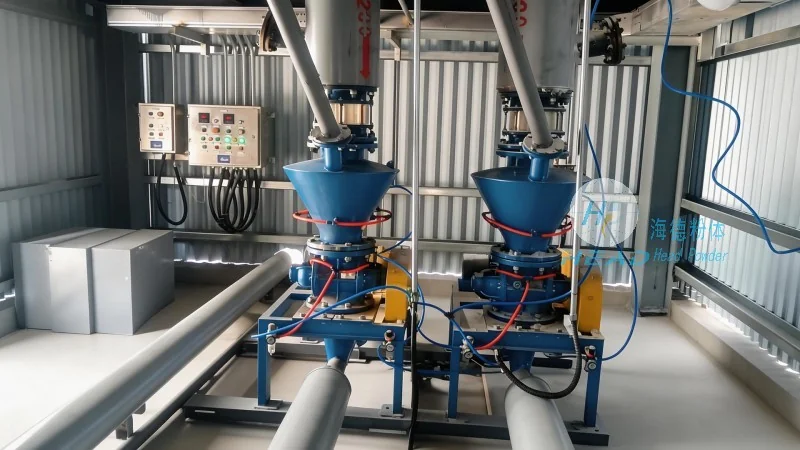
Principle of Continuous Material Feeding and Conveying Systems
Continuous material feeding and conveying systems operate on the principle of automated, unbroken material transfer from a source to a destination. These systems are engineered to handle a wide range of materials, including powders, granules, and bulk solids, with precision and efficiency. The core components typically include feeding mechanisms, conveying elements (such as belts, screws, or buckets), and control systems that coordinate the movement of materials through the process. The feeding mechanism ensures a consistent flow of material into the system, while the conveying element transports it along the designated path. Control systems, often integrated with sensors and automation technology, monitor and adjust the process parameters to maintain optimal performance and material quality. This integrated approach allows for seamless material handling, reducing manual intervention and enhancing operational reliability.

Working Scene Characteristics and Applications
The working scene characteristics of continuous material feeding and conveying systems are tailored to meet diverse industrial requirements. These systems are commonly used in sectors such as pharmaceuticals, food processing, chemical manufacturing, and mining, where the need for efficient and hygienic material transfer is critical. The design of these systems can be customized to accommodate different material properties, such as particle size, moisture content, and flowability, ensuring that the equipment operates effectively under various conditions. For instance, in pharmaceutical applications, the systems are often constructed with stainless steel components to meet stringent hygiene standards, while in food processing, they may incorporate sanitary design features to prevent contamination. The working scene also includes considerations for space optimization, as these systems are designed to fit into existing production lines without disrupting workflow. Additionally, the systems are equipped with safety features to protect operators and equipment, ensuring compliance with industry regulations. The versatility of continuous material feeding and conveying systems makes them suitable for both small-scale and large-scale operations, providing flexibility in material handling solutions.

Advantages in Material Handling
Continuous material feeding and conveying systems offer several advantages that enhance operational efficiency and productivity. One key benefit is the reduction in labor costs, as automated systems minimize the need for manual handling of materials. This not only improves safety but also increases the speed of material transfer, allowing for higher throughput in production processes. The systems also contribute to improved material quality by maintaining consistent flow rates and preventing material degradation due to prolonged exposure or handling. Additionally, the integration of sensors and control systems enables real-time monitoring and adjustment, ensuring that the process remains stable and efficient. This leads to reduced downtime and increased equipment lifespan. The adaptability of these systems allows them to be integrated with existing production lines, minimizing the need for extensive modifications. Furthermore, the energy efficiency of modern conveying systems reduces operational costs, making them a cost-effective solution for long-term material handling needs. Overall, continuous material feeding and conveying systems provide a reliable and efficient means of managing material flow, supporting the smooth operation of industrial processes.