

Gravity Dust Removal and Gas-Pneumatic Conveying Design Calculation and Equipment Selection
HeadPowder, a leading engineering firm based in Shandong, China, specializes in the design, calculation, and selection of equipment for gravity dust removal and gas-pneumatic conveying systems. This article provides a comprehensive overview of the technical aspects and practical considerations involved in implementing such systems, ensuring efficient and reliable material handling for industrial applications.

Understanding Gravity Dust Removal and Gas-Pneumatic Conveying
Gravity dust removal is a critical process in industrial operations where airborne particles are separated from a gas stream through gravitational settling. This method is particularly effective for handling fine to medium-sized dust particles, offering a cost-effective solution for many applications. The subsequent gas-pneumatic conveying system then transports the collected dust to designated storage or processing locations. The integration of these two processes ensures a seamless material handling workflow, minimizing downtime and maximizing operational efficiency.
Design Calculation for Gravity Dust Removal Systems
The design of a gravity dust removal system involves several key calculations to ensure optimal performance. First, the settling velocity of dust particles must be determined based on their size, density, and the gas flow characteristics. This is calculated using the Stokes' law or other appropriate fluid dynamics equations. The cross-sectional area of the dust removal chamber is then sized to accommodate the required gas flow rate while allowing sufficient residence time for particles to settle. The height of the chamber is also critical, as it directly impacts the separation efficiency. Engineers at HeadPowder use advanced computational tools to model these parameters, ensuring that the final design meets the specific requirements of the client's process.
Equipment Selection for Gas-Pneumatic Conveying
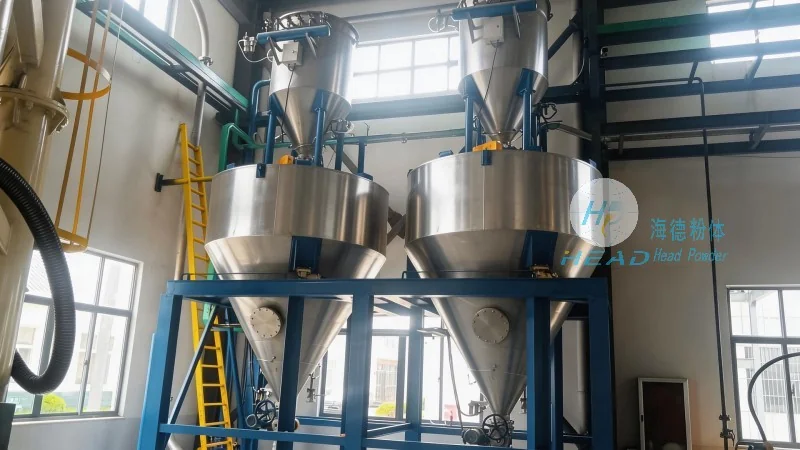
Once the dust is effectively removed, the gas-pneumatic conveying system must be selected to transport the material. The choice of equipment depends on several factors, including the material's properties (such as particle size, density, and moisture content), the conveying distance, and the required flow rate. Common equipment includes rotary valves, feeders, and conveying lines made of materials like stainless steel or polyethylene to prevent corrosion and material buildup. The selection process also considers the system's pressure requirements, as both positive and negative pressure systems are available for different applications. HeadPowder's experts evaluate these factors to recommend the most suitable equipment, ensuring long-term reliability and low maintenance costs.
Integration and System Optimization
The successful implementation of gravity dust removal and gas-pneumatic conveying systems requires careful integration of all components. This includes the dust removal unit, conveying equipment, and any necessary controls or monitoring systems. HeadPowder's engineers conduct thorough system simulations to identify potential bottlenecks and optimize the overall performance. For example, the placement of the dust removal chamber relative to the conveying line can significantly impact the system's efficiency. By adjusting the height and position, engineers can improve the separation efficiency and reduce the pressure drop in the system. Additionally, incorporating sensors and control systems allows for real-time monitoring of key parameters, such as pressure, flow rate, and particle concentration, enabling proactive maintenance and adjustments to maintain optimal performance.

Case Study: Industrial Application in Shandong
HeadPowder recently completed a project for a cement manufacturing plant in Shandong, China. The client required a system to handle fine cement dust and transport it to a storage silo. The gravity dust removal system was designed with a large settling chamber and a high-efficiency cyclone separator to capture the majority of the dust particles. The gas-pneumatic conveying system was then selected to transport the remaining particles over a distance of 50 meters. The system was successfully installed and commissioned, achieving a dust removal efficiency of over 95% and a conveying capacity of 10 tons per hour. The client reported significant improvements in operational efficiency and reduced maintenance costs compared to their previous system.
Conclusion and Future Considerations
Gravity dust removal and gas-pneumatic conveying are essential components of modern industrial material handling systems. The design and selection of appropriate equipment are critical to ensuring the system's efficiency, reliability, and cost-effectiveness. HeadPowder, with its expertise in engineering and design, provides comprehensive solutions tailored to the specific needs of each client. By leveraging advanced computational tools and practical experience, HeadPowder ensures that its clients achieve optimal performance and long-term success in their material handling operations.