

Introduction to Feather Pneumatic Conveying Systems: Structure and Working Principles
Feather pneumatic conveying systems are specialized equipment designed for the efficient and safe transportation of lightweight materials such as feathers, powders, and fine granules. As a leading manufacturer in the field, Shandong HeadPowder Engineering Co., Ltd. (referred to as HeadPowder) has been at the forefront of developing advanced pneumatic conveying solutions tailored to meet the unique demands of the poultry processing and related industries. This document provides a comprehensive overview of the system's structure and operational principles, highlighting key components and their functions.

About HeadPowder: Your Trusted Pneumatic Conveying Partner
HeadPowder, a division of Shandong HeadPowder Engineering Co., Ltd., is a professional manufacturer and supplier of pneumatic conveying systems based in Shandong, China. With years of experience in the industry, we specialize in designing, manufacturing, and delivering high-quality feather pneumatic conveying equipment that ensures reliable material handling with minimal downtime and operational costs. Our commitment to quality and customer satisfaction has established us as a trusted partner for businesses seeking efficient and effective solutions for their material transport needs.
System Structure and Key Components
The feather pneumatic conveying system typically consists of several critical components that work in tandem to achieve efficient material transport. The main parts include the material feeding hopper, the air supply unit (blower or compressor), the conveying pipeline, the control system, and the material discharge unit. Each component plays a vital role in the overall operation of the system.
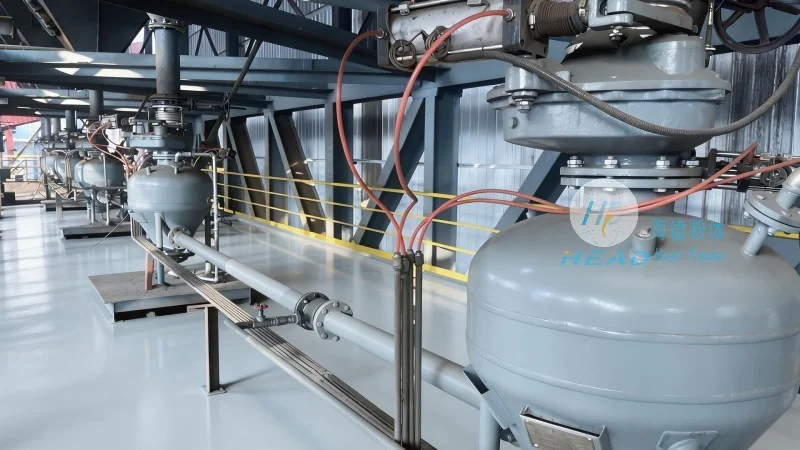
The material feeding hopper is designed to hold the feather or powder material and feed it into the conveying pipeline at a controlled rate. This hopper often features a variable speed feeder or a rotary valve to regulate the material flow, ensuring consistent and stable feeding. The air supply unit provides the necessary pressure and airflow to move the material through the pipeline. In most systems, a positive displacement blower is used due to its ability to maintain consistent pressure and airflow, even with varying material loads. The conveying pipeline is usually made of flexible or rigid materials, such as PVC or metal, depending on the application and material characteristics. The control system manages the operation of the blower, feeder, and other components, allowing for automated and remote control. Finally, the material discharge unit collects the conveyed material and directs it to the desired destination, such as a storage silo or processing unit.
Working Principles of the Pneumatic Conveying System
The operation of a feather pneumatic conveying system is based on the principle of pneumatic transport, where material is suspended and transported by a stream of air. The process begins with the material being fed from the hopper into the pipeline. The air supply unit then generates a high-pressure air flow that carries the material particles through the pipeline. As the material is suspended in the air stream, it moves along the pipeline to the discharge point. The velocity of the air and the size of the material particles determine the conveying efficiency and distance. The system may use either positive or negative pressure (or a combination of both) depending on the specific application and material characteristics. Positive pressure systems push the material through the pipeline using the blower, while negative pressure systems draw the material using a vacuum pump. The control system monitors the pressure and flow rates to maintain optimal operation and prevent blockages or other issues.

Advantages and Features of Feather Pneumatic Conveying Systems
Feather pneumatic conveying systems offer several advantages over traditional material handling methods. One of the primary benefits is the ability to transport lightweight materials like feathers over long distances without the need for mechanical components such as conveyors or elevators. This reduces the risk of material contamination and damage, which is crucial for sensitive products like feathers. Additionally, the system is compact and can be installed in various spaces, making it suitable for both new and existing facilities. The automated control system ensures consistent and reliable operation, minimizing the need for manual intervention and reducing labor costs. Furthermore, the system is easy to clean and maintain, which is essential for maintaining hygiene standards in food processing applications. HeadPowder's feather pneumatic conveying systems are designed with these advantages in mind, providing customers with a cost-effective and efficient solution for their material transport needs.
Applications and Industries
Feather pneumatic conveying systems are widely used in various industries, particularly in the poultry processing sector. They are commonly employed to transport feathers from processing plants to storage facilities or to other processing units for further use. The system can also be used to convey other lightweight powders and granules, such as flour, sugar, or other fine materials. The versatility of the system makes it suitable for a range of applications, from small-scale operations to large industrial facilities. HeadPowder's systems are designed to meet the specific requirements of each application, ensuring optimal performance and efficiency.