

Introduction to Heavy Calcium Pneumatic Conveying Line: Structure and Principle Overview
Heavy calcium, also known as heavy calcium carbonate, is a widely used industrial material in various sectors such as construction, plastics, and papermaking. The efficient and reliable transportation of heavy calcium powder from production sites to processing or packaging facilities is crucial for maintaining production efficiency and product quality. Pneumatic conveying systems have emerged as a preferred solution for handling such bulk materials due to their ability to transport powders in a closed system, minimizing dust pollution and ensuring safe operation. This article provides an overview of the heavy calcium pneumatic conveying line, focusing on its structural components and the underlying principles of operation.

Company Profile: Shandong HeadPowder Engineering Co., Ltd.
Shandong HeadPowder Engineering Co., Ltd. is a professional manufacturer and supplier specializing in the design, production, and installation of pneumatic conveying equipment. With a strong commitment to technological innovation and customer satisfaction, the company has established itself as a leading provider in the industry. HeadPowder's facilities are located in Shandong, China, where the company leverages advanced manufacturing capabilities and experienced engineering teams to deliver high-quality solutions tailored to the specific needs of clients. The company's products are widely recognized for their durability, efficiency, and compliance with international standards, making them suitable for diverse industrial applications.
Overview of Heavy Calcium Pneumatic Conveying Line
A heavy calcium pneumatic conveying line is a system designed to transport heavy calcium powder through a network of pipes using compressed air. This method offers several advantages over traditional mechanical conveying systems, including reduced labor costs, lower maintenance requirements, and improved product cleanliness. The system typically consists of several key components that work in coordination to ensure smooth and continuous material flow. These components include the material hopper, feeder, air compressor, conveying pipes, and dust collection equipment. Each component plays a critical role in the overall operation of the conveying line, and their proper integration is essential for optimal performance.
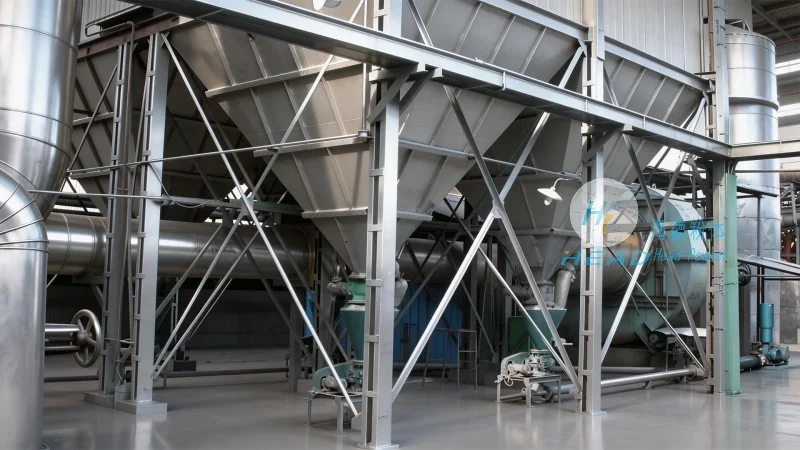
Structural Components of the Heavy Calcium Pneumatic Conveying Line
The structural design of a heavy calcium pneumatic conveying line is engineered to handle the specific characteristics of heavy calcium powder, such as its density, particle size, and flowability. The material hopper is the initial component where the heavy calcium powder is stored before being fed into the system. It is usually equipped with a feeding mechanism, such as a rotary valve or a screw feeder, which controls the flow rate of the material into the conveying line. The feeder ensures a consistent and controlled supply of powder, preventing overloading or underloading of the system. The air compressor is the heart of the pneumatic conveying system, responsible for generating the necessary pressure and airflow to move the powder through the pipes. It is typically a positive displacement compressor, which provides a stable and adjustable air supply. The conveying pipes are made of materials resistant to corrosion and wear, such as stainless steel or special plastic, to withstand the abrasive nature of heavy calcium particles. The system may also include bends, elbows, and expansion joints to accommodate changes in direction and pressure within the pipeline. Additionally, a dust collection system is integrated to capture any airborne particles, ensuring environmental compliance and maintaining a clean working environment.

Principle of Operation for the Heavy Calcium Pneumatic Conveying Line
The operation of a heavy calcium pneumatic conveying line is based on the principle of fluidization and suspension of the powder particles in a stream of air. When compressed air is introduced into the material hopper, it creates a low-pressure zone that draws the heavy calcium powder into the feeder. The feeder then meters the powder into the conveying pipe, where it is carried by the high-velocity air stream. The air velocity is maintained at a level sufficient to keep the powder particles suspended, preventing them from settling or clogging the pipes. The conveying line may include multiple sections, such as a primary conveying section and a secondary conveying section, to transport the powder over longer distances or to different destinations. The air and powder mixture is then directed to a separator, where the powder is separated from the air stream and collected in a receiving hopper. The separated air is then filtered and discharged, while the collected powder is ready for further processing or packaging. The entire process is automated and controlled by a system of valves, sensors, and control panels, which monitor parameters such as pressure, flow rate, and temperature to ensure safe and efficient operation.

Advantages and Applications of Heavy Calcium Pneumatic Conveying Line
The heavy calcium pneumatic conveying line offers several advantages over traditional conveying methods, making it an ideal choice for industries dealing with heavy calcium powder. These advantages include high conveying efficiency, reduced dust pollution, minimal product contamination, and lower energy consumption. The system is also flexible and can be easily scaled to accommodate varying production volumes and distances. The applications of this technology are widespread, including the transportation of heavy calcium from storage silos to production lines, from production facilities to packaging areas, and between different processing stages. In the construction industry, it is used to transport heavy calcium for concrete and mortar production. In the plastics industry, it is employed to feed heavy calcium into polymerization reactors. In the papermaking industry, it is utilized to supply heavy calcium for coating and filler applications. The versatility and reliability of the heavy calcium pneumatic conveying line make it a critical component in modern industrial operations.
Conclusion
In conclusion, the heavy calcium pneumatic conveying line is a sophisticated and efficient system designed to handle the transportation of heavy calcium powder with precision and reliability. The structural components and operational principles of the system are carefully engineered to ensure optimal performance, safety, and environmental compliance. Shandong HeadPowder Engineering Co., Ltd. has been at the forefront of developing and providing such systems, leveraging advanced technology and industry expertise to meet the diverse needs of clients. As industries continue to demand higher efficiency and quality in material handling, the heavy calcium pneumatic conveying line remains a vital solution for the seamless and safe transportation of heavy calcium powder. The integration of such systems not only enhances production efficiency but also contributes to a cleaner and more sustainable industrial environment.