

Introduction to Dry Denitration Equipment: Structure and Working Principle
Industrial facilities, particularly those utilizing combustion processes, often face stringent environmental regulations concerning nitrogen oxide (NOx) emissions. To address this challenge, advanced air pollution control technologies such as dry denitration equipment have emerged as effective solutions. This equipment is designed to reduce NOx levels in flue gas streams, thereby minimizing environmental impact and ensuring compliance with regulatory standards. The following sections provide an overview of the dry denitration equipment offered by Shandong HeadPowder Engineering Co., Ltd., detailing its structural components and operational principles.

Company Profile: Shandong HeadPowder Engineering Co., Ltd.
As a leading manufacturer in the field of environmental engineering, Shandong HeadPowder Engineering Co., Ltd. specializes in the design, development, and supply of advanced air pollution control systems. With a strong commitment to innovation and quality, the company has established itself as a trusted partner for industrial clients seeking reliable solutions for NOx reduction. HeadPowder's expertise lies in creating customized dry denitration equipment tailored to the specific requirements of various industrial applications, including power plants, cement factories, and industrial boilers. The company's operational base is located in Shandong, China, where it leverages local resources and technical expertise to deliver high-performance equipment that meets international standards.
Structural Components of Dry Denitration Equipment
The dry denitration system typically consists of several key components that work in tandem to achieve efficient NOx reduction. The primary structural elements include:

- Flue Gas Preheater: This component preheats the incoming flue gas to an optimal temperature range, which is crucial for enhancing the catalytic reaction efficiency. By raising the temperature, the system ensures that the catalysts operate within their most effective performance window.
- Denitration Reactor: The reactor housing contains the catalyst bed, where the actual NOx conversion takes place. The reactor is designed with a robust structure to withstand high temperatures and corrosive gas environments, ensuring long-term durability and reliability.
- Catalyst Bed: At the heart of the denitration process, the catalyst bed comprises specialized materials (often based on titanium dioxide or other metal oxides) that facilitate the chemical reduction of NOx to nitrogen (N₂) and water (H₂O). The catalyst's surface area and composition are optimized to maximize reaction rates while minimizing pressure drop across the system.
- Control System: An integrated control system monitors and regulates key parameters such as temperature, gas flow rate, and catalyst activity. This system ensures that the equipment operates within safe and efficient conditions, adapting to variations in feed gas composition and load changes.
- Gas Distribution System: This system ensures uniform distribution of flue gas across the catalyst bed, preventing hot spots and ensuring consistent contact between the gas and catalyst surfaces. Proper gas distribution is critical for achieving uniform NOx reduction and maintaining optimal performance.
Working Principle of Dry Denitration Equipment
The dry denitration process operates on the principle of selective catalytic reduction (SCR), where a reducing agent (typically ammonia or urea) is introduced into the flue gas stream. The reducing agent reacts with NOx over the catalyst surface, converting nitrogen oxides into harmless nitrogen and water. The overall chemical reaction can be represented as follows:
4NH₃ + 4NO + O₂ → 4N₂ + 6H₂O
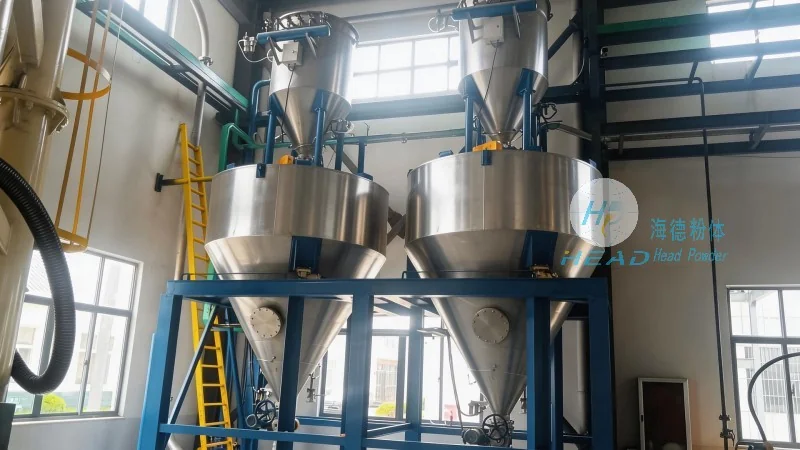
During operation, flue gas from the combustion process enters the preheater, where it is heated to the required temperature. The heated gas then flows into the denitration reactor, passing through the catalyst bed. Simultaneously, the reducing agent is injected into the gas stream upstream of the catalyst. As the gas contacts the catalyst, the chemical reaction occurs, leading to a significant reduction in NOx concentrations. The treated gas, now with reduced NOx levels, exits the reactor and is subsequently discharged to the atmosphere.

Key Advantages of Dry Denitration Equipment
Shandong HeadPowder Engineering Co., Ltd.'s dry denitration equipment offers several advantages that make it a preferred choice for industrial applications:
- High NOx Reduction Efficiency: The optimized catalyst design and operating conditions enable the system to achieve NOx reduction rates of up to 90% or higher, depending on the specific application and gas conditions.
- Low Operating Costs: By utilizing dry catalysts and minimizing the need for wet scrubbing processes, the equipment reduces water consumption and chemical usage, leading to lower operational expenses over the equipment's lifecycle.
- Compact and Space-Efficient: The modular design of the dry denitration system allows for easy installation in existing facilities, requiring minimal space and infrastructure modifications.
- Robust and Durable: Constructed with high-quality materials and engineered to withstand harsh operating conditions, the equipment offers long service life and minimal maintenance requirements.
- Adaptability: The system can be customized to accommodate varying flue gas compositions, temperatures, and flow rates, making it suitable for a wide range of industrial processes.
Conclusion
Shandong HeadPowder Engineering Co., Ltd. provides advanced dry denitration equipment that effectively addresses the challenges of NOx emissions in industrial applications. By integrating robust structural components and efficient catalytic processes, the equipment ensures high performance, low operating costs, and long-term reliability. With its headquarters in Shandong, China, HeadPowder continues to innovate and deliver solutions that meet the evolving environmental standards, supporting sustainable industrial operations worldwide.