

Operation Process and Working Principle of Pneumatic Conveying Equipment for Lithium-Ion Battery Nan
HeadPowder, a leading manufacturer based in Shandong, China, specializes in advanced pneumatic conveying systems tailored for the handling of lithium-ion battery nanomaterials. This equipment is designed to efficiently transport fine powders and nanomaterials used in the production of lithium batteries, ensuring precision, reliability, and safety in material handling processes.
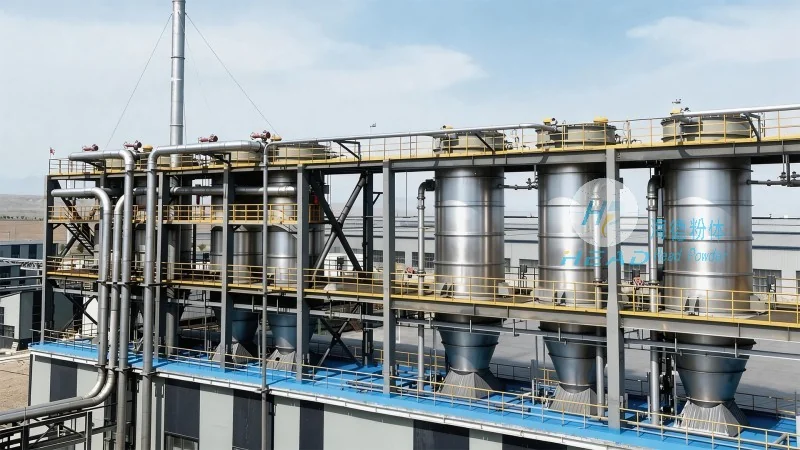
Introduction to Pneumatic Conveying Equipment for Lithium-Ion Battery Nanomaterials
The pneumatic conveying system for lithium-ion battery nanomaterials is a critical component in modern battery manufacturing facilities. It enables the seamless transfer of sensitive nanomaterials such as lithium cobalt oxide, lithium iron phosphate, and other high-purity powders from storage silos to processing equipment. The system is engineered to maintain material integrity, minimize contamination, and optimize production throughput. HeadPowder's solution integrates advanced control systems and robust construction to meet the stringent requirements of the battery industry.
Key Components and Structure of the Pneumatic Conveying System
The pneumatic conveying equipment typically consists of several key components, including a material hopper, feeder, air compressor, conveying line, and receiver. The material hopper is designed to store the nanomaterials and feed them into the system at a controlled rate. The feeder ensures a consistent flow of material, preventing blockages and maintaining system efficiency. The air compressor generates the necessary pressure to move the material through the conveying line, which is often made of stainless steel to resist corrosion and ensure durability. The receiver collects the material at the destination point, such as a mixing or coating unit, and the system may include filters and cyclones to separate any entrained air and maintain material purity.

Operation Process of the Pneumatic Conveying Equipment
The operation of the pneumatic conveying system for lithium-ion battery nanomaterials follows a systematic process. Initially, the nanomaterials are loaded into the material hopper. The feeder then starts, delivering a controlled amount of material into the conveying line. Simultaneously, the air compressor activates, generating a flow of compressed air that propels the material through the pipeline. The material is carried by the air stream, moving from the hopper to the receiver. The system may include multiple conveying lines or a loop system to handle different material routes or to return excess air and material. The receiver collects the material, and the process continues until the desired quantity is transferred. The entire operation is monitored by the control system, which adjusts parameters like air pressure and material feed rate to maintain optimal performance.
Working Principle of the Pneumatic Conveying System
The working principle of the pneumatic conveying system relies on the interaction between the material and the air stream. In a dilute-phase conveying system, the material is suspended in the air as it travels through the pipeline, allowing for high-velocity transport and minimal pressure drop. The system operates by creating a pressure differential between the hopper and the receiver, with the air compressor providing the necessary pressure to overcome resistance and move the material. The air flow is carefully controlled to ensure that the material is not damaged or agglomerated during transport. The system may also use cyclone separators or filters to remove any fine particles or moisture, maintaining the quality of the nanomaterials. The control system continuously monitors pressure, flow rate, and material level, ensuring that the process runs smoothly and efficiently.

Advantages and Applications of the Pneumatic Conveying Equipment
HeadPowder's pneumatic conveying equipment for lithium-ion battery nanomaterials offers several advantages over traditional mechanical conveying methods. It provides a dust-free and enclosed environment, reducing the risk of contamination and improving workplace safety. The system is also highly flexible, allowing for multiple material routes and easy integration with existing production lines. Additionally, the equipment is designed for high efficiency, with minimal material loss and low maintenance requirements. The system is widely used in the production of lithium-ion batteries, including the handling of cathode materials, anode materials, and electrolyte components. It is particularly suitable for high-purity nanomaterials that require precise control and minimal exposure to external factors.
Conclusion
HeadPowder's pneumatic conveying equipment for lithium-ion battery nanomaterials is a reliable and efficient solution for material handling in the battery manufacturing industry. By understanding the operation process and working principle of this equipment, manufacturers can optimize their production processes, improve material quality, and enhance overall operational efficiency. The advanced design and robust construction of the system ensure long-term performance and durability, making it a valuable asset for any battery production facility.