

Principle and Working Scene Characteristics of Barite Powder Material Handling Conveying Lines
Barite powder material handling conveying lines are critical components in industrial processes, particularly in the mining and chemical sectors where the efficient transport of heavy and fine powders is essential. These systems are designed to handle barite powder, a dense mineral often used as a weighting agent in drilling fluids, with precision and reliability. Understanding the principle and working scene characteristics of such conveying lines is crucial for optimizing material flow and ensuring operational efficiency in various industrial applications.

The Principle of Barite Powder Material Handling Conveying Lines
The core principle of barite powder material handling conveying lines revolves around the integration of mechanical and gravitational forces to move the powder from a source to a destination. Typically, these systems employ screw conveyors, bucket elevators, or pneumatic conveying systems, each tailored to the specific characteristics of barite powder—such as its density, particle size, and flowability. Screw conveyors, for instance, use a rotating helical screw to push the powder forward, leveraging the friction between the screw and the material to achieve continuous transport. Bucket elevators, on the other hand, utilize a series of buckets attached to a belt or chain that lifts the powder vertically and then deposits it at the top. Pneumatic conveying systems employ air pressure to transport the powder through pipes, which is particularly effective for fine powders that are prone to dusting or clogging in traditional mechanical systems. The choice of system depends on factors like the distance to be covered, the height of the lift, and the required flow rate, ensuring that the conveying line operates at optimal efficiency.
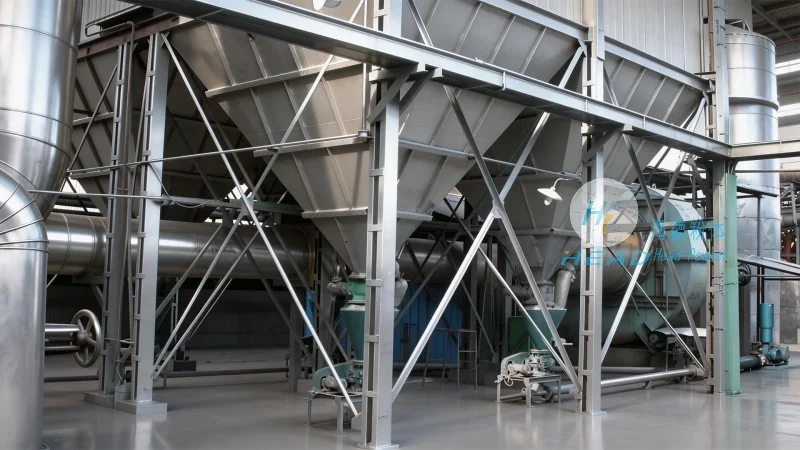
Working Scene Characteristics of Barite Powder Material Handling Conveying Lines
The working scene characteristics of barite powder material handling conveying lines vary significantly based on the industrial application and the environment in which they are deployed. In mining operations, for example, these systems are often used to transport barite from ore processing facilities to storage silos or loading areas, where the heavy density of the powder necessitates robust and durable equipment to withstand the harsh conditions of the mine. The conveying lines in such scenarios are typically designed with heavy-duty components, such as reinforced steel frames and wear-resistant liners, to prevent damage from the abrasive nature of the powder and the constant mechanical stress. In chemical processing plants, barite powder is used as a weighting agent in drilling fluids, and the conveying lines must be able to handle the powder in conjunction with other chemicals, requiring systems that are chemically resistant and capable of maintaining a consistent flow rate to ensure the quality of the final product. Additionally, in pharmaceutical or food processing industries, where the purity of the barite powder is critical, the conveying lines are often equipped with dust collection systems and sterile components to prevent contamination and maintain compliance with regulatory standards. The working scene characteristics also include considerations of space constraints, as in urban or compact industrial settings, where the conveying lines are designed to be compact and flexible, using vertical or inclined configurations to maximize space utilization while maintaining efficient material transport.
Company Overview and Expertise in Barite Powder Conveying Solutions
Shandong HeadPowder Engineering Co., Ltd., commonly known as headpowder, is a leading manufacturer and supplier of specialized material handling equipment, including barite powder conveying lines. With a strong presence in China, particularly in Shandong province, the company has established itself as a trusted partner for industries requiring reliable and efficient conveying solutions. Headpowder specializes in designing and manufacturing custom conveying systems tailored to the unique needs of each client, ensuring that the equipment is optimized for the specific characteristics of the barite powder, such as its density, particle size distribution, and flowability. The company's expertise lies in integrating advanced engineering principles with practical industrial applications, resulting in conveying lines that are not only efficient but also durable and low-maintenance. By leveraging years of experience in the industry, headpowder has developed a comprehensive range of products, from standard screw conveyors to customized pneumatic systems, all of which are designed to meet the highest standards of performance and safety.

Key Features and Benefits of HeadPowder's Barite Powder Conveying Lines
HeadPowder's barite powder material handling conveying lines offer several key features that make them ideal for industrial applications. One of the primary benefits is their high efficiency in transporting dense and fine powders, which reduces the time and labor required for material handling and improves overall production throughput. The systems are also designed for durability, with components made from high-quality materials that can withstand the abrasive nature of barite powder and the harsh operating conditions. This durability translates to lower maintenance costs and longer service life, providing a significant return on investment for clients. Additionally, the conveying lines are equipped with advanced control systems that allow for precise regulation of the flow rate, ensuring consistent material delivery and preventing overloading or underloading of downstream equipment. The systems are also designed for safety, with features such as emergency stop buttons, overload protection, and dust suppression mechanisms to minimize the risk of accidents and ensure compliance with safety regulations. Furthermore, the compact and modular design of the conveying lines allows for easy installation and integration into existing industrial setups, reducing downtime and installation costs.