

Introduction to and Structural Principles of a Protein Powder Pneumatic Conveying System
Protein powder, a critical component in the food and beverage industry, requires efficient and reliable handling solutions to maintain product quality and operational efficiency. The pneumatic conveying system offered by Shandong HeadPowder Engineering Co., Ltd. (referred to as HeadPowder) is designed to address these needs, providing a robust method for transporting protein powders with precision and minimal risk of contamination.

Key Components and Structural Design
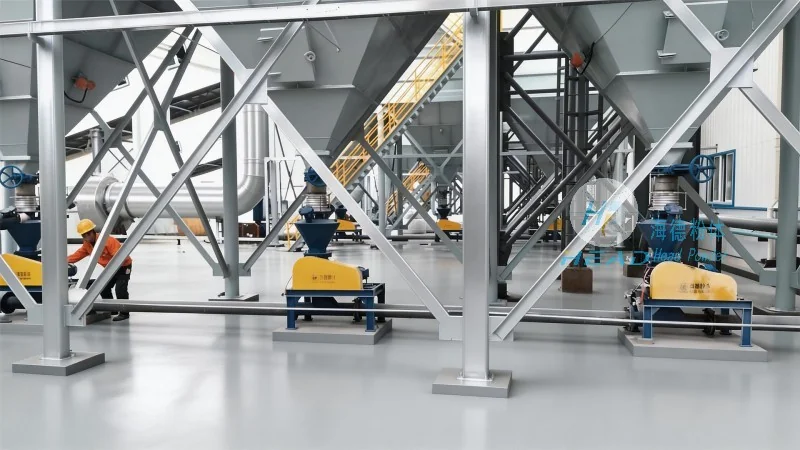
The system's design incorporates several key components that work in tandem to ensure optimal performance. At its core is the conveying line, which typically consists of a pipeline system equipped with air movers and material feed mechanisms. The air compressor generates the necessary pressure to move the powder through the pipeline, while the feed hopper and distribution unit control the flow of protein powder into the system. Additionally, the separation and collection equipment ensures that the powder is deposited accurately at the destination, minimizing loss and ensuring consistent product delivery.

Working Principle of the Pneumatic Conveying Process
The operation of the protein powder pneumatic conveying system is based on the fundamental principle of air movement. As the air compressor produces compressed air, it is introduced into the pipeline, creating a flow that carries the protein powder particles. The system utilizes either dense-phase or dilute-phase conveying, depending on the specific requirements of the application. Dense-phase conveying, for instance, involves a higher concentration of powder in the air stream, which reduces particle breakage and ensures a smoother flow, while dilute-phase conveying is suitable for longer distances or larger volumes.

Advantages of the System for Protein Powder Handling
Implementing a pneumatic conveying system for protein powders offers several advantages over traditional methods such as belt conveyors or bucket elevators. Firstly, it eliminates the need for physical contact between the powder and the conveying equipment, reducing the risk of contamination from metal or other materials. Secondly, the system provides a more hygienic environment, which is crucial for food-grade products. Thirdly, it offers flexibility in terms of layout, allowing for vertical, horizontal, or mixed-direction transport, and can be easily integrated into existing production lines. Furthermore, the system's ability to handle varying powder characteristics, such as moisture content or particle size, makes it a versatile solution for different protein powder types.
Application Scenarios and Operational Considerations
The protein powder pneumatic conveying system is widely used in various applications within the food and beverage industry. It is commonly employed in the production of whey protein, soy protein, and other plant-based protein powders, where consistent quality and low contamination are paramount. The system is also suitable for use in research and development facilities, where precise powder handling is required for formulation testing. Operational considerations include maintaining proper air pressure, ensuring the pipeline is free from blockages, and regularly cleaning the system to prevent powder buildup. These measures help to ensure the system operates efficiently and maintains the quality of the protein powder throughout the conveying process.
Conclusion and Company Information
Shandong HeadPowder Engineering Co., Ltd. specializes in providing advanced pneumatic conveying solutions tailored to the unique needs of the protein powder industry. By leveraging its expertise in system design and engineering, HeadPowder delivers systems that enhance operational efficiency, maintain product integrity, and meet the stringent standards of the food and beverage sector. With its headquarters in Shandong, China, HeadPowder continues to be a trusted partner for businesses seeking reliable and effective protein powder handling solutions.