

Principles and Working Scene Characteristics of Limestone Powder Material Handling
HeadPowder, a leading provider of material handling solutions, specializes in the efficient and reliable transport of limestone powder. This article explores the fundamental principles behind limestone powder material handling and highlights the key characteristics of its application across various industrial settings.
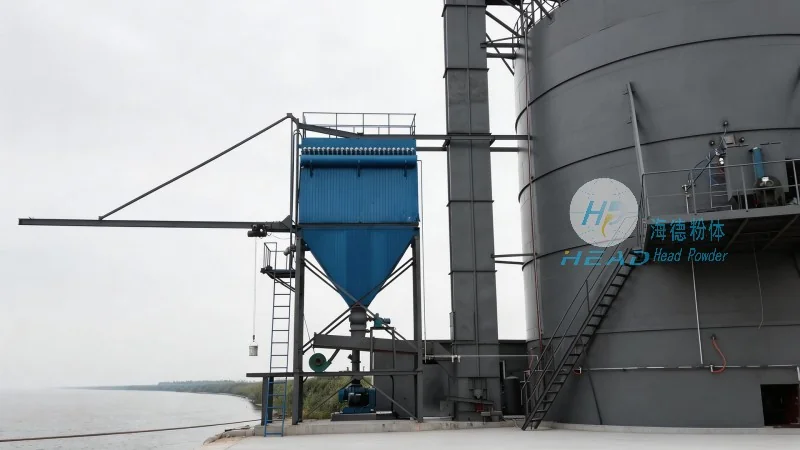
Introduction to Limestone Powder Material Handling
Limestone powder, a crucial raw material in industries such as cement production, chemical manufacturing, and construction, requires specialized handling techniques to ensure safety, efficiency, and product integrity. The process of transporting limestone powder involves understanding its physical properties, selecting appropriate equipment, and optimizing operational parameters to minimize dust generation, energy consumption, and material loss.
Core Principles of Limestone Powder Material Handling
The primary principle of limestone powder material handling is to maintain the material's flowability while preventing agglomeration or caking. Limestone powder, being a fine particulate, is prone to sticking to surfaces and forming blockages in traditional conveyor systems. Therefore, advanced handling methods, including pneumatic conveying and mechanical feeding systems, are employed to address these challenges. Pneumatic conveying, for instance, uses air pressure to move the powder through pipelines, reducing the risk of dust exposure and ensuring a consistent flow rate. Mechanical systems, such as screw conveyors and belt conveyors, are also utilized, particularly in applications where bulk material handling is required.

Working Scene Characteristics of Limestone Powder Handling
The working scene characteristics of limestone powder material handling vary significantly based on the industry and application. In cement plants, limestone powder is often processed in large-scale production lines where it is mixed with other raw materials to form clinker. The handling systems in these settings must be capable of handling high volumes of material while maintaining precise control over the feed rate to ensure consistent product quality. In chemical manufacturing, limestone powder may be used as a filler or reactant in processes that require fine, uniform particles. Here, the handling equipment must be designed to minimize particle size variation and prevent contamination from other materials.
Key Factors Influencing Limestone Powder Handling Efficiency
Several factors contribute to the efficiency of limestone powder material handling. Firstly, the moisture content of the limestone powder is critical. Excess moisture can cause the powder to clump together, leading to blockages in conveyor systems. Proper drying and moisture control measures are therefore essential. Secondly, the particle size distribution of the limestone powder affects its flowability. Coarser particles tend to flow more freely, while finer particles are more prone to dust generation and caking. Equipment selection must consider the specific particle size characteristics of the limestone powder to optimize handling performance. Thirdly, the scale of the operation plays a significant role. Large-scale industrial applications require robust, high-capacity handling systems, while smaller-scale operations may benefit from more compact and flexible solutions.
Application Examples in Industrial Settings
Limestone powder material handling is integral to numerous industrial processes. In the cement industry, limestone powder is transported from storage silos to grinding mills where it is ground into fine powder and mixed with other raw materials. The handling systems in cement plants often include multiple stages, such as bulk material handling, pneumatic conveying, and dosing systems, to ensure a seamless flow of material from extraction to production. In the chemical industry, limestone powder may be used in the production of calcium carbonate, a widely used industrial chemical. The handling of limestone powder in this context involves precise dosing and mixing to achieve the desired chemical composition. Additionally, in the construction industry, limestone powder is used as a filler in concrete and mortar, where it is transported from storage facilities to mixing sites using belt conveyors or truck loading systems.

Advantages of Professional Material Handling Solutions
Utilizing specialized material handling solutions, such as those provided by Shandong HeadPowder Engineering Co., Ltd., offers several advantages. These include improved safety by reducing dust exposure, enhanced efficiency through optimized material flow, and increased product quality by minimizing material loss and contamination. Professional handling systems are designed to meet the specific requirements of limestone powder, ensuring that the material is transported safely and efficiently from source to destination. The expertise of companies like HeadPowder in material handling technology allows them to provide tailored solutions that address the unique challenges of limestone powder processing.
Conclusion
In conclusion, the principles and working scene characteristics of limestone powder material handling are critical to the success of various industrial applications. By understanding the physical properties of limestone powder and selecting appropriate handling equipment, industries can ensure efficient, safe, and reliable transport of this essential raw material. Companies like Shandong HeadPowder Engineering Co., Ltd., with their expertise in material handling solutions, play a vital role in supporting these operations and contributing to the overall efficiency of industrial processes.