

Organic Silicon Powder Pneumatic Conveying: An Overview and Structural Principles
Organic silicon powder pneumatic conveying is a key technology in material handling, especially for handling fine powders like organic silicon. This method involves transporting powder particles through a pipeline using a gas stream, typically air. The process is widely used in industries such as chemical manufacturing, pharmaceuticals, and electronics due to its efficiency and flexibility.

Introduction to Pneumatic Conveying of Silicone Powder
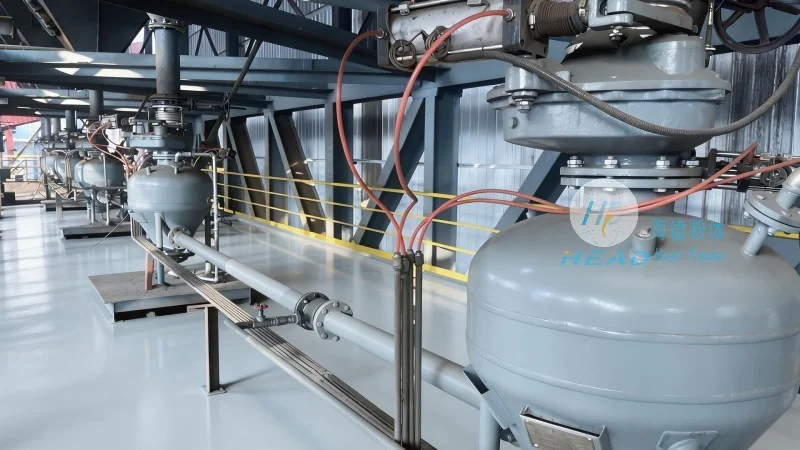
Pneumatic conveying systems for organic silicon powder are designed to transport the material from a source to a destination without the need for mechanical components like belts or buckets. The system typically consists of several key components: a feeder to introduce the powder into the system, a conveying line where the powder is carried by the gas stream, a separator to separate the powder from the air at the end of the line, and a gas source (usually a blower or compressor) to provide the necessary pressure and flow rate.
Structural Principles of the Pneumatic Conveying System
The structural design of a pneumatic conveying system for organic silicon powder is based on fluid dynamics and particle mechanics. The system must be able to handle the specific properties of organic silicon powder, which may include low bulk density, high dustiness, and potential for agglomeration. The design considerations include the selection of appropriate materials for the conveying line to prevent corrosion or contamination, the use of efficient feeders to maintain a consistent flow rate, and the implementation of proper separation techniques to recover the powder and clean the air.

Key Components and Their Functions
Each component in the pneumatic conveying system plays a critical role in ensuring effective and reliable operation. The feeder, often a rotary valve or a venturi feeder, controls the rate at which the organic silicon powder is introduced into the system. The conveying line, which can be either a positive pressure or negative pressure system, transports the powder particles through the pipeline. The positive pressure system uses a blower to push the air and powder mixture through the line, while the negative pressure system uses a vacuum to pull the mixture. The separator, such as a cyclone or a bag filter, separates the powder from the air, allowing the powder to be collected and the air to be discharged or recycled.
Advantages of Pneumatic Conveying for Organic Silicon Powder
Pneumatic conveying offers several advantages over traditional mechanical conveying methods for organic silicon powder. These include the ability to handle fine and dusty powders without the risk of clogging or contamination, the flexibility to transport materials over long distances or through complex layouts, and the reduced risk of product degradation due to minimal contact with equipment. Additionally, the system can be easily integrated with other processing equipment, such as mixers or reactors, to form a continuous production line.
About Shandong HeadPowder Engineering Co., Ltd.
Shandong HeadPowder Engineering Co., Ltd., commonly known as HeadPowder, is a leading manufacturer and supplier of pneumatic conveying systems and related equipment for the handling of organic silicon powder and other fine materials. With a focus on innovation and quality, the company has developed advanced solutions tailored to the specific needs of the chemical and pharmaceutical industries. HeadPowder's expertise in material handling technology ensures that their systems are efficient, reliable, and safe for handling sensitive materials like organic silicon powder.
The company is headquartered in Shandong, China, and serves clients worldwide with customized solutions that meet their specific requirements. By combining years of experience with cutting-edge technology, HeadPowder provides comprehensive support from system design and installation to maintenance and troubleshooting, ensuring optimal performance and longevity of the pneumatic conveying systems.