

Working Principle and Features of Talc Powder Material Handling Systems
The company, Shandong HeadPowder Engineering Co., Ltd., specializes in providing advanced material handling solutions for industries dealing with talc powder. HeadPowder is dedicated to delivering high-quality equipment that ensures efficient and reliable processing of talc powder, a key mineral used in various manufacturing processes.
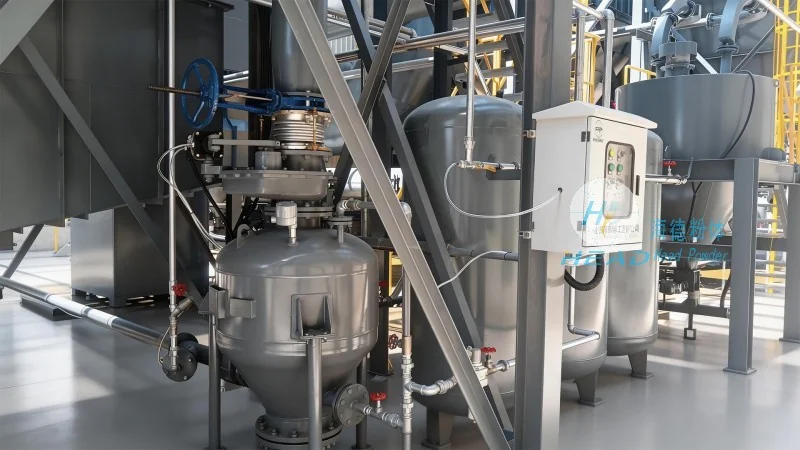
Working Principle of Talc Powder Material Handling Systems
The working principle of talc powder material handling systems involves a series of integrated components designed to handle the unique properties of talc powder. The process typically begins with the reception of raw talc powder, which is then fed into a storage silo or hopper. From there, the powder is transferred to a vibrating feeder or conveyor system that regulates the flow rate and ensures uniform material distribution. The system may include screening equipment to remove impurities or oversized particles, followed by a conveyor or pneumatic transport system that moves the processed talc powder to the next stage of production or storage. This integrated approach ensures that talc powder is handled from raw material reception to final delivery with minimal loss and maximum efficiency.

Key Features of Talc Powder Material Handling Systems
Key features of these systems include high efficiency in material transport, precise control over flow rates to minimize waste and optimize processing, and robust construction to withstand the abrasive nature of talc powder. The equipment is designed with low maintenance requirements, ensuring long-term operational reliability and cost-effectiveness for industrial applications. Additionally, the systems often incorporate advanced control technologies such as PLC (Programmable Logic Controller) systems that allow for automated operation and real-time monitoring of the material flow, enhancing overall process control and product quality.

Technical Specifications and Advantages
Technical specifications often include adjustable speed controls, durable materials such as stainless steel or corrosion-resistant alloys to prevent material buildup and contamination, and integrated safety features like overload protection and emergency stop mechanisms. The advantages of using such systems include improved product quality through consistent processing, reduced labor costs due to automated operations, and enhanced safety in handling potentially dusty or hazardous materials. The systems are also designed to be scalable, allowing businesses to expand their material handling capabilities as production needs grow.

Application Scenarios
These material handling systems are widely used in industries such as chemical manufacturing, paper production, plastics processing, and cosmetics. In chemical plants, talc powder is used as a filler or extender, and the handling system ensures that the powder is delivered to reactors or mixing units without segregation or contamination. In the paper industry, talc is added to improve paper quality, and the system maintains consistent particle size distribution to achieve the desired paper properties. Similarly, in the plastics industry, talc is used to enhance the mechanical strength and stability of plastic products, and the efficient handling system ensures that the powder is uniformly mixed with the base polymer. In the cosmetics industry, talc is used in various formulations, and the system ensures that the powder is handled hygienically and free from contamination, meeting strict quality standards.