

Technical Parameters and Transport System Process of Hot Dry Ash
HeadPowder, a leading engineering company based in Shandong, China, specializes in providing advanced solutions for hot dry ash handling and transport systems. This article delves into the technical parameters and process of the transport system, offering a comprehensive overview of the technology used in modern waste-to-energy and industrial applications.
Company Overview
HeadPowder Engineering Co., Ltd. is a professional enterprise dedicated to the research, development, and application of hot dry ash technology. With a strong focus on innovation and efficiency, the company has established itself as a key player in the field of ash handling systems. Based in Shandong, China, HeadPowder leverages local expertise and resources to deliver high-quality solutions tailored to the needs of various industrial sectors.
Technical Parameters of Hot Dry Ash
The technical parameters of hot dry ash are critical for ensuring the safe and efficient operation of transport systems. Key parameters include ash temperature, moisture content, particle size distribution, and bulk density. These factors directly impact the selection of equipment such as ash coolers, conveyors, and storage silos. For instance, high-temperature ash requires specialized cooling mechanisms to prevent equipment damage and ensure worker safety. The moisture content affects the flowability of ash, influencing the choice of conveyor type—whether pneumatic or mechanical. Particle size distribution determines the suitability of different transport methods, as fine particles may require dust control measures to prevent environmental contamination. Bulk density is essential for calculating the capacity and power requirements of the transport system, ensuring optimal performance and energy efficiency.

Conveying System Process
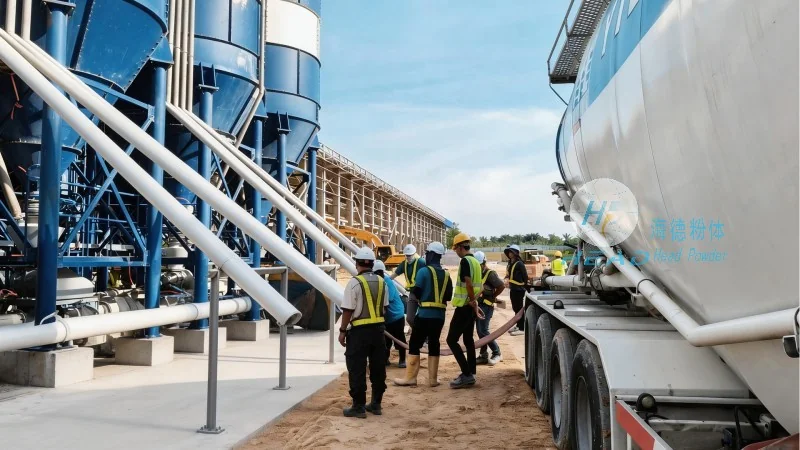
The transport system for hot dry ash typically involves a multi-stage process designed to handle the material from the boiler to the final storage or disposal location. The process begins with the collection of hot ash from the boiler outlet, where it is transferred to an ash cooler. The cooler reduces the temperature of the ash to a manageable level, often using air or water as a cooling medium. Once cooled, the ash is conveyed to a storage silo or directly to the next processing stage. The conveying system may use pneumatic systems, where ash is transported through pipelines using compressed air, or mechanical systems, such as belt conveyors or screw conveyors. Pneumatic systems are preferred for high-temperature or fine ash, as they offer flexibility and minimal maintenance. Mechanical systems are suitable for larger particle sizes and require less energy for operation. The selection of the conveying method depends on factors like ash characteristics, distance to be transported, and environmental regulations. After transport, the ash may undergo further processing, such as pelletization or utilization in construction materials, enhancing the overall efficiency of the system.

Key Components and Their Functions
Several key components are integral to the hot dry ash transport system. The ash cooler is the first critical component, responsible for reducing the temperature of the hot ash to prevent equipment damage and ensure safe handling. It typically consists of a heat exchanger where the ash flows through while being cooled by a circulating fluid. The conveyor system, whether pneumatic or mechanical, is responsible for moving the ash from the cooler to the storage or processing area. Pneumatic conveyors use air pressure to transport ash through pipes, while mechanical conveyors rely on belts or screws to move the material. The storage silo is another essential component, designed to hold the cooled ash until it is transported to the final destination. Silos are constructed with materials resistant to ash corrosion and have features like dust collection systems to minimize environmental impact. Additionally, control systems are used to monitor and regulate the entire process, ensuring that parameters such as temperature, pressure, and flow rate are maintained within safe operating limits. These systems provide real-time data and alerts, enabling operators to quickly address any issues that may arise during operation.
Application and Industry Impact
Hot dry ash transport systems are widely used in power plants, industrial facilities, and waste-to-energy plants. In power plants, these systems are crucial for managing the ash generated from coal combustion, reducing the environmental impact of ash disposal. The efficient transport of ash allows for proper storage and potential reuse, contributing to sustainability goals. In industrial applications, the technology is used to handle ash from various processes, such as metal smelting or chemical production. The ability to transport hot dry ash safely and efficiently enhances operational efficiency and reduces downtime. The adoption of advanced transport systems has led to improved safety standards, as the risk of accidents related to hot ash handling is minimized. Additionally, the technology supports the circular economy by enabling the reuse of ash in construction materials, reducing the need for virgin resources and minimizing waste. Overall, the hot dry ash transport system plays a vital role in modern industrial operations, balancing efficiency, safety, and environmental responsibility.