

Operation Process and Working Principle of Dilute Phase Pneumatic Conveying
Dilute phase pneumatic conveying is a critical technology in material handling, widely used for transporting powders and granular materials over long distances with efficiency and reliability. This method involves the use of a gas stream, typically air, to move particles through a pipeline. The process is characterized by the low concentration of solids in the conveying medium, which distinguishes it from dense phase conveying. Understanding the operation process and working principle is essential for optimizing system performance and ensuring safe, effective material transport.

Working Principle of Dilute Phase Pneumatic Conveying
The core of dilute phase pneumatic conveying lies in the interaction between the gas and the solid particles. In this system, a high-velocity air stream is generated, often by a blower or compressor, and is introduced into the conveying line. The particles are then introduced into the gas stream, either by being fed directly into the pipeline or by being drawn into the air flow through a venturi or other feeding device. The gas stream provides the necessary kinetic energy to lift and transport the particles. The particles remain in a dispersed state throughout the conveying process, with minimal interaction between individual particles, which reduces the risk of caking or blockages. The velocity of the gas is typically maintained above the minimum conveying velocity to prevent particle settling and ensure continuous flow.

Key Components in Dilute Phase Pneumatic Conveying Systems
Several key components are integral to the successful operation of dilute phase pneumatic conveying systems. These include the air supply system, which provides the necessary pressure and flow rate; the feeding equipment, such as hoppers or rotary valves, that introduces the material into the system; the conveying line, which transports the material from the feed point to the discharge point; and the control and monitoring systems, which regulate the flow and ensure system stability. The air supply system may consist of a blower, compressor, or other air-moving device, and is designed to deliver air at the required pressure and volume. The feeding equipment is critical for maintaining a consistent flow of material into the system, preventing blockages and ensuring uniform particle distribution. The conveying line is typically made of metal or plastic, with smooth internal surfaces to minimize friction and particle deposition. Control systems may include pressure sensors, flow meters, and variable frequency drives to adjust the air flow and feeding rate in real-time, optimizing system performance and energy efficiency.

Operation Process of Dilute Phase Pneumatic Conveying
The operation process of a dilute phase pneumatic conveying system involves several sequential steps. First, the material is fed into the system through the feeding equipment, such as a hopper or rotary valve. The material is then introduced into the high-velocity air stream, which lifts and transports it through the conveying line. The system is designed to maintain the gas velocity above the minimum conveying velocity to prevent particle settling and ensure continuous flow. As the material travels through the pipeline, it may encounter various components, such as bends, elbows, or expansion joints, which are designed to minimize pressure loss and maintain flow stability. At the discharge point, the material is separated from the air stream, typically through a cyclone separator or other filtration device, and collected in a receiving hopper or container. The air stream, now containing any residual particles, is then filtered and discharged to the atmosphere or recirculated back into the system, depending on the application and environmental requirements.
Applications and Benefits of Dilute Phase Pneumatic Conveying
Dilute phase pneumatic conveying is widely used in various industries, including food processing, pharmaceuticals, chemicals, and minerals. Its applications range from short-distance transport within a facility to long-distance transport over several kilometers. The key benefits of this technology include high transport efficiency, minimal material degradation, and the ability to handle a wide range of particle sizes and shapes. Unlike other material handling methods, such as belt conveyors or bucket elevators, pneumatic conveying systems can transport materials that are difficult to handle, such as fine powders or sticky granules, without the risk of caking or blockages. Additionally, the system can be easily integrated with other processes, such as mixing or drying, to form a complete material handling solution. The use of dilute phase conveying also offers advantages in terms of space and flexibility, as the conveying line can be installed in a variety of configurations, including vertical, horizontal, or inclined, to suit the specific layout of the facility.
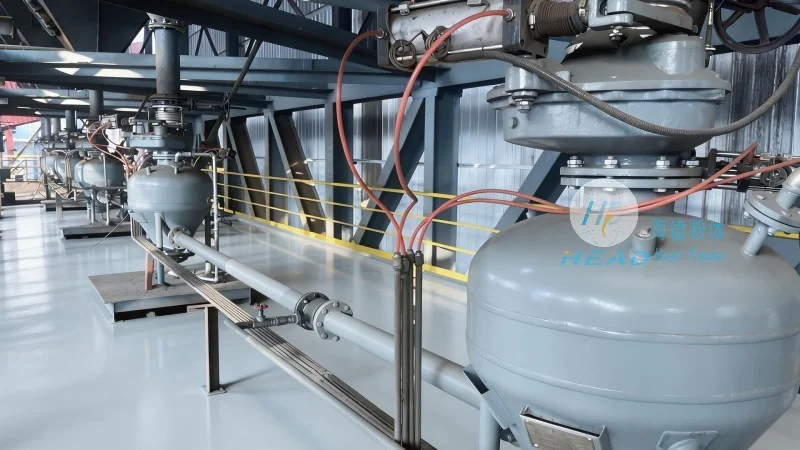
Company Profile: Shandong HeadPowder Engineering Co., Ltd.
Shandong HeadPowder Engineering Co., Ltd., operating under the brand name headpowder, is a leading provider of pneumatic conveying solutions. With a focus on innovation and quality, the company specializes in the design, manufacturing, and installation of dilute phase and dense phase pneumatic conveying systems. HeadPowder's expertise lies in understanding the unique requirements of each application and developing customized solutions that meet the specific needs of clients. The company's products are designed to deliver high performance, reliability, and energy efficiency, ensuring that clients achieve optimal material handling results. HeadPowder's commitment to customer satisfaction and technical excellence has made it a trusted partner in the industry, serving clients across China and beyond. The company's headquarters is located in Shandong, China, where it maintains a state-of-the-art facility for research, development, and manufacturing. HeadPowder's team of experienced engineers and technicians work closely with clients to provide comprehensive support, from system design and installation to maintenance and troubleshooting. This approach ensures that clients receive not only high-quality products but also reliable service and support throughout the lifecycle of their pneumatic conveying systems.