

Principle and Working Scene Characteristics of Rice Husk Ash Powder Conveying
Understanding the principles and operational characteristics of rice husk ash powder conveying is crucial for industries that handle this specific material. Rice husk ash, a byproduct of rice processing, is often used in construction, agriculture, and industrial applications due to its unique properties. Efficient powder conveying ensures consistent material flow, minimizing waste and enhancing process efficiency.

Principle of Powder Conveying for Rice Husk Ash
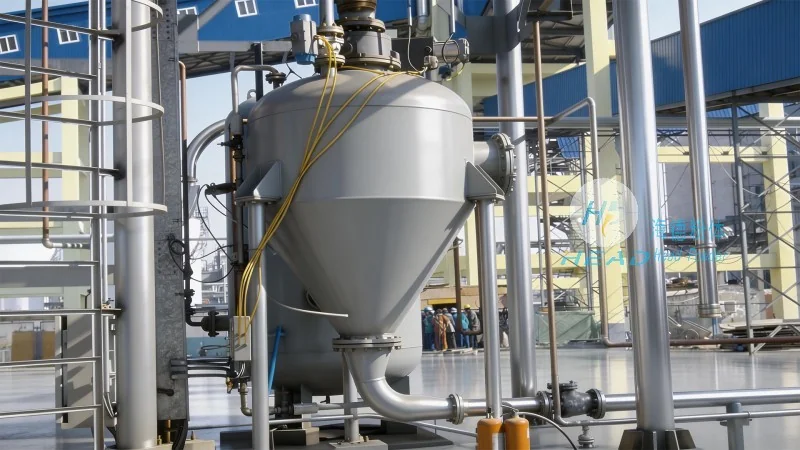
The core principle of rice husk ash powder conveying involves the use of pneumatic or mechanical systems to transport fine particles. Pneumatic conveying systems utilize air pressure to move the material through pipelines, while mechanical systems rely on screws, belts, or other mechanisms. For rice husk ash, which is typically fine and light, pneumatic systems are often preferred due to their ability to handle low-density materials with minimal pressure loss. The process begins with material feeding into a hopper, where it is then drawn into a conveying line by a vacuum or pressure source. This method ensures a continuous and controlled flow, preventing clogging and maintaining material integrity.

Key Working Scene Characteristics
Several key characteristics define the working scenes where rice husk ash powder conveying is applied. Firstly, the material's low bulk density and fine particle size require specialized equipment to avoid segregation and blockages. Secondly, the need for dust control is critical, as rice husk ash can generate significant airborne particles, posing health and safety risks. Effective dust suppression systems, such as cyclone separators and filtration units, are integral to the conveying process. Thirdly, the variability in material moisture content can affect conveying efficiency; therefore, moisture control measures are often integrated into the system to maintain optimal flow characteristics. Additionally, the scale of operations, ranging from small-scale industrial applications to large-scale processing plants, influences the choice of conveying technology. For instance, large-scale facilities may use high-capacity pneumatic systems with multiple pipelines, while smaller operations might opt for compact mechanical conveyors.
Company Overview: Shandong HeadPowder Engineering Co., Ltd.
HeadPowder, the brand name of Shandong HeadPowder Engineering Co., Ltd., specializes in designing and manufacturing advanced powder conveying solutions tailored to the unique needs of rice husk ash and other fine materials. With a focus on innovation and reliability, HeadPowder has developed systems that address the challenges of handling low-density, dusty materials. The company's expertise lies in customizing conveying equipment to match specific operational requirements, ensuring optimal performance and longevity. HeadPowder's products are engineered to meet industry standards for safety, efficiency, and environmental compliance, making them suitable for various applications in construction, agriculture, and industrial sectors.
Address and Location
HeadPowder is headquartered in Shandong, China, a region known for its industrial prowess and advanced manufacturing capabilities. The company's location provides easy access to raw materials and a skilled workforce, enabling efficient production and timely delivery of conveying systems. This strategic positioning allows HeadPowder to serve clients both domestically and internationally, delivering high-quality solutions that meet the demands of modern powder handling operations.